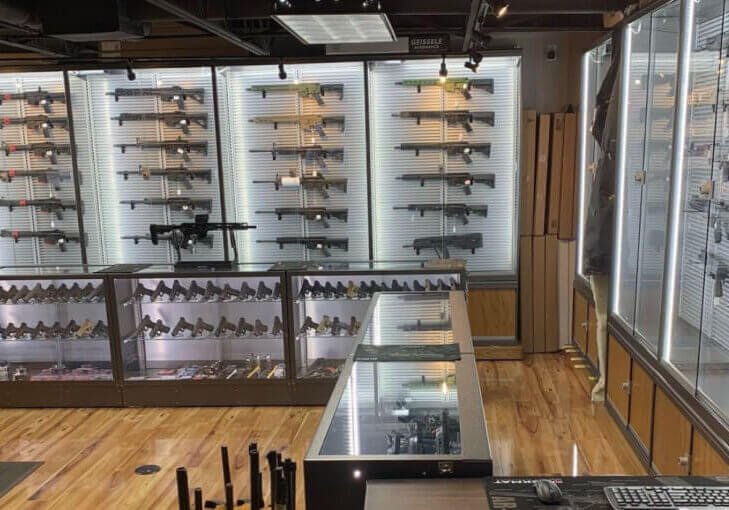
Oklahoma dealers should be ready to show FFL records, fulfillment controls, age and eligibility policies, and chargeback procedures. Underwriters review both the products sold and how the transaction is completed.
oklahoma firearms credit card processing high-risk merchants.
Oklahoma firearms retailers operate in a strong sporting, hunting, gun show, and self-defense market, but card acceptance still requires careful underwriting. High Wire Payments helps FFL dealers, ranges, and outdoor retailers prepare compliant applications, manage chargeback exposure, and document online and in-store sales controls.
OK
State Market
21+
Common Carry Age
2019
Permitless Carry Repeal Year
FFL
Core Underwriting File
Oklahoma firearms payment processing is a specialized high-risk category because a merchant account must satisfy card-brand rules, acquiring-bank risk standards, federal firearm requirements, and local retail realities at the same time. Dealers in Oklahoma City, Tulsa, Norman, Broken Arrow, Lawton, Edmond, Moore, Midwest City, Enid, and Stillwater serve hunters, sport shooters, collectors, first-time buyers, range customers, and outdoor families. That demand can produce steady ticket sizes, seasonal spikes, and large accessory baskets, but it also creates underwriting questions around restricted goods, shipping, customer eligibility, chargebacks, and how the business separates regulated firearms from general sporting goods.
Oklahoma is known for broad firearm ownership rights. The research notes that Oklahoma is a constitutional carry state and that most adults who are 21 years of age or older may legally own and possess firearms, while individuals ages 18 to 20 may possess firearms only if they meet specific legal conditions. It also notes that Oklahoma repealed its permitting requirement for concealed carry in 2019. Those facts matter for local demand, but they do not remove the documentation burden that banks place on firearms merchants. A processor still needs to understand whether the business is a storefront FFL, range, gunsmith, online seller, ammunition retailer, gun show vendor, or mixed outdoor store.
High Wire Payments reviews Oklahoma firearms merchants with an underwriting-first approach. That means we help organize the file before it goes to an acquiring bank, rather than treating firearms as a standard retail category. A shop selling long guns in Tulsa, ammunition in Lawton, optics in Edmond, or accessories at an Enid event may have different risk markers than a range with memberships and training classes in Oklahoma City. The payment plan should reflect those differences. Relevant High Wire resources include /high-risk-merchant-account/, /firearms-credit-card-processing/, /chargeback-management/, and /merchant-account-underwriting/.
Research identifies Oklahoma as a permitless carry state following the 2019 repeal of the carry permit requirement, and the Oklahoma State Bureau of Investigation still provides handgun licensing services. Payment underwriting is separate from carry law: card acceptance depends on FFL documentation, product controls, website disclosures, shipping rules, and chargeback management.
Why Oklahoma firearms merchants are reviewed as high-risk
Firearms retailers are classified as high-risk because the transaction involves products that are lawful but heavily controlled, politically sensitive, and subject to inconsistent policies across banks and platforms. In Oklahoma, that high-risk classification applies even when the merchant is fully licensed and operating in a firearm-friendly market. A storefront in Broken Arrow may have excellent local reputation and low refund volume, but an acquiring bank still reviews the FFL, product mix, fulfillment method, website wording, chargeback history, ticket size, and whether any prohibited or restricted items are present.
Underwriters also look at how the business completes sales. A compliant online firearms sale generally requires shipment to a valid receiving FFL, not direct shipment to an unlicensed consumer. Ammunition, parts, optics, holsters, range memberships, training fees, gunsmithing deposits, transfers, and accessories may each create a different risk profile. If the website accepts deposits or sells inventory online, the bank may ask how the buyer is informed about transfer requirements, background check obligations, age restrictions, shipping limitations, and cancellation rules. Clear checkout language reduces confusion that later becomes chargeback activity.
Oklahoma’s active event market also matters. Research from Oklahoma Gun Shows lists 2026 events at the Tulsa Fairgrounds, Enid’s Garfield County Fairgrounds, the Comanche County Fairgrounds in Lawton, and the Stoney Creek Hotel & Conference Center in Broken Arrow. Those shows are described as including firearms, ammunition, knives, hunting gear, survival tools, and accessories, with all federal, state, and local laws applying to transactions. If your business processes mobile payments at shows, underwriters may want to know whether the account supports card-present transactions, keyed transactions, inventory records, and receipts that clearly identify the seller.
Oklahoma market factors: stores, shows, ranges, and outdoor retail
The Oklahoma firearms market is not limited to traditional gun counters. Oklahoma City and Tulsa support large retail demand, ranges, training providers, gunsmiths, and accessory sellers. Norman, Edmond, Moore, Midwest City, and Stillwater include customers connected to universities, suburbs, outdoor sports, and commuting patterns. Lawton has a military-adjacent retail environment, while Enid and Broken Arrow support both local buyers and regional show traffic. Because these markets behave differently, a payment application should explain the merchant’s primary revenue streams instead of simply using the phrase “gun shop.”
Seasonality can also affect risk review. Hunting seasons, holiday promotions, manufacturer rebates, gun show weekends, and major outdoor buying events can create volume spikes that look unusual to a processor if they are not explained in advance. The research notes that the 2026 NBS Semi-Annual Spring Market is scheduled for February 10–13, 2026, at the Oklahoma City Convention Center, with Traditions Firearms attending and exhibiting at Booth #1138. Events like that highlight how Oklahoma City participates in the broader outdoor and sporting goods supply chain, where dealers may place orders, expand inventory, and later see higher card volume.
For payment processing, volume spikes are manageable when the merchant account is built with accurate projections and supporting documentation. If a Tulsa dealer expects a strong weekend tied to a show at 4145 East 21st Street, or a Lawton vendor expects increased sales around the Comanche County Fairgrounds event at 920 SW Sheridan Road, that context should be reflected in monthly volume estimates. Sudden unexplained volume, large keyed sales, high refund rates, and mismatched descriptors can trigger reserves, funding holds, or account reviews.
Oklahoma’s firearm laws may be permissive compared with many states, but merchant services are governed by bank policy, card-network rules, federal firearm controls, and the merchant’s own procedures. A legal sale can still be declined by underwriting if the file lacks FFL proof, fulfillment controls, or website disclosures.
Compliance documentation Oklahoma firearm dealers should expect
A strong Oklahoma firearms merchant account file starts with the basics: the legal business name, ownership information, tax identification, bank statements, processing history if available, and a clear explanation of what is being sold. Firearms merchants should also provide the Federal Firearms License associated with the location or business model. If the company operates multiple locations in Oklahoma City and Tulsa, or sells from both a storefront and approved events, the file should make that structure clear. Confusion about the seller of record is one of the easiest ways to slow underwriting.
The website or point-of-sale environment should support the compliance story. Product pages should identify firearms, ammunition, parts, and accessories accurately. Checkout pages should explain that firearm transfers must comply with applicable federal, state, and local law and may require completion through an FFL. Policies should address shipping restrictions, returns, restocking fees, transfer cancellations, age-related requirements, and customer responsibility for failed background checks. For card-not-present sales, confirmation emails and receipts should be written to reduce misunderstandings about when the customer can take possession of the firearm.
Dealers should also be careful with product labeling. Although firearms are not labeled like supplements or hemp products, the same underwriting principle applies: the product description must match what is actually being sold. Avoid vague descriptions for regulated items, especially when selling parts, conversion-related components, ammunition, or restricted accessories. Research from Everytown lists policy areas such as auto sears or Glock switches, bump stocks, ghost guns, high-capacity magazines, and assault weapons as common regulatory topics across states. Oklahoma merchants should not assume a processor will accept every accessory category without review.
Documents to prepare for an Oklahoma firearms merchant account
Underwriting delays usually happen when the processor receives only a partial file. Firearms merchants should prepare a package that proves identity, licensing, financial stability, operational controls, and customer-service practices. This is especially important for new dealers without processing history, existing merchants leaving an aggregator, online sellers adding firearms transfers, and vendors expanding into Oklahoma gun shows. The goal is not to overwhelm the bank; it is to make the risk understandable.
- Federal Firearms License for the selling entity and location, plus any relevant additional locations
- Government-issued owner identification and ownership percentage information
- IRS EIN confirmation letter or equivalent tax documentation
- Three to six months of business bank statements, or startup financial information if new
- Recent processing statements showing volume, refunds, chargebacks, and average ticket if available
- Website URL, product catalog, and screenshots of checkout, cart, refund, shipping, and transfer language
- Written firearm transfer process, including use of receiving FFLs for online firearm sales
- Age, eligibility, and restricted-product policies for firearms, ammunition, and accessories
- Chargeback response workflow, including who gathers invoices, receipts, tracking, and communications
- Event sales plan for Oklahoma gun shows, mobile terminals, descriptors, receipts, and inventory records
If your business sells both firearms and non-firearm goods, separate the categories in the application. A mixed outdoor retailer in Stillwater may sell apparel, optics, camping goods, hunting accessories, ammunition, and firearms. A range in Oklahoma City may process lane fees, memberships, rentals, instruction, retail sales, and transfers. A gunsmith in Midwest City may take deposits and final payments. Each revenue stream should be explained so that the processor can place the account correctly and avoid surprises after approval.
Chargebacks, descriptors, and fraud controls for firearm transactions
Chargeback management is a core part of firearms payment processing because disputes can arise from transfer delays, failed eligibility checks, shipping confusion, special-order cancellations, restocking fees, or customers who do not understand that online firearms are not shipped directly to their home. Oklahoma dealers can reduce disputes by using plain-language receipts, accurate billing descriptors, signed policies, and proactive communication. If a customer in Norman orders a firearm online for transfer to a receiving FFL, the order confirmation should clearly explain the process before the card is charged or finalized.
Descriptors are especially important for gun show and mobile sales. A customer who buys accessories from a vendor at the Tulsa Fairgrounds or Garfield County Fairgrounds in Enid should recognize the business name when the statement arrives. If the descriptor uses an unrelated corporate name, disputes become more likely. High Wire Payments helps merchants review descriptor strategy, terminal deployment, receipt content, and card-present versus keyed-entry practices. The objective is to reduce avoidable chargebacks and make legitimate disputes easier to answer with documentation.
Fraud controls should match the sales channel. Card-present retail can use EMV terminals, signed receipts where appropriate, and serialized inventory records. E-commerce can use address verification, CVV checks, velocity controls, manual review for large orders, and fulfillment rules that prevent shipment of firearms except to valid receiving FFLs. Dealers selling ammunition or accessories online should document state shipping restrictions and customer age controls. These practices do not eliminate risk, but they make the account more defensible during bank review and ongoing monitoring.
preparation checklist for Oklahoma firearms payment processing
Before applying for a firearms merchant account in Oklahoma, assemble the file as if an underwriter has never seen your business before. Explain the market, the products, the sales channels, and the customer experience. The following checklist is designed for FFL dealers, ranges, gunsmiths, gun show vendors, and outdoor retailers in Oklahoma City, Tulsa, Broken Arrow, Lawton, Edmond, Moore, Midwest City, Enid, Norman, and Stillwater.
- Confirm that the legal business name, DBA, website, bank account, and FFL information are consistent
- List each Oklahoma location, event-sales channel, and online sales channel separately
- Identify the percentage of revenue from firearms, ammunition, accessories, range fees, training, gunsmithing, and transfers
- Update website policies for firearm transfers, failed background checks, shipping limits, returns, and restocking fees
- Use product descriptions that accurately label firearms, ammunition, parts, optics, and accessories
- Prepare three to six months of bank statements and processing statements if the business has history
- Document your chargeback response process and keep invoices, signed receipts, tracking, and customer messages organized
- Use EMV terminals for in-store and gun show transactions whenever possible to reduce avoidable dispute exposure
- Set realistic monthly volume and average-ticket projections, especially before seasonal promotions or Oklahoma gun shows
- Review related High Wire pages at /firearms-credit-card-processing/, /high-risk-merchant-account/, /chargeback-management/, and /payment-gateway/
High Wire Payments can review your Oklahoma firearms merchant account file before submission and identify documentation gaps that commonly delay underwriting. We do not promise guaranteed approval, and every account depends on the merchant’s licensing, product mix, processing history, risk controls, and bank review. If you operate a compliant firearms business and need card-present, e-commerce, mobile, or high-risk gateway support, request a review and come prepared with your FFL, statements, website policies, and sales-channel details.
Oklahoma firearms markets we support
High Wire Payments works with firearms and outdoor retailers across Oklahoma, including storefronts, ranges, gunsmiths, event vendors, and e-commerce sellers.
Firearms payment support built for Oklahoma operators
Our review focuses on the controls that underwriters actually ask to see: licensing, product clarity, sales-channel documentation, and chargeback readiness.
FFL-first underwriting packages
High Wire organizes the merchant file around the Federal Firearms License, ownership details, bank statements, website policies, and sales channels. For Oklahoma dealers with storefront and gun show activity, we separate each channel so the bank can understand where volume originates.
Gun show and mobile payment planning
Oklahoma merchants attending Tulsa Fairgrounds, Enid, Lawton, or Broken Arrow events need terminals, descriptors, and receipts that match the selling entity. We help document mobile sales procedures so card-present volume does not look like unexplained keyed activity.
Chargeback ratio monitoring
High Wire can help monitor dispute activity and flag merchants before chargebacks become a funding problem. We focus on documentation for transfer delays, restocking fees, special orders, ammunition sales, and customer communication.
Website policy and checkout review
For Oklahoma e-commerce firearm sellers, we review checkout language for FFL transfer disclosures, shipping limits, returns, failed background check outcomes, and restricted-product notices. Clear language helps reduce customer confusion and post-sale disputes.
Gateway and terminal alignment
A firearms merchant may need EMV retail terminals, a compatible payment gateway, recurring billing for range memberships, and secure invoicing for gunsmithing deposits. We match the payment setup to the actual transaction flow rather than forcing every sale through one channel.
Reserve and volume expectation review
Seasonal hunting demand, Oklahoma gun shows, and outdoor buying events can create temporary volume increases. High Wire helps merchants present realistic volume projections and supporting context so spikes are easier for underwriting and risk teams to evaluate.
Can an Oklahoma gun shop get credit card processing?
Yes, many Oklahoma gun shops can obtain credit card processing when the business is properly licensed, accurately documented, and matched with a processor that accepts firearms risk. Approval is not guaranteed, and underwriting will review the FFL, ownership, product mix, website policies, statements, and chargeback history.
Why are firearms merchants in Oklahoma considered high-risk if firearms are legal in the state?
State legality and merchant-account risk are different issues. Firearms are high-risk for payment processing because banks and card networks review restricted products, fulfillment rules, disputes, reputational exposure, and compliance controls, even in a constitutional carry state like Oklahoma.
What Oklahoma firearm law facts matter for underwriting?
Research notes that Oklahoma is a constitutional carry state, that most adults age 21 or older may legally own and possess firearms, and that Oklahoma repealed its concealed carry permit requirement in 2019. Underwriters may consider the market context, but they still require federal licensing, clear product controls, and compliant sales procedures.
Does the Oklahoma State Bureau of Investigation handgun license process affect merchant processing?
The Oklahoma State Bureau of Investigation provides handgun licensing services, but that is separate from card-processing approval. A firearms merchant account is reviewed by acquiring banks and processors based on business documentation, product categories, transaction methods, and chargeback risk.
Can Oklahoma gun show vendors accept cards at events?
Often, yes, if the merchant account is set up for mobile or card-present event transactions and the vendor’s business model is disclosed during underwriting. Oklahoma Gun Shows research lists events in Tulsa, Enid, Lawton, and Broken Arrow, and merchants should use clear descriptors, EMV-capable terminals, and receipts tied to the licensed selling entity.
What documents should an Oklahoma FFL provide for underwriting?
A typical file includes the Federal Firearms License, owner identification, EIN confirmation, bank statements, processing statements if available, product catalog, website URL, refund and shipping policies, firearm transfer procedures, and chargeback workflow. E-commerce sellers should also provide checkout screenshots and FFL transfer language.
Can an Oklahoma firearms website sell guns online and take card payments?
An Oklahoma firearms website may be able to accept card payments, but firearm fulfillment must follow applicable federal, state, and local rules, including transfer through a receiving FFL where required. Underwriters will review checkout language, shipping restrictions, age and eligibility controls, refund policies, and prohibited-product controls.
Do ammunition sales change the risk profile for an Oklahoma merchant account?
Yes. Ammunition can increase underwriting scrutiny because it involves age controls, shipping restrictions, product labeling, and potential customer-service issues around delivery and returns. Merchants should clearly separate firearms, ammunition, accessories, and range or training revenue in the application.
How can Oklahoma firearms retailers reduce chargebacks?
Use recognizable billing descriptors, EMV terminals for card-present sales, clear receipts, written transfer policies, signed special-order terms, and documented customer communications. For online orders, explain FFL transfer steps, shipping limits, and what happens if a buyer fails an eligibility or background check requirement.
Does High Wire Payments guarantee approval for Oklahoma firearms merchants?
No. High Wire Payments does not guarantee approval. We help Oklahoma firearms merchants prepare a stronger underwriting file, document compliance controls, review risk factors, and connect with payment options that may fit the business model.
Prepare your Oklahoma firearms merchant account file
If you operate a firearms store, range, gunsmithing business, outdoor retailer, or gun show sales channel in Oklahoma, High Wire Payments can review your file before underwriting. Bring your FFL, statements, policies, sales-channel details, and chargeback history so the review can focus on real approval factors.