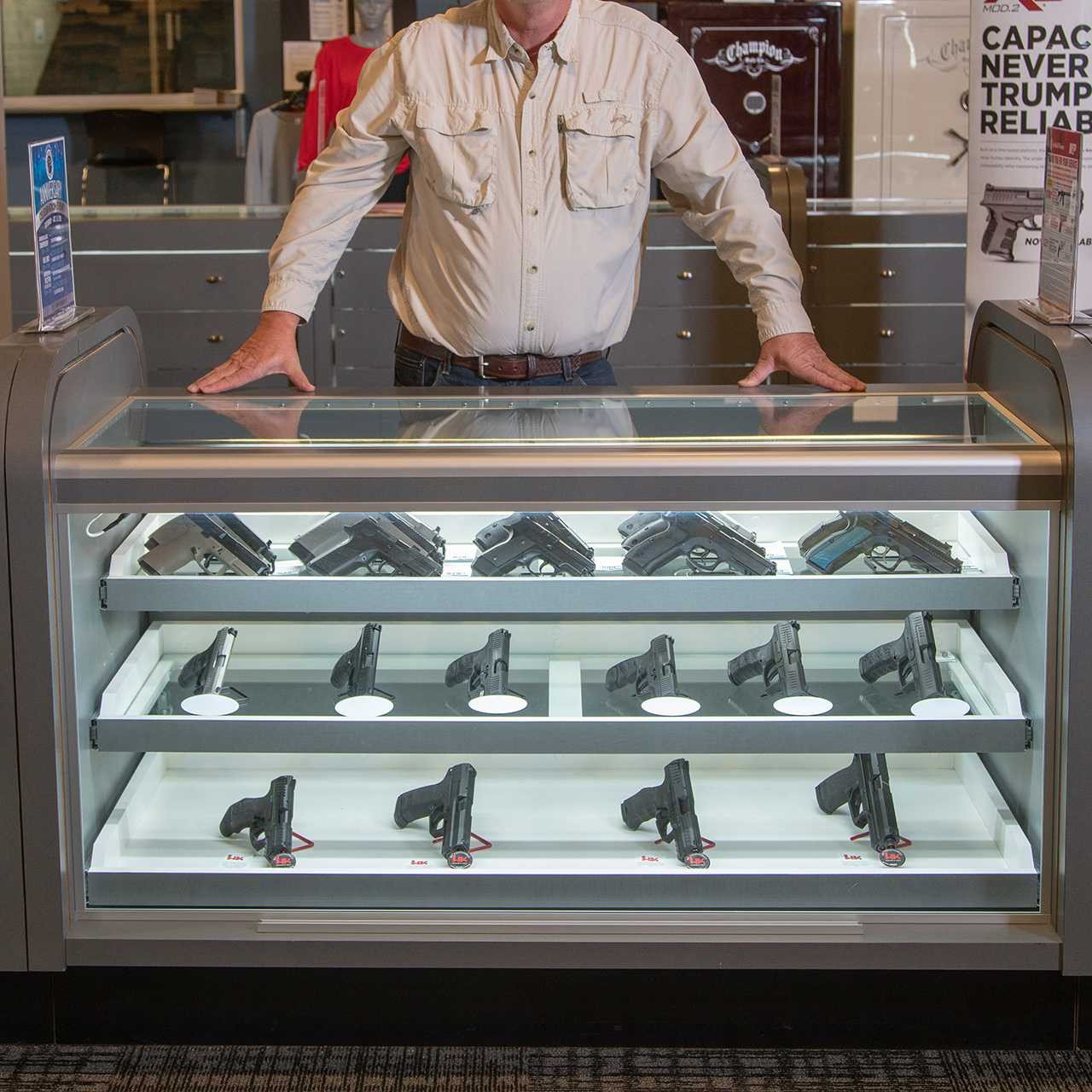
We review FFL documentation, website policies, fulfillment flow, age controls, prohibited product rules, and chargeback exposure before matching the account to a risk-tolerant processor.
kentucky firearms credit card processing high-risk merchants.
Kentucky firearm retailers, ranges, gunsmiths, and online dealers need payment processing built around FFL verification, product controls, chargeback monitoring, and card-network scrutiny. High Wire Payments helps operators prepare underwriting files for compliant firearm, ammunition, accessory, range, and training sales.
KY
state market
FFL
core document
2019
permitless carry repeal year
0.7%
chargeback alert threshold
Kentucky firearms credit card processing requires more preparation than a standard retail merchant account, even in a state with a strong gun culture and a visible firearms retail base. Operators in Louisville, Lexington, Bowling Green, Owensboro, Covington, Richmond, Georgetown, Florence, Hopkinsville, and Nicholasville may sell similar products, but their underwriting profiles can look very different depending on whether they are a storefront gun shop, shooting range, gunsmith, training business, ammunition seller, e-commerce FFL, or marketplace-connected dealer.
The Kentucky market includes large, established operators. Bud’s Gun Shop & Range in Lexington describes a 12,000 square foot retail showroom with handguns, shotguns, rifles, safes, aftermarket parts, range bags, apparel, and three separate shooting ranges: a 10-lane Commercial range, a 5-lane Club range, and a 15-lane Tactical range used for competition, events, and law enforcement live-fire training. KYGUNCO is headquartered in Bardstown and positions itself as an online gun store for firearms, ammunition, parts, and accessories. Those examples show why a one-size merchant setup rarely fits Kentucky firearms businesses.
Payment risk is not the same as legal status. Kentucky is commonly described as a shall-issue, permitless carry state, with concealed deadly weapon licenses processed by the Kentucky State Police. Research sources note that Kentucky has no waiting period, no firearms registration, and no state license requirement to purchase a firearm from a private individual. That does not remove card-brand, bank, acquirer, fraud, chargeback, shipping, age-verification, or product-policy requirements. A processor still needs to understand what is sold, how transfers occur, where fulfillment happens, and how the merchant prevents restricted sales.
This page is educational and not legal advice. Kentucky firearms retailers should confirm federal ATF requirements, FFL obligations, NICS or transfer procedures, local zoning, range rules, alcohol-related restrictions such as the Kentucky State Police reference to KRS 244.125, and any city or county rules before accepting payments online or in store.
Why Kentucky firearms merchants are treated as high-risk
Firearms businesses are reviewed as high-risk because the product category is heavily regulated, politically sensitive, fraud-prone in certain channels, and subject to strict bank policy. A Louisville retailer selling handguns over the counter may have a lower card-not-present exposure than an online ammunition seller shipping statewide, but both can face enhanced underwriting. Processors typically review federal licensing, product categories, fulfillment methods, refund terms, customer identification procedures, and whether the merchant sells firearms, receivers, ammunition, magazines, optics, suppressors, parts kits, knives, tactical gear, or training services.
Kentucky law may be comparatively permissive, but acquirers focus on their own risk obligations. NRA-ILA research notes that open carry of a handgun is lawful except in certain restricted areas and that a permit is not required to carry openly or concealed in Kentucky. Giffords research describes Kentucky as allowing a person 21 or older who is legally able to purchase a firearm to carry concealed in public without a permit. Those facts help explain consumer demand, but they do not replace the processor’s need to verify that the merchant sells only lawful products through controlled channels.
Underwriters also look at the sales mix. Shooting Industry reported that handgun sales were still strong entering 2026 and that multiple shops indicated handguns continued to outpace long guns. The same industry reporting discussed an uptick in suppressor interest after the federal $200 tax stamp for suppressors, short-barreled rifles, short-barreled shotguns, and Any Other Weapons was eliminated effective January 1, 2026. For payment review, that matters because NFA-adjacent products, suppressors, transfers, and specialized accessories often require clearer website language, fulfillment controls, and documentation than general sporting goods.
Kentucky regulatory context that affects payment underwriting
A Kentucky firearms merchant account review usually begins with federal compliance, then moves into state and local operating conditions. The core document is the Federal Firearms License, not a Kentucky-specific firearms dealer license. Research from policy summaries indicates Kentucky does not impose several foundational state-level firearm policies, and Everytown’s Kentucky profile identifies the state as lacking a dealer license requirement. Even so, payment processors normally want proof that the exact legal entity, trade name, business address, and website match the FFL and business formation records.
Kentucky State Police administers concealed deadly weapon licensing, but that is separate from payment acceptance for a retail FFL. For underwriting, the question is not whether a customer may carry; it is whether the merchant has a compliant process for sale, transfer, pickup, shipment, return, and refund. A Lexington shop with in-store transfers will be reviewed differently than a Covington e-commerce dealer accepting deposits online and completing transfers through third-party FFLs. The processor needs to see how customer identity is verified and when the firearm actually changes possession.
Local realities also matter. A store in Florence near interstate traffic may have different fraud patterns than a neighborhood range in Richmond or a gunsmith in Nicholasville. Louisville and Lexington businesses may face more complex zoning, signage, event, and occupancy issues than smaller-market dealers. If the merchant operates a range, hosts competitions, sells memberships, or provides law enforcement training, the underwriting file should separate retail revenue from range time, instruction, rentals, memberships, ammunition, gunsmithing, and firearm transfers.
Kentucky’s lack of waiting periods or registration does not mean every bank will board a firearms merchant. Acquirers can decline lawful businesses if the website, chargeback profile, product list, or fulfillment process falls outside their firearms policy.
What processors look for on a Kentucky firearms website
A firearms website should be written for customers and underwriters at the same time. If a Bowling Green dealer accepts online payment for firearms, the site should clearly state that firearms ship only to a valid FFL where required, transfers are completed in accordance with applicable law, and customers must pass any required background check before taking possession. If the site sells ammunition, magazines, parts, or accessories, restricted shipping locations should be listed plainly rather than hidden inside a generic terms page.
Age controls are a major part of the review. Federal rules and merchant policy may require different treatment for handguns, long guns, ammunition, and certain accessories. A processor will not want vague statements such as “buyer responsible for compliance” standing alone. Stronger underwriting files include checkout acknowledgments, date-of-birth collection where appropriate, adult signature or pickup controls when applicable, and staff procedures for in-store identification. These controls are especially important for online orders flowing into stores in Georgetown, Hopkinsville, Owensboro, or Florence.
Product labeling and product categorization also matter. Firearms merchants should avoid ambiguous listings, incomplete SKU names, or images that make it difficult to identify whether an item is a firearm, receiver, magazine, ammunition, NFA item, accessory, or non-regulated sporting good. Clear categorization helps the processor evaluate risk and helps the merchant defend disputes. It also supports better fraud screening because high-risk items can receive stricter order review, signature requirements, velocity limits, or manual approval before shipment.
Documents Kentucky firearms merchants should prepare
A complete underwriting package shortens review cycles and reduces back-and-forth. Firearms merchants are often declined not because they are unlawful, but because the acquiring bank cannot reconcile the legal entity, FFL, website, processing history, product list, and fulfillment model. A Kentucky dealer that prepares this information before applying is easier to evaluate, especially when the business has multiple revenue channels such as retail sales, online sales, range memberships, training classes, transfers, ammunition, and gunsmithing.
- Current Federal Firearms License with matching business name and premises address
- Kentucky business formation records or secretary of state registration
- Government ID for each owner or control person requested by underwriting
- Three to six months of recent processing statements, if available
- Three to six months of business bank statements
- Detailed product list separating firearms, ammunition, parts, accessories, range fees, training, and gunsmithing
- Website URL, checkout screenshots, refund policy, privacy policy, shipping policy, and terms of sale
- Written firearm transfer procedure, including FFL shipment or pickup steps
- Age verification, ID check, and restricted-product procedures
- Chargeback log, dispute response examples, and fraud-screening settings
For range operators, add range waivers, membership agreements, rental policies, safety rules, and instructor credentials where applicable. For businesses selling suppressors or other NFA-related items, provide a clear explanation of the order timeline, federal transfer process, customer communication, and refund terms. Industry reporting in the research notes increased suppressor interest entering 2026 after the federal tax stamp change, so processors may pay closer attention to NFA-related listings and customer expectations.
Chargebacks, fraud, and fulfillment controls
Chargebacks can become a serious issue for firearms merchants because many transactions involve high-ticket products, shipping restrictions, transfer delays, special orders, deposits, or third-party FFL coordination. A customer may dispute a charge because a background check is delayed, a transfer fee was unexpected, a firearm shipped to the wrong FFL, a special-order item is nonreturnable, or an ammunition order was canceled due to shipping limitations. The best defense is documentation before the sale, not a hurried response after the dispute arrives.
High Wire Payments encourages Kentucky merchants to use layered controls: AVS, CVV, velocity limits, device review, billing and shipping address comparison, order notes, tracking numbers, signed pickup receipts, and clear refund acknowledgments. For higher-risk SKUs, merchants can route orders into manual review rather than automatically fulfilling them. For stores in Louisville, Lexington, and Bowling Green with both foot traffic and online orders, the POS and e-commerce systems should produce records that show whether the item was shipped, transferred, picked up, refunded, or canceled.
Dispute ratios should be monitored before they become a processing emergency. A practical internal trigger is an alert at 0.7% of transactions so staff can review order quality, descriptors, refund friction, and customer communication before approaching card-brand thresholds. Firearms merchants should also make sure the billing descriptor is recognizable. A customer who sees an unfamiliar descriptor after buying ammunition, range time, or a firearm deposit is more likely to contact the issuing bank instead of the store.
Kentucky firearms payment preparation checklist
Use this checklist before requesting a new firearms merchant account, changing processors, adding online checkout, or expanding into ammunition, suppressor-related products, range memberships, or training deposits. It is designed for Kentucky operators that want a cleaner underwriting review without overstating approval odds.
- Confirm the legal entity, DBA, bank account, website footer, and FFL all align or are clearly explainable
- Separate revenue categories for firearms, ammunition, accessories, gunsmithing, range fees, rentals, classes, memberships, and transfers
- Publish clear shipping rules, including FFL transfer language and restricted-destination language
- Add age, identity, and pickup controls to checkout and in-store procedures
- Write refund, cancellation, special-order, transfer, and background-check delay policies in plain language
- Document how NFA-related items, suppressors, or regulated accessories are ordered, held, transferred, or refunded
- Use AVS, CVV, velocity controls, manual review rules, tracking, and signed pickup records
- Prepare processing statements, bank statements, chargeback reports, and current sales volume estimates
- Train staff to preserve receipts, customer acknowledgments, transfer notes, and dispute evidence
- Review local zoning, range rules, alcohol-related restrictions, signage, and municipal requirements before expansion
High Wire Payments can review a Kentucky firearms merchant account package before it is submitted to an acquiring bank. We do not promise approval, and we do not replace legal counsel, but we help merchants present the facts underwriters need: licensing, product scope, fulfillment controls, website policies, chargeback management, and payment history.
Kentucky firearms markets we reference
High Wire Payments supports Kentucky firearms merchants across urban, suburban, and regional markets, including storefront, range, gunsmithing, training, ammunition, and e-commerce models.
How High Wire Payments prepares Kentucky firearms accounts
Our review focuses on documents, controls, and risk signals that firearms-friendly underwriters expect to see before they evaluate a merchant account.
FFL and entity alignment review
We compare the Federal Firearms License, legal entity, DBA, bank account, website footer, and listed premises address before submission. If a Kentucky store has multiple locations or a separate online brand, we flag what needs explanation.
Product category mapping
We help separate firearms, ammunition, magazines, optics, safes, apparel, range time, training, transfers, and gunsmithing revenue. This prevents underwriters from treating the entire account as an undefined tactical-products catalog.
Checkout and policy audit
We review checkout language for FFL transfer rules, restricted shipping, age controls, refunds, cancellations, and special orders. Clear policy placement reduces avoidable disputes and helps the acquiring bank understand fulfillment.
Chargeback ratio monitoring
We recommend chargeback monitoring with automated internal alerts at 0.7% so Kentucky merchants can respond before ratios become account-threatening. We also review descriptors, refund timing, and dispute evidence templates.
Fraud control configuration
We evaluate AVS, CVV, velocity limits, address mismatches, high-ticket order review, and manual approval rules for regulated SKUs. This is especially important for online ammunition, parts, and firearm deposit transactions.
Range and membership billing structure
For Kentucky ranges, we separate memberships, lane fees, rentals, classes, ammunition, events, and retail sales. That structure helps reduce confusion in reporting, underwriting, refunds, and chargeback responses.
Can a Kentucky gun shop accept credit cards for firearms?
Yes, many Kentucky firearms businesses accept cards, but they generally need a processor that permits firearms activity. Underwriters will review the FFL, product list, website policies, fulfillment process, and chargeback history before deciding whether to board the account.
Do Kentucky firearms dealers need a separate state dealer license for payment processing?
The research provided does not identify a separate Kentucky firearms dealer license requirement, and policy summaries indicate Kentucky does not require a state dealer license. Payment processors will still require the appropriate Federal Firearms License and may request local business licensing or zoning documentation.
Does Kentucky permitless carry make firearms merchant approval easier?
Not by itself. Kentucky is described as a permitless carry state after legislators repealed the concealed carry permitting requirement in 2019, but payment approval depends on bank policy, card-network risk, licensing, product controls, and dispute history.
Which Kentucky agency processes concealed carry licenses?
Research identifies the Kentucky State Police as the agency that processes concealed deadly weapon licenses. That licensing function is separate from a merchant account review, but processors may still consider how the business explains state and federal compliance.
Can a Kentucky firearms website take payment before an FFL transfer is completed?
That depends on the processor’s policy and the merchant’s procedures. Underwriters typically want the website to state that firearms ship to a valid FFL where required and that possession does not transfer until applicable legal requirements are satisfied.
Are ammunition sales treated differently from firearm sales by processors?
Often, yes. Ammunition can create shipping, age, fraud, and fulfillment concerns, so processors may request separate product categorization, shipping restrictions, adult-signature procedures where applicable, and stronger fraud controls.
What should a Kentucky shooting range disclose during underwriting?
A range should disclose lane fees, memberships, rentals, ammunition sales, training classes, firearm sales, transfers, waivers, and event deposits. Clear revenue separation helps the processor understand risk and avoid misclassifying the account.
How do chargebacks happen in Kentucky firearms transactions?
Common triggers include transfer delays, unclear refund rules, canceled ammunition shipments, special-order disputes, descriptor confusion, and customer misunderstanding about background-check or FFL pickup requirements. Written policies, signed acknowledgments, and tracking records help defend disputes.
Can Kentucky merchants process suppressor-related sales?
Some processors may consider the account, while others restrict suppressors or NFA-related products. Shooting Industry reported increased suppressor interest entering 2026 after the federal tax stamp change, so merchants should document the transfer process, timelines, and refund terms carefully.
Do Louisville, Lexington, or Bowling Green firearms stores need local review before applying?
Processors usually focus on FFL, business, website, and risk documents, but local zoning, occupancy, range, signage, and municipal requirements can still matter. Operators in Louisville, Lexington, Bowling Green, and other Kentucky cities should confirm local obligations before expanding or changing payment channels.
Prepare your Kentucky firearms merchant account before underwriting
High Wire Payments reviews FFL documentation, product categories, website policies, age controls, fulfillment procedures, chargeback exposure, and processing history for Kentucky firearms merchants. Request a compliance-aware review before you submit a new application or add online sales.