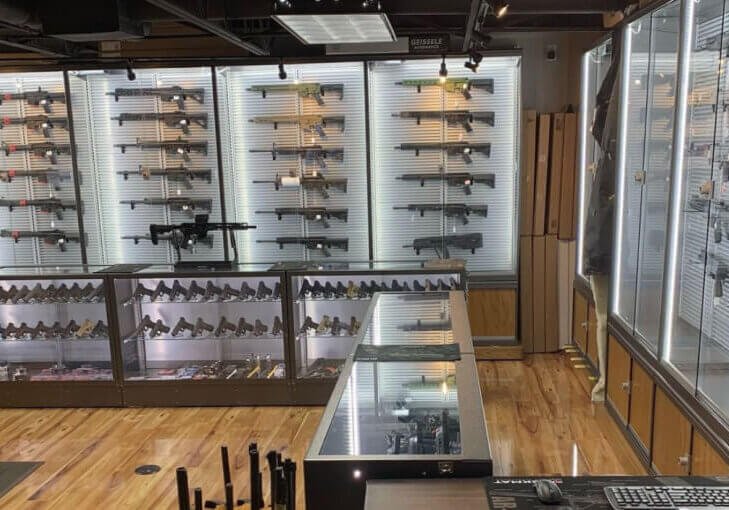
washington firearms and ammunition payment processing high-risk merchants.
High Wire Payments supports Washington FFL dealers, ammunition retailers, sporting goods stores, shooting ranges, and ecommerce firearms-related sellers with underwriting-aware payment processing. Serving businesses in Washington, we help merchants prepare documentation, review product mix, manage chargeback exposure, and align checkout workflows with card-brand and state-specific compliance expectations.
WA
State Review
10+
Magazine Restriction
Mar 15
Trace Report Due
2025
Dealer Reporting Start
Washington firearms and ammunition payment processing requires more preparation than a standard retail merchant account. FFL dealers, ammunition sellers, sporting goods stores, gunsmiths, range operators, and ecommerce firearms-related merchants in Seattle, Spokane, Tacoma, Vancouver, Bellevue, Kent, Everett, Renton, Yakima, Federal Way, Spokane Valley, and Bellingham operate in a market where card networks, acquiring banks, and payment gateways look closely at product type, licensing, age controls, fulfillment, chargebacks, and state compliance. High Wire Payments is serving businesses in Washington with firearms-friendly processing guidance built around documentation, underwriting accuracy, and ongoing risk monitoring.
The Washington market includes established local operators such as Federal Way Discount Guns & Indoor Range, which publicly describes a long-running retail, consignment, gunsmithing, rental, class, and indoor range model serving the Greater Seattle and Tacoma area. That type of mixed operation shows why firearms merchants are not all alike. A single business may sell serialized firearms, accessories, ammunition, range time, training classes, memberships, repairs, special orders, rentals, and consignment inventory. Each revenue stream can affect how an underwriter evaluates the account, how products should be described on the website, and how refunds and chargebacks should be handled.
This page is educational and is not legal advice. Washington merchants should consult qualified counsel, their FFL compliance resources, and appropriate state or local authorities for legal interpretation. From a payments perspective, the practical goal is to avoid surprises: disclose regulated product categories, document eligibility to sell, use clear product labeling, verify age where required, restrict prohibited items, maintain transparent shipping and pickup workflows, and keep records that support disputes. For broader category guidance, merchants can also review /firearms-and-ammunition-payment-processing/ and /firearms-payment-processing/ before submitting an application through /apply/.
The Washington Attorney General’s Office states that its role is limited and that it cannot interpret firearms laws or provide legal advice. Research from the AG’s firearms page identifies several dates merchants should know: high-capacity magazine restrictions took effect July 1, 2022; the assault weapon sale, manufacture, and import prohibition took effect April 25, 2023; and annual dealer reporting for certain trace requests took effect July 1, 2025, with forms due March 15 for the preceding calendar year.
Why Washington firearms merchants are reviewed as high-risk
Firearms merchants are commonly treated as high-risk because the transaction involves regulated products, age-sensitive purchases, elevated fraud concerns, political and reputational review, shipping restrictions, and chargeback scenarios that are different from ordinary retail. A sporting goods store in Bellevue that sells general outdoor equipment may be reviewed differently once firearm parts, ammunition, optics, or restricted accessories are introduced. An FFL in Spokane may also be evaluated differently from a training business in Tacoma, a range in Federal Way, or an ecommerce accessory seller shipping from Vancouver.
Underwriting usually begins with product clarity. Banks and processors want to know whether the merchant sells serialized firearms, ammunition, magazines, firearm parts, gun safes, holsters, optics, training courses, range memberships, gunsmithing services, or non-firearm sporting goods. They also want to know whether sales occur in person, online, by invoice, at events, through phone orders, or through a marketplace. If an ecommerce site lists restricted products without clear fulfillment controls, an underwriter may request revisions before approval or may decline the account entirely.
Washington adds state-level facts that a merchant should address in the file. The July 1, 2022 restriction on the sale, attempted sale, manufacture, and distribution of magazines holding more than 10 rounds should be reflected in catalog controls. The April 25, 2023 prohibition on the sale, manufacture, and import of assault weapons, while allowing reasonable exemptions for law enforcement and military manufacture and sale, should be considered when describing product availability. The July 1, 2025 annual trace-request reporting requirement for retail gun dealers with sales volume exceeding $1,000 per month on average over the preceding 12 months should also be part of a merchant’s compliance calendar if applicable.
Payment processing fit for FFL dealers, ammunition retailers, and ranges
A Washington FFL dealer needs payment infrastructure that matches how the business actually operates. Countertop retail in Kent or Everett may need EMV terminals, PIN debit, inventory-friendly settlement reporting, and next-day batch discipline. An indoor range in Renton may need payments for lane fees, rental equipment, classes, memberships, retail accessories, and ammunition sold for range use. A gunsmith in Yakima may need invoicing, deposits, repair balances, and clear work-order descriptions. A mixed sporting goods store in Bellingham may need category separation so firearms-related transactions are not misrepresented as unrelated retail.
High Wire Payments focuses on truthful placement rather than forcing a firearms merchant into a low-risk category. The application should disclose firearm and ammunition activity, provide the FFL where applicable, explain whether the merchant ships products or requires in-store pickup, and identify any third-party software such as POS, ecommerce cart, accounting, range management, or inventory systems. If the business uses a website, the site should display the legal business name, customer service contact, refund policy, shipping policy, privacy policy, terms of sale, and compliance statements appropriate for regulated goods.
A comparison table approach is useful when owners evaluate providers. A general processor may offer low introductory pricing but later freeze funds after discovering firearm products. A marketplace-only setup may limit control over descriptors, chargeback documentation, and customer data. A firearms-aware processor should expect deeper underwriting, more precise documentation, restricted-product review, gateway controls, chargeback monitoring, and reserve discussions when risk warrants it. The goal is not guaranteed approval; it is a stronger file that allows the acquiring bank to understand the business before transactions begin.
Washington merchants should build checkout workflows that reflect age controls, product labeling, shipping rules, pickup requirements, and state restrictions. Product pages should not imply availability for items that cannot be sold in Washington, and ammunition or regulated accessories should be described clearly enough to support underwriting and dispute defense.
Washington firearms rules that affect payment underwriting
Payment companies do not replace legal counsel, but they do review whether the merchant appears to understand the regulatory environment. Washington’s Attorney General firearms page notes that Initiative 1639 was adopted by voters in November 2018 and made a number of changes to Washington firearms laws. It also notes that the AG’s Office developed frequently asked questions for that initiative. For a payment file, the important point is not to summarize every legal obligation; it is to show that the business has a process for age verification, background-check-related workflows, training documentation where applicable, and product restrictions.
The July 1, 2022 high-capacity magazine rule is particularly relevant to online catalogs. The AG’s summary states that Washington prohibits the sale, attempted sale, manufacture, and distribution of high-capacity magazines that hold more than 10 rounds, while not prohibiting possession. A Washington ecommerce seller should avoid listing disallowed items as available to Washington consumers and should maintain inventory controls that prevent accidental sale. If the site sells magazines to lawful out-of-state buyers, the merchant should be prepared to explain state-by-state restrictions and shipping blocks.
The April 25, 2023 assault weapon restriction is also important for payment review. The AG’s summary says Washington prohibits the sale, manufacture, and import of assault weapons in Washington state while allowing reasonable exemptions for manufacture and sale to law enforcement and the military, and that the law does not prohibit possession. A merchant in Seattle, Spokane Valley, or Tacoma should not rely on vague product names. Underwriters may ask for catalog examples, excluded-product lists, exemption procedures, and evidence that staff understand which items require additional review before sale.
Documents Washington firearms merchants should prepare
The strongest payment applications are complete before submission. Washington firearms merchants should expect questions about ownership, licensing, transaction volume, average ticket, refund rates, chargeback history, inventory categories, ecommerce functionality, shipping practices, and compliance controls. If the business is new, projections should be conservative and supported by a business plan. If the business is established, processing statements and bank statements help underwriters see actual activity instead of guessing. A firearms merchant account is easier to review when the file is organized, consistent, and transparent.
- Federal Firearms License information when the business sells or transfers firearms
- Washington business registration and legal entity documents
- Government-issued identification for owners or control persons
- Three to six months of recent processing statements if the business already accepts cards
- Three to six months of business bank statements showing operating activity
- Website URL, product catalog, and screenshots of checkout, policies, and restricted-product notices
- Refund, cancellation, shipping, pickup, transfer, and age-verification policies
- Chargeback history with explanations for any elevated dispute periods
- Inventory category list separating firearms, ammunition, accessories, training, range fees, and general sporting goods
- Compliance calendar for Washington-specific items such as applicable annual trace-request reporting due March 15
Washington’s July 1, 2025 trace-request reporting requirement should be considered in the documentation process when it applies. According to the AG’s summary, retail gun dealers with sales volume exceeding $1,000 per month on average over the preceding 12 months must provide annual reports to the Attorney General’s Office concerning trace requests. The form is due March 15 each year for the preceding calendar year, or the following business day when March 15 falls on a weekend. A merchant does not need to turn every compliance item into a payment document, but maintaining an internal calendar demonstrates operational discipline.
Chargebacks, descriptors, reserves, and risk monitoring
Chargebacks in firearms and ammunition businesses often come from delivery confusion, delayed background-check-related pickup, refund disagreements, family-member disputes, unclear descriptors, duplicate billing, out-of-stock substitutions, or customers misunderstanding compliance restrictions. A buyer in Vancouver may purchase an accessory online and dispute the charge because shipping took longer than expected. A customer in Tacoma may challenge a deposit after a transfer cannot be completed. A range member in Federal Way may dispute a recurring billing charge if cancellation terms were not clear. These issues are manageable when documentation is kept close to the transaction.
High Wire Payments encourages merchants to use recognizable billing descriptors, emailed receipts, signed invoices where appropriate, clear class and range membership terms, and order notes documenting customer communications. For ecommerce, merchants should retain IP address, AVS and CVV results, shipping confirmation, pickup instructions, customer acknowledgments, and copies of policy acceptance. For in-store sales, EMV insertion or tap, signed receipts when appropriate, and staff notes can help. Chargeback prevention is not just a dispute department function; it begins with clear labeling, accurate product descriptions, and straightforward return policies.
Reserves may be discussed for some firearms merchants, especially where volume is growing quickly, ecommerce fulfillment is significant, chargeback ratios are elevated, or the merchant sells higher-ticket items. A reserve is not automatically bad; it can be a risk-control tool that lets an acquiring bank support a category it would otherwise avoid. The important factors are transparency, review terms, and a plan for reducing risk over time. A Washington merchant with clean processing statements, low disputes, strong age controls, and accurate catalog restrictions is better positioned than one that submits incomplete information.
prepare your Washington firearms payment application
Before applying, Washington firearms merchants should prepare a practical checklist that mirrors underwriting questions. This is especially important for sellers in Seattle, Spokane, Tacoma, Vancouver, Bellevue, Kent, Everett, Renton, Yakima, Federal Way, Spokane Valley, and Bellingham that sell through multiple channels or combine retail, ecommerce, training, range use, and gunsmithing. The following steps help High Wire Payments route the file accurately and help the acquiring bank understand the business without unnecessary delays.
- Confirm the legal business name, DBA, ownership structure, tax ID, and bank account match across all documents
- Gather FFL documentation and describe which sales require transfers, pickup, or other regulated workflows
- List every product category, including firearms, ammunition, magazines, optics, parts, accessories, classes, range fees, rentals, and gunsmithing
- Remove or restrict Washington-prohibited catalog items, including products affected by the July 1, 2022 magazine restriction and April 25, 2023 assault weapon restriction
- Add clear age-control, identity-verification, shipping, pickup, transfer, cancellation, refund, and privacy policies to the website
- Confirm the checkout does not allow prohibited Washington deliveries or unsupported product combinations
- Prepare recent processing statements, bank statements, chargeback summaries, and explanations for any unusual spikes
- Use a recognizable billing descriptor and make customer support contact information easy to find
- Create an internal compliance calendar for applicable reporting, including the March 15 trace-request report deadline if the requirement applies
- Submit the application through /apply/ with complete notes rather than omitting firearms-related activity
High Wire Payments works with Washington firearms merchants that want a payment setup built for the realities of regulated commerce. We do not provide legal advice, promise approval, or claim a local Washington office. We are serving businesses in Washington with application preparation, underwriting review, chargeback guidance, and processing options for eligible firearms, ammunition, shooting sports, and related ecommerce merchants. Start with /firearms-and-ammunition-payment-processing/, review /firearms-payment-processing/, or submit details through /apply/ for a focused review.
Serving Washington firearms businesses
We support eligible merchants across Washington, including Seattle, Spokane, Tacoma, Vancouver, Bellevue, Kent, Everett, Renton, Yakima, Federal Way, Spokane Valley, and Bellingham.
Specific payment capabilities for Washington firearms merchants
High Wire Payments helps firearms businesses prepare a complete underwriting file, structure payment acceptance, and monitor risk without misrepresenting regulated activity.
Firearms-aware underwriting package
We help organize FFL documentation, product categories, ownership records, processing statements, and website policies into a clear file. The package identifies Washington-specific concerns such as magazine limits, assault weapon restrictions, and applicable trace-request reporting.
Catalog and checkout review
We review whether firearm, ammunition, magazine, parts, training, and range products are labeled clearly for payment review. For ecommerce sellers, we look for shipping blocks, pickup language, age controls, and restricted-product notices before the file is submitted.
Chargeback ratio monitoring
We help merchants track disputes tied to deposits, delayed pickup, delivery confusion, subscriptions, range memberships, and special orders. Merchants can use alerts and reporting to address issues before card-brand thresholds become a problem.
POS and ecommerce coordination
Retail counters, ranges, gunsmithing invoices, and online accessory sales often need different workflows. We help align terminals, gateways, descriptors, receipts, and policy disclosures so the payment setup reflects the actual Washington business model.
Descriptor and receipt controls
Recognizable billing descriptors, itemized receipts, refund terms, and customer service contacts reduce confusion. This is especially important for higher-ticket firearms transactions, range memberships, training classes, and ammunition orders.
Reserve and volume planning
If an acquiring bank requires a reserve, we help merchants understand the structure, review triggers, and documentation that may support future adjustment. Growth plans should match inventory, fulfillment capacity, and dispute performance.
Can Washington FFL dealers get firearms payment processing?
Eligible Washington FFL dealers may be able to obtain firearms payment processing through high-risk underwriting. Approval is not guaranteed, and the file should include FFL documentation, product categories, policies, processing history, and clear disclosure of firearms-related activity.
Do Washington ammunition retailers need a high-risk merchant account?
Ammunition sales are commonly reviewed as high-risk because they involve regulated, age-sensitive products and potential shipping restrictions. A merchant should disclose ammunition activity, explain online or in-store sales channels, and use clear product labeling and age controls.
How do Washington magazine restrictions affect ecommerce payment review?
Washington’s high-capacity magazine restrictions took effect July 1, 2022 and prohibit the sale, attempted sale, manufacture, and distribution of magazines holding more than 10 rounds. Ecommerce sellers should restrict affected products and be able to explain catalog controls to underwriting.
What should Washington merchants know about the assault weapon restriction?
The Washington Attorney General’s summary states that effective April 25, 2023, Washington prohibits the sale, manufacture, and import of assault weapons while allowing reasonable exemptions for law enforcement and military manufacture and sale. Payment underwriters may ask how the merchant prevents restricted sales.
Does the July 1, 2025 trace-request reporting rule matter for payments?
It can matter as part of the overall compliance profile. The AG’s summary says certain retail gun dealers with sales volume over $1,000 per month on average over the preceding 12 months must submit annual trace-request reports by March 15 for the prior calendar year.
Can a Washington shooting range process lane fees, memberships, and retail sales together?
Often yes, but the merchant should explain each revenue stream clearly. Range fees, rentals, memberships, classes, ammunition, accessories, and firearm sales may carry different documentation and dispute risks.
Why was my Washington gun store declined by a standard processor?
Many standard processors restrict firearms, ammunition, weapons accessories, or regulated goods in their acceptable-use policies. A decline may result from category restrictions, incomplete disclosure, ecommerce shipping concerns, chargeback history, or unsupported product inventory.
What chargebacks are common for Washington firearms merchants?
Common disputes involve delayed pickup, transfer issues, special orders, unclear refund terms, duplicate billing, shipping delays, and membership cancellations. Strong receipts, customer acknowledgments, support records, and clear policy pages help defend disputes.
Can Washington firearms ecommerce sellers use the same gateway as ordinary retailers?
Not always. The gateway and processor must support the merchant’s actual firearms-related product mix, and the website should include restricted-product controls, age language, shipping policies, refund terms, and accurate descriptions.
Does High Wire Payments provide legal advice for Washington gun laws?
No. High Wire Payments provides payment-processing and underwriting guidance, not legal advice. Washington merchants should consult qualified counsel or appropriate authorities for legal interpretation.
Prepare your Washington firearms payment file
High Wire Payments is serving businesses in Washington with firearms and ammunition payment processing review for eligible FFL dealers, ammunition sellers, shooting ranges, sporting goods stores, and ecommerce merchants. Review /firearms-and-ammunition-payment-processing/, compare /firearms-payment-processing/, or start at /apply/.
Apply Now