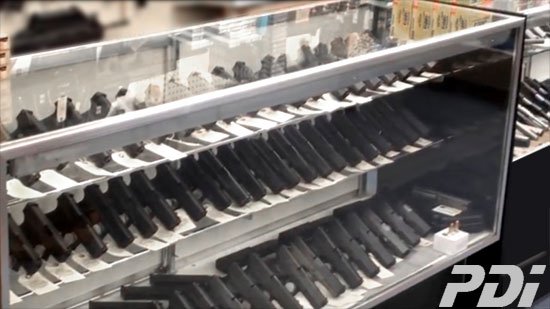
arkansas firearms and ammunition high-risk payment processing.
High Wire Payments supports Arkansas gun stores, FFL merchants, ammunition retailers, sporting goods shops, and firearms e-commerce sellers with underwriting-focused payment processing. We help organize compliance documentation, age-control workflows, product-category review, chargeback monitoring, and card-present or online payment options for businesses serving customers across Arkansas.
AR
Serving Businesses In Arkansas
FFL
Dealer Documentation Review
18+
Arkansas Carry Context
2026
Suppressor Demand Watch
Arkansas firearms payment processing has to account for the way gun, ammunition, and outdoor retailers actually operate across Little Rock, Fort Smith, Fayetteville, Springdale, Jonesboro, Rogers, Conway, Bentonville, Pine Bluff, and Hot Springs. A storefront may run a traditional retail counter during the week, host weekend traffic before hunting season, accept online accessory orders, process ammunition purchases, and manage FFL transfers that are never as simple as ordinary retail. High Wire Payments works with firearms businesses serving businesses in Arkansas that need a payment setup built around underwriting, documentation, and realistic risk controls rather than a generic small-business account.
Firearms merchants are often classified as high risk because the category can involve regulated products, age-restricted sales, higher-ticket inventory, card-not-present orders, shipping controls, returns limitations, fraud screening, and reputational review by banks and processors. Even when a business is lawful and well-run, underwriting teams want to understand exactly what is sold, how orders are accepted, where products are shipped, how chargebacks are handled, and whether firearms transactions are separated from accessories, training, gunsmithing, range fees, or outdoor sporting goods. That is why the application package matters as much as the payment technology.
Arkansas is generally described in available public summaries as a gun-friendly state, but that does not remove federal obligations or processor scrutiny. NRA-ILA materials state that Arkansas does not require a license or permit to possess or acquire a firearm, and also state that Arkansas does not require background checks for ammunition purchases or regulate sellers of ammunition at the state level. Those facts are important context, but they are not legal advice. FFL merchants still need to follow federal law, ATF requirements, card-brand rules, shipping restrictions, age-verification practices, and any applicable municipal business-license obligations.
High Wire Payments does not provide legal advice and does not represent that any product, sale, or shipment is lawful. Arkansas businesses should review federal firearms rules, ATF guidance, carrier policies, state and local requirements, and their own counsel before changing inventory, e-commerce, or fulfillment practices.
arkansas firearms retail trends underwriters will ask about
Underwriting teams want more than a business name and bank account. They want to know what product mix drives revenue. Research from Shooting Industry Magazine noted that handguns continued to outpace long guns at the end of 2025 and were expected by multiple shops to remain strong in early 2026. The same reporting pointed to strong bulk ammunition sales and parts sales at some dealers. For Arkansas merchants, that means a processor may ask whether most volume comes from handguns, rifles, shotguns, ammunition, optics, magazines, safes, holsters, range supplies, or non-firearms outdoor merchandise.
Suppressors are another area to document carefully. Shooting Industry reported that, effective January 1, 2026, the $200 federal tax stamp for suppressors, short-barreled rifles, short-barreled shotguns, and Any Other Weapons was eliminated under federal law, creating a noticeable uptick in suppressor interest among some retailers. Arkansas news coverage also noted retailers such as Arkansas Armory preparing for potential increased sales once the tax was officially eliminated. From a payments perspective, increased demand can be positive, but it also raises questions about NFA product handling, refund timing, special orders, transfer status, and customer expectations.
A Fayetteville sporting goods shop with a mostly in-person customer base may underwrite differently than a Bentonville e-commerce seller shipping accessories nationwide, even if both use the same brand name. A Little Rock FFL with high-value firearm sales may need stronger documentation than a Hot Springs outdoor store that primarily sells ammunition, camping gear, and hunting accessories. Fort Smith, Jonesboro, Conway, Rogers, Springdale, and Pine Bluff retailers may also experience seasonal spikes around hunting, holidays, and local events. High Wire helps present those operating details in a format an acquiring bank can review.
why standard processors often struggle with firearms accounts
A standard payment processor may approve a merchant quickly and then review the account later when product pages, transaction volume, refund patterns, or customer disputes trigger a risk hold. That is especially disruptive for firearms and ammunition businesses because inventory is expensive, sales may be seasonal, and customers may expect tight timelines for pickups, transfers, or shipments. A processor that does not understand FFL documentation, restricted product categories, or firearm-related reputational review can create operational uncertainty even before a chargeback occurs.
High-risk firearms processing is not about avoiding compliance. It is about giving the processor and acquiring bank a clearer view of the business from the beginning. That includes the legal entity, ownership, FFL documentation when applicable, website disclosures, age controls, fulfillment process, refund policy, product categories, chargeback history, and sales channels. High Wire can help Arkansas businesses review these areas before submission, identify missing documents, and separate unsupported products from payment flows when needed. The goal is a cleaner underwriting file, not a rushed or incomplete application.
Chargebacks deserve special attention in this vertical. Firearms, ammunition, optics, and outdoor equipment can involve high average tickets, special-order deposits, shipment delays, transfer delays, customer remorse, fraud attempts, and disputes over product condition or delivery. A merchant should be able to show clear invoices, signed pickup procedures, shipment tracking, refund terms, order confirmations, customer communications, and product descriptions. High Wire emphasizes chargeback ratio visibility, reason-code review, and documentation workflows so Arkansas merchants are not trying to reconstruct a transaction after the dispute deadline has already started.
Firearms merchants should compare underwriting tolerance, reserve requirements, e-commerce support, chargeback tools, settlement timing, and prohibited-product rules. A lower advertised rate is not helpful if the account is later frozen because the processor never reviewed the firearms model correctly.
card-present, e-commerce, and omnichannel firearms payment options
Many Arkansas firearms businesses need both countertop and online payment capabilities. A retail shop may need EMV terminals, contactless payments, receipt capture, tipping disabled where inappropriate, inventory-friendly reporting, and secure batch settlement. A firearms e-commerce seller may need a compliant gateway, fraud screening, address verification, shipping-rule alignment, product-category controls, and a checkout experience that does not misrepresent regulated products. High Wire can help evaluate card-present and card-not-present options for merchants that sell through a storefront, website, catalog, phone order process, or mixed retail model.
Age controls are critical. While public summaries note that Arkansas permits open carry for adults at least 18 who may legally possess firearms, retail sales still require product-specific and federal age practices. FFL sales, handgun-related transactions, long gun sales, ammunition sales, and accessories may not all follow the same operational workflow. Online merchants should not rely on a simple checkbox alone for restricted products. Underwriters may expect clear age-gating, customer certification language, identity review where appropriate, shipment restrictions, and internal procedures for rejecting suspicious or unsupported orders.
Product labeling and website presentation also affect payment risk. Firearms pages should use accurate names, model numbers, descriptions, condition notes, restricted-item disclosures, and clear statements about FFL shipment or pickup requirements. Ammunition pages should avoid vague descriptions that confuse customers about caliber, quantity, grain, or use case. Accessory pages should distinguish ordinary sporting goods from firearm components, magazines, suppressor-related items, or other regulated products. High Wire reviews these presentation issues from a payments perspective because unclear product labeling can increase customer disputes and make underwriting less confident.
approval-ready documentation for arkansas gun stores and ffl merchants
A stronger firearms merchant file usually includes more than a basic processing application. Underwriters want to understand who owns the business, where it operates, how it sells, what it sells, and whether the website and physical location match the represented model. For Arkansas businesses, it is also useful to explain whether the merchant is a gun store, FFL transfer business, ammunition retailer, range, gunsmith, sporting goods store, e-commerce seller, or hybrid model. The more specific the file, the fewer assumptions the reviewer has to make.
- Federal Firearms License, if the business conducts FFL activities
- Government-issued owner identification and ownership information
- Arkansas business registration or entity documents, when applicable
- Current business license or local registration documents, if required by the municipality
- Voided business check or bank letter for settlement verification
- Three to six months of recent processing statements, if available
- Three to six months of business bank statements for volume context
- Website URL, product catalog, and screenshots of checkout disclosures
- Refund, return, shipping, pickup, and cancellation policies
- Chargeback records, dispute response process, and customer-service contact information
Businesses that are new, changing processors, or adding online sales should also prepare a written explanation of expected monthly volume, average ticket, high-ticket products, seasonal swings, and sales by category. If suppressors or other NFA products are part of the model, explain how customer deposits, transfer timing, approvals, cancellations, and refunds are handled. If ammunition is sold online, document where shipments are allowed, how addresses are screened, and what carriers are used. These details do not guarantee approval, but they reduce ambiguity during underwriting.
standard processor vs firearms-focused high-risk processing
A standard processor is often built for restaurants, boutiques, salons, or general retail. It may not ask detailed questions during onboarding because it assumes the merchant sells ordinary goods with ordinary risk. That can become a problem for firearms merchants when the processor later reviews the website, sees firearm or ammunition inventory, notices a spike in card-not-present volume, or receives a dispute involving a regulated product. At that point, the business may face document requests, delayed deposits, rolling reserves, transaction limits, or account closure with little time to transition.
A firearms-focused high-risk approach starts with category review. The processor needs to know whether the merchant sells firearms, ammunition, optics, safes, parts, magazines, suppressors, training, range memberships, apparel, or general outdoor equipment. It also needs to know how transactions are fulfilled: in-store pickup, FFL transfer, carrier shipment, local delivery, or service completion. High Wire uses this information to align the application with realistic processing needs, including countertop terminals, virtual terminal access where appropriate, e-commerce gateway support, recurring billing only when suitable, and reporting that helps monitor disputes.
For Arkansas operators, a useful comparison is not simply price; it is operational fit. Can the provider support card-present sales in a Little Rock shop and online accessory orders from the same legal entity? Can it review an FFL document without treating it as an exception? Can it help flag chargeback ratios before they become a network problem? Can it explain reserve requests, settlement timing, and prohibited categories in plain language? Those questions matter for merchants with inventory, payroll, supplier payments, and customer commitments.
arkansas firearms payment processing preparation checklist
Before applying for firearms merchant services, Arkansas businesses should make the account easy to understand. The best preparation is practical: clean documentation, accurate website content, realistic volume projections, and clear policies that match actual operations. Use the checklist below before requesting a review through High Wire or comparing providers.
- Confirm the exact business model: gun store, FFL, ammunition retailer, range, gunsmith, sporting goods shop, e-commerce seller, or hybrid
- Gather FFL documentation and ensure the business name and address match application details
- Separate firearms, ammunition, accessories, training, and general outdoor products into clear revenue categories
- Update product pages with accurate descriptions, restrictions, pickup or shipping notes, and customer-service contact information
- Publish clear refund, return, cancellation, special-order, layaway, and transfer policies
- Document age-verification procedures for in-store and online restricted-product sales
- Prepare recent processing statements, bank statements, and chargeback details if the business has history
- Review checkout for address verification, fraud filters, customer acknowledgments, and restricted-shipping rules
- Train staff to keep invoices, pickup records, tracking numbers, and customer communications organized for disputes
- Apply through <a href=”/apply/”>High Wire Payments</a> with a complete file instead of submitting partial information
High Wire Payments is serving businesses in Arkansas that need a more structured path for firearms and ammunition payments. Learn more about <a href=”/firearms-and-ammunition-payment-processing/”>firearms and ammunition payment processing, review our dedicated <a href=”/firearms-payment-processing/”>firearms payment processing information, or start a document review through <a href=”/apply/”>the application page. We will help identify the payment options that fit your sales channels, risk profile, and compliance documentation without offering legal advice or guaranteeing approval.
Serving Arkansas Firearms Businesses
High Wire supports firearms, ammunition, FFL, sporting goods, and outdoor retailers serving businesses in Arkansas, including merchants in Little Rock, Fort Smith, Fayetteville, Springdale, Jonesboro, Rogers, Conway, Bentonville, Pine Bluff, and Hot Springs.
Firearms Payment Features Built For Underwriting
The right payment setup should document risk, monitor disputes, and support the way Arkansas firearms businesses sell in-store and online.
FFL-aware application packaging
High Wire helps organize FFL documentation, business records, ownership details, and product-category notes before submission. A cleaner file helps the underwriter understand whether the merchant is a storefront, transfer dealer, range, gunsmith, ammunition seller, or e-commerce operator.
Chargeback ratio monitoring
Firearms merchants need early visibility into disputes because high-ticket sales can move ratios quickly. High Wire helps merchants track dispute activity, organize evidence such as invoices and pickup records, and respond with documentation before deadlines are missed.
Card-present and online workflows
Arkansas retailers may need countertop terminals, mobile event options, virtual terminal access, and e-commerce gateway support. High Wire reviews how the business accepts orders so the payment setup reflects actual sales channels instead of forcing every transaction into one model.
Age-control and product review
Underwriters may ask how age-restricted products are handled in-store and online. High Wire reviews checkout disclosures, product labeling, category separation, and internal procedures for firearms, ammunition, accessories, and other restricted inventory.
Reserve and settlement guidance
Some firearms accounts may involve reserves, volume caps, or settlement conditions. High Wire helps merchants understand what those terms mean, why they may be requested, and how documentation, processing history, and chargeback performance can affect future review.
E-commerce risk controls
Online firearms and ammunition sellers need fraud screening, address verification, restricted-shipping workflows, and clear policies. High Wire can review the payment gateway and checkout presentation so the processing file aligns with the website customers actually use.
Do Arkansas gun stores need high-risk payment processing?
Many do, especially if they sell firearms, ammunition, regulated accessories, or high-ticket outdoor products. The category often receives additional underwriting because of age controls, product restrictions, chargeback exposure, e-commerce risk, and bank policy.
Do Arkansas ammunition retailers need a separate state license to sell ammo?
NRA-ILA materials state that Arkansas does not require background checks for ammunition purchases and does not regulate sellers of ammunition at the state level. That does not remove federal rules, carrier policies, business-license requirements, or processor underwriting expectations.
Can an Arkansas FFL accept credit cards for firearm transfers?
Yes, many FFL merchants accept cards, but the processor must understand the business model and documentation. Underwriters may ask for the FFL, transfer procedures, refund policy, customer receipt process, and details about whether payments are for firearms, transfer fees, accessories, or services.
What Arkansas firearms facts should I include in my merchant application?
Include your city, product mix, FFL status, sales channels, expected volume, average ticket, website URL, refund policy, and chargeback history. If you operate in Little Rock, Fayetteville, Fort Smith, Rogers, or another Arkansas market, describe whether sales are primarily in-store, online, or mixed.
Can Arkansas firearms e-commerce sellers process online payments?
Online processing may be available when the business model, products, website disclosures, shipping procedures, and age controls can be underwritten. The gateway and acquiring bank will need to review what is sold, where it ships, how restricted products are handled, and how customer disputes are documented.
How do 2026 suppressor trends affect payment underwriting?
Shooting Industry reported increased suppressor interest after the federal $200 tax stamp for suppressors and certain NFA items was eliminated effective January 1, 2026. If suppressors are part of your Arkansas business, document how orders, transfers, deposits, cancellations, and customer communications are managed.
Will High Wire guarantee approval for my Arkansas gun store?
No. High Wire does not guarantee approval and does not provide legal advice. We help prepare the underwriting file, identify likely documentation gaps, and match the business with payment options that can review firearms-related risk.
What chargeback documents should an Arkansas firearms merchant keep?
Keep itemized invoices, signed pickup records, shipping tracking, customer communications, order confirmations, refund notices, transfer documentation where applicable, and product descriptions. These records help support dispute responses and show underwriters that the business has organized controls.
Can a sporting goods store in Arkansas process firearms and non-firearms sales together?
Sometimes, but the processor will want clear product-category visibility. A store selling hunting apparel, optics, ammunition, firearms, camping gear, and accessories should disclose the full mix rather than presenting itself as ordinary general retail.
Does High Wire have a local Arkansas office?
High Wire is serving businesses in Arkansas without making local-office claims. Reviews, documentation requests, and application support can be handled remotely for merchants in Little Rock, Springdale, Jonesboro, Bentonville, Hot Springs, and other Arkansas communities.
Prepare Your Arkansas Firearms Merchant File
If your Arkansas gun store, FFL, ammunition retailer, outdoor business, or firearms e-commerce site needs high-risk payment processing, start with a complete underwriting review. Visit /apply/ or learn more at /firearms-and-ammunition-payment-processing/ and /firearms-payment-processing/.
Apply Now