Payment Processor vs Payment Gateway: Understanding The Differences.
In today’s digital economy, knowing the difference between a payment processor and a payment gateway is critical for optimizing your payment systems.
21+
Years of Experience
150+
Business Partners
350+
Successful Transactions Daily
99.9%
Uptime Guarantee
Understanding the functions and distinctions between a payment processor and a payment gateway is essential for businesses looking to establish their online payment systems. In this comprehensive guide, we will explore the roles played by each component in the payment processing ecosystem and help clarify which one might best suit your business needs.
What is a Payment Processor?
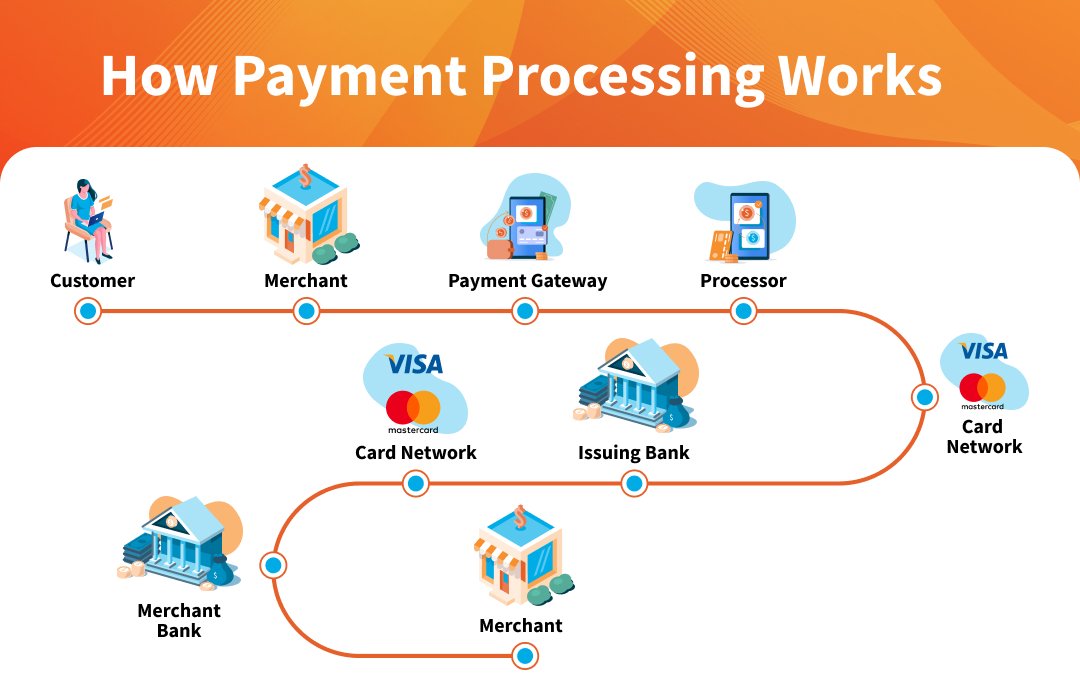
A payment processor is a service that facilitates the transaction between a customer’s payment method (credit card, debit card) and the merchant’s bank. Essentially, the payment processor is responsible for collecting the customer’s payment details, securely transmitting them to the bank, and then awaiting authorization.
What is a Payment Gateway?
A payment gateway acts as a bridge between a customer and the merchant. It provides the technology necessary for the customer’s payment information to be collected securely and then authorizes the transaction. During checkout, the payment gateway encrypts sensitive information such as credit card numbers to ensure they remain secure during transmission to the payment processor.
Payment Processor vs Payment Gateway: Key Differences
While the terms “payment processor” and “payment gateway” are often used interchangeably, they serve distinct functions in the payment processing ecosystem. Below is a comparison table illustrating these differences.
| Feature | Payment Processor | Payment Gateway |
|---|---|---|
| Definition | Handles transaction between customer and merchant | Authorizes transactions and captures payment data |
| Security | Provides security and compliance for funds transfer | Encrypts transaction data for security during transfer |
| User Interaction | Usually not visible to the customer | Visible during the checkout process |
| Speed | Ensures fast fund transfers | Processes transaction authorizations quickly |
Understanding these differences can help businesses select the right options for their transaction needs.
Why Choose High Wire Payments?
High Wire Payments is uniquely equipped to handle the payment processing needs of high-risk industries such as kratom, CBD, and adult-ecommerce. We offer a robust platform that integrates seamlessly with both payment processors and gateways, providing reliability and efficiency for your business. Our team of specialists is available to guide you through the process of selecting the best payment solutions tailored to your unique business needs.
Frequently Asked Questions
Common inquiries regarding payment processing and gateways.
What is a payment processor?
A payment processor handles the transaction between a customer’s payment method and the merchant’s bank, ensuring smooth transactions.
What is a payment gateway?
A payment gateway provides necessary technology to securely collect and transmit transaction information during a payment.
How do payment processors and gateways work together?
Payment gateways send transaction details to payment processors, which communicate with the banks for payment approvals.
Are there specific solutions for high-risk industries?
Yes, High Wire Payments specializes in offering services tailored for high-risk industries, ensuring compliance and reliability.
What should I look for when choosing a payment processor?
Consider transaction fees, integration ease, customer support, and security features to find the right processor.
Why choose High Wire Payments?
We specialize in high-risk payment processing, providing reliable solutions to help you thrive in the digital marketplace.
Ready to Optimize Your Payments?
Contact us to leverage tailored payment processing solutions for your business today.
Apply Now →