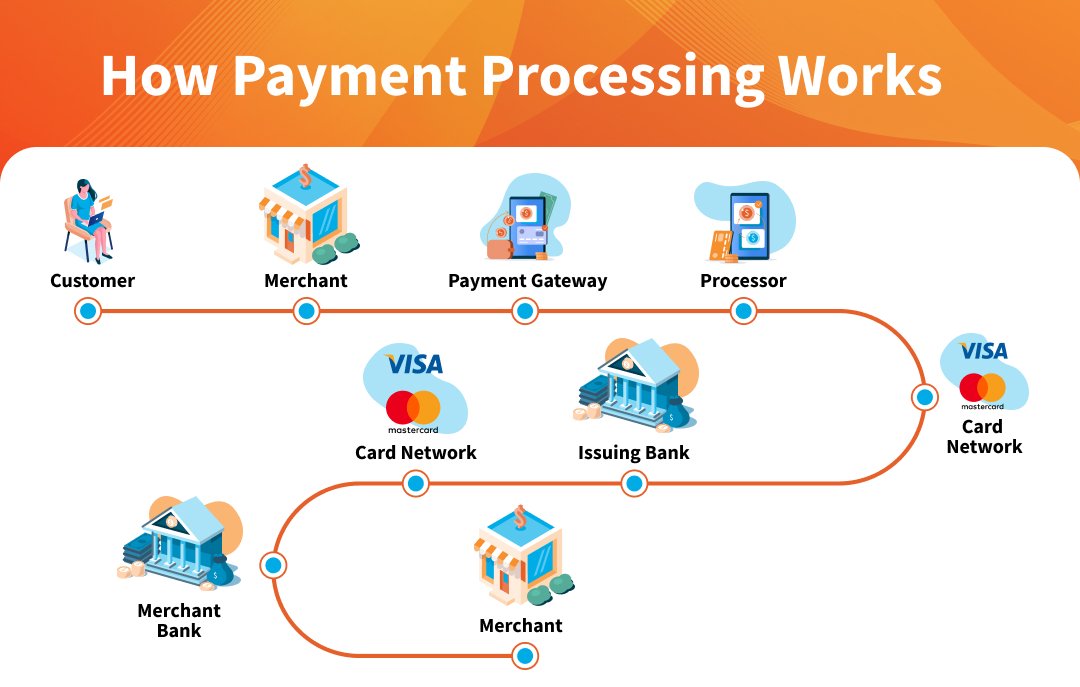
Payment processor vs payment gateway: understanding the differences.
In the complex world of payment processing, understanding the roles of payment processors and payment gateways is essential for merchants. This comprehensive guide will cover merchant accounts, acquirers, transactions, and more.
10+
Years in Business
5,000+
Merchants Served
99.9%
Uptime Guarantee
30+
Supported Integrations
What is a payment processor?
A payment processor is a company that facilitates the transfer of funds between a buyer, a seller, and the customer’s bank. They manage the technical side of processing transactions through various payment methods, including credit cards, debit cards, and digital wallets.
What is a payment gateway?
A payment gateway acts as a digital intermediary that transmits transaction data from the point of sale to the payment processor. It encrypts sensitive information, ensuring secure data transmission and compliance with PCI standards.
Understanding merchant accounts
A merchant account is an agreement between a merchant and a payment processor to accept credit and debit card payments. Merchants need a merchant account to receive payments through payment processing services.
Role of acquirers
Acquirers are financial institutions that partner with merchants to process card payments. They are responsible for managing the merchant’s account and facilitating the transaction process
, working closely with payment processors and payment gateways to ensure smooth operations.
How payment authorization works
During the payment process, authorization happens when the payment processor contacts the issuing bank to check if the customer has sufficient funds to complete the transaction. If approved, the transaction moves forward; if declined, the customer is informed of the failure.
Settlement process overview
Settlement refers to the process where the funds from the customer’s account are transferred to the merchant’s account after a successful transaction. This usually occurs within 24-72 hours, depending on the payment processor and banking institutions involved.
Gateway integrations and their importance
Integrating a payment gateway smoothly into a merchant’s website is crucial for user experience. Businesses can choose from various integration methods, such as API integration, hosted page integration, and off-site payment processing. A seamless integration creates a better user experience and can lead to increased sales.
Fraud filters and chargebacks
To safeguard transactions, most payment processors and gateways implement fraud filters designed to detect and prevent fraudulent activities. In cases where fraud does occur, chargebacks can happen when customers dispute a transaction, leading to the reversal of funds. Managing chargebacks is essential for merchants as excessive chargebacks can result in penalties and increased fees.
Why trust High Wire Payments?
Our years of experience and industry knowledge make us the ideal processing partner for high-risk merchants.
Secure Transactions
We ensure that all transactions are secured with advanced fraud protection technologies.
Dedicated Support
Our team is here to guide you through every step of the payment processing journey.
Flexible Solutions
We provide tailored solutions to fit the unique needs of high-risk merchants.
Transparent Pricing
We offer straightforward pricing with no hidden fees, ensuring clarity and trust.
Quick Setup
Get started quickly and easily with our efficient onboarding process.
Robust Technology
Our advanced technology stack supports seamless transaction processing for your business.
What types of payments can I accept?
With High Wire Payments, you can accept all major credit cards, debit cards, and digital wallets.
How long does it take to set up?
Our onboarding process typically takes a few days to complete.
What are chargeback fees?
Chargeback fees are penalties imposed when a customer disputes a transaction. These fees can vary by processor, so it’s essential to review your agreement.
Can I integrate with my existing website?
Yes, we offer various integration options compatible with most ecommerce platforms.
What is PCI compliance?
PCI compliance refers to the set of security standards designed to protect card information during a transaction.
Are there monthly fees?
Yes, a monthly fee is typically charged, along with per transaction fees. Please check your contract for specifics.
Start accepting payments today!
Take the first step to providing your customers with a seamless payment experience. Apply for our services now!
Apply Now →