Understanding Merchant Account Reserves.
In the world of payment processing, reserves can significantly impact cash flow. Learn how they work and ways to minimize their effect.
21+
Years in Business
1000+
Happy Clients
99%
Client Satisfaction Rate
50+
Payment Solutions Offered
Defining Merchant Account Reserves
When you enter into a payment processing agreement, it’s crucial to understand what a merchant account reserve is.
A reserve acts as a safeguard for payment processors, ensuring they have funds to cover potential chargebacks, refunds, and other unexpected events. These reserves can impact how much cash flow a merchant can utilize during their operations.
Types of Merchant Account Reserves
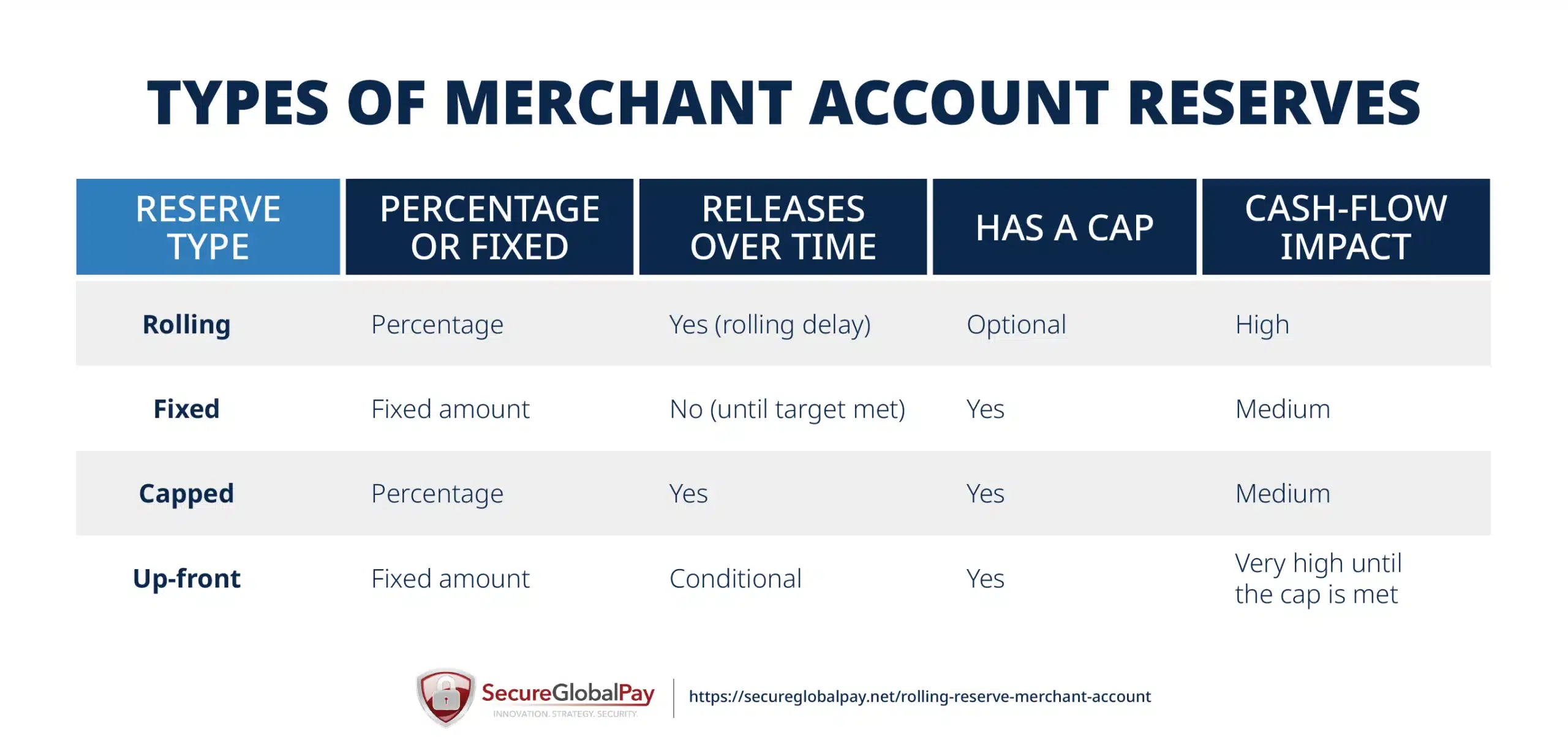
Rolling Reserves
A rolling reserve is a common reserve type where a percentage of each transaction is held back for a predetermined period. For instance, if the rolling reserve is 10% and your monthly transactions amount to $10,000, the processor will withhold $1,000.
This reserve is typically released after a defined timeline, often ranging from 30 to 180 days, allowing processors to manage risk effectively. Less frequent payouts can create cash flow challenges for merchants.
Capped Reserves
In contrast, a capped reserve has a maximum limit on the amount withheld. For example, if a merchant agrees to a capped reserve of $5,000, they would never have more than that amount held back irrespective of their transaction volume.
Capped reserves can provide merchants with more predictable cash flow since the reserve amount will not fluctuate dramatically.
Delayed Funding
Some processors also implement delayed funding, where payouts take longer to reach the merchant’s bank account. This can range from a couple of days to several weeks. For businesses relying on swift cash flow, delayed funding can be detrimental.
Understanding Release Schedules
Release schedules dictate when the funds held in reserves are released back to the merchant. Knowing your release schedule is vital for forecasting your cash flow effectively.
Typically, the release schedule is aligned with how long the payment processor requires to assess the transaction’s risk. After the assessment period passes, the withheld funds are scheduled for release. Understanding your specific release dates can help reduce anxiety about cash flow shortages.
Risk Mitigation Strategies
One of the primary functions of reserves is risk mitigation. Payment processors analyze the risk factors associated with individual merchants and their businesses.
Factors include chargeback rates, the nature of the products sold, and overall business stability. By actively managing these risk factors, merchants can potentially influence their reserve requirements. High Wire Payments can assist in implementing best practices to reduce overall risk.
Reducing Reserve Requirements
Merchants seeking to lower their reserve requirements can take several proactive steps:
- Maintain a Strong Credit Score: A good credit score can alleviate concerns for payment processors, leading to lower reserve requirements.
- Prove Sales Stability: Demonstrating consistent sales can instill confidence in processors, reducing the perceived risk.
- Build A Good Relationship: Maintain clear and honest communication with your payment processor. A collaborative approach can lead to favorable terms.
- Provide Documentation: Being transparent about your business practices, sales trends, and operational processes can lead to better outcomes.
By implementing these strategies, merchants can positively impact their reserve requirements, ultimately leading to improved cash flow.
Conclusion
Merchant account reserves are a critical component of payment processing, and understanding their impact is vital for businesses. By being aware of rolling reserves, capped reserves, and how to manage your reserves effectively, merchants can make informed decisions. Reducing reserve requirements can greatly improve cash flow and financial stability. For more tailored solutions, apply now to start your journey with High Wire Payments.
Why Trust High Wire Payments?
Discover why we’re a leader in payment processing for high-risk merchants.
Expert Industry Knowledge
With years of experience, we understand the nuances of high-risk industries.
Comprehensive Support
Our dedicated team is here to support you at every step.
Flexible Solutions
Tailored solutions that fit your business model and risk profile.
Transparent Practices
We believe in open communication and honesty regarding fees and processes.
Low Transaction Fees
Our competitive rates ensure you keep more of your hard-earned revenue.
Fast Approvals
We streamline the onboarding process to help you get started quickly.
What are the benefits of having a merchant account reserve?
Having a merchant account reserve protects both the merchant and the payment processor. It ensures financial security against disputes, fraud, and chargebacks.
Can I negotiate reserve terms with my payment processor?
Yes, merchants can negotiate the reserve terms based on their transaction history, creditworthiness, and business model.
How long does it take to release held funds?
The timeline can vary based on the payment processor’s policies and the specific terms outlined in your agreement.
Do all payment processors require reserves?
Not all processors require reserves, but they are common in high-risk industries, given the higher risk of chargebacks.
How can I improve my chances of having a lower reserve requirement?
Maintaining a stable business, having a good credit score, and providing accurate documentation can help
What steps should I take if I have a high chargeback rate?
Working with customer service, improving communication with clients, and implementing better return policies can help lower chargeback rates.
Ready to Enhance Your Payment Processing?
Don’t let reserves stifle your business potential. Take control today.
Apply Now →