Unlock the complexities of interchange pricing.
Understanding interchange pricing and interchange-plus pricing.
Explore interchange and interchange-plus pricing models specifically tailored for high-risk merchants, including their components and fees.
21+
Years in Business
99%
Approval Rate
$1M+
Funds Processed Daily
500+
Happy Merchants
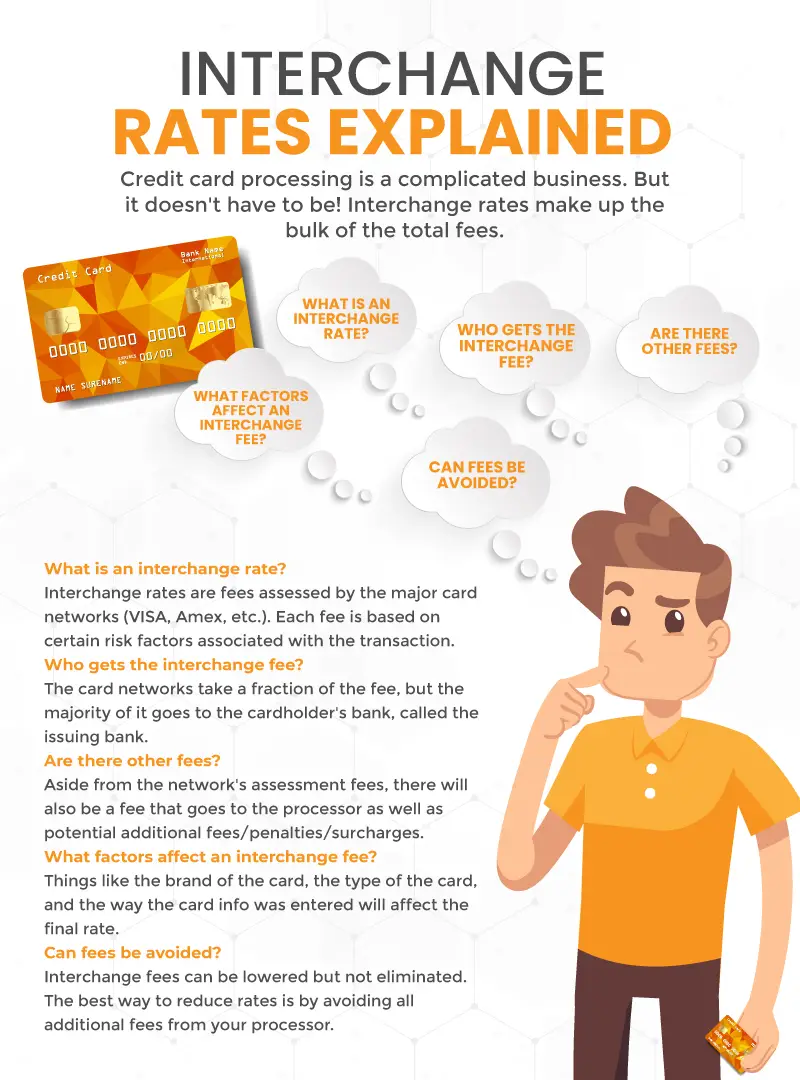
Interchange pricing is a crucial aspect for merchants who accept credit card payments. It is composed of various fees dictated by card networks such as Visa, MasterCard, and American Express. The interchange fee covers the cost associated with processing card transactions and goes to the card-issuing bank. Understanding these fees is essential for high-risk merchants to manage their costs effectively.
What is interchange pricing?
Interchange pricing refers to the charges that a merchant must pay whenever a customer uses their credit card for a transaction. These fees can vary widely based on factors like the card brand, transaction type, and risk level of the merchant. Generally, interchange fees constitute a significant portion of the overall transaction costs incurred by merchants.
Components of interchange pricing
The main components of interchange pricing include:
- Card brand fees: Fees set by credit card networks like Visa or MasterCard.
- Assessments: Additional charges levied by card brands based on transaction volumes.
- Processor markup: The amount added by payment processors to cover their services.
Knowing how these components fit together helps merchants analyze their overall payment processing costs and explore potential savings.
Interchange-plus pricing model
Interchange-plus pricing is a pricing structure that allows merchants to understand their fees transparently. It consists of the interchange fee plus a fixed markup. For example, if the interchange fee for a transaction is 2% and the processor’s markup is $0.30, the total fee for that transaction would be 2% + $0.30. This model is usually more favorable for merchants because it provides a clear breakdown of their costs.
Comparison of pricing models
High-risk merchants often face unique challenges in pricing structures due to their business nature. Here’s how interchange-plus stacks up against flat-rate pricing:
| Criteria | Interchange-Plus | Flat-Rate |
|---|---|---|
| Transparency | High – clear breakdown | Low – vague fee structure |
| Cost Variability | Variable, based on transactions | Fixed, regardless of transaction |
| Best for | High-volume merchants | Low-volume merchants |
Understanding statements
Merchants often receive statements detailing their interchange transactions and fees. Understanding these statements is vital to recognize discrepancies and spot potential savings. Here are some terms you’ll often find:
- Merchant discount rate: The total fee charged for processing services.
- Chargebacks: Fees incurred when customers dispute transactions.
- Transaction fees: Fees charged for each card swipe or entry.
Frequently asked questions (FAQ)
What is the average interchange fee?
The average interchange fee typically ranges from 1.5% to 3.5%, depending on various factors like transaction volume and card type.
Can interchange fees be negotiated?
Yes, some processors allow for negotiation, especially if you are a high-volume merchant with substantial transaction history.
What happens if a customer disputes a transaction?
Disputed transactions lead to chargebacks, which can result in additional fees and potential losses for the merchant.
How can I reduce interchange fees?
You can reduce interchange fees by selecting the right pricing model, implementing measures to prevent fraud, and maintaining good customer service to reduce chargebacks.
Why trust High Wire Payments?
At High Wire Payments, we specialize in payment processing solutions tailored for high-risk merchants. Our commitment to transparency ensures you understand the fees associated with your transactions. With our state-of-the-art analytics tools, we help you navigate the world of interchange pricing seamlessly.
Benefits of working with High Wire Payments
At High Wire Payments, we offer numerous benefits designed to empower high-risk merchants.
Transparent Pricing
Understand every fee associated with your transactions.
Dedicated Support
Our team of specialists is always here to help you.
Advanced Analytics
Get insights to better manage your payment processing.
Scalable Solutions
We grow with you, no matter your business size.
How are interchange fees set?
Interchange fees are determined by various factors including the card issuer, transaction type, and payment processor.
Are interchange fees the same across all processors?
No, interchange fees can vary depending on the processor due to differing markup fees.
What should I look for in a payment processor?
Consider transparency, fee structure, support, and features that align with your business needs.
Can I switch processors without disrupting my business?
Yes, most processors facilitate a smooth transition without significant disruption.
How do chargebacks affect interchange fees?
Chargebacks can result in additional costs and increased risk ratings, affecting future fees.
Ready to tackle your payment processing fees?
With a clear understanding of interchange pricing, you can optimize your payment processing costs.