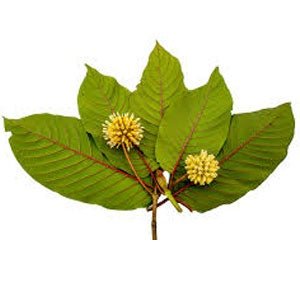
South Dakota merchants should be prepared to show 21+ sales controls, clear product labeling, supplier documentation, and chargeback prevention practices before applying.
south dakota kratom payment processing for high-risk merchants.
High Wire Payments serves South Dakota kratom retailers, smoke shops, supplement brands, and ecommerce sellers that need compliant payment processing support. We help operators prepare for underwriting, manage age-restricted inventory, reduce chargebacks, and document product labeling, COAs, website controls, and refund policies.
SD
Serving South Dakota businesses
21+
Kratom buyer age rule
CNP
Ecommerce risk review
7-OH
Labeling scrutiny
South Dakota kratom payment processing is a specialized need for merchants in Sioux Falls, Rapid City, Aberdeen, Brookings, Watertown, Mitchell, and surrounding communities. Kratom retailers operate in a category that banks and card processors review closely because products are age restricted, sold through mixed-inventory smoke shops, and frequently marketed online. High Wire Payments serves South Dakota businesses with high-risk merchant account support for kratom merchants, smoke shops, ecommerce sellers, supplement retailers, wellness brands, and other regulated or elevated-risk operators.
Kratom is not treated like an ordinary convenience-store item by payment networks. Under South Dakota Codified Law 34-20B-115, it is unlawful to knowingly sell or distribute a kratom product to a person under the age of twenty-one. That 21+ requirement matters during underwriting because processors want to see how a merchant prevents underage purchases at the counter, online, and during shipping. A store in Sioux Falls with behind-counter controls and ID checks will be reviewed differently from a website that ships nationally with weak age-gate language.
The South Dakota legislative environment also adds risk sensitivity. In 2025, House Bill 1056 was reported as a consumer protection proposal that advanced unanimously in the House and focused on kratom product standards, including concerns over packaging labels, 7-Hydroxymitragynine, synthetic alkaloids, serving information, and warning language. In 2026, Senate Bill 77 proposed banning kratom and kratom products, was reported out of the Senate Health and Human Services Committee without recommendation by a 7-0 vote, and then failed on the Senate calendar on January 22, 2026 by a 13-20 vote. Even when a prohibition proposal fails, underwriting teams notice the debate.
South Dakota currently has a 21+ kratom sales rule, and recent proposals have focused on product standards, 7-OH limits, synthetic alkaloids, labeling, and possible bans. Merchants should document their age controls, product sourcing, COAs, refund policy, and website terms before applying for payment processing.
why South Dakota kratom merchants are considered high-risk
Kratom merchants are considered high-risk because the product sits at the intersection of retail, supplements, consumer safety, age controls, and regulatory uncertainty. South Dakota retailers may sell kratom as capsules, powder, tea products, extracts, or packaged shots, often alongside CBD, hemp, Delta-8 products, vape products, glass, tobacco accessories, and other smoke shop inventory. That mixed inventory can trigger additional review because processors need to understand exactly what is being sold, which products are age restricted, and whether prohibited or unsupported products appear on the same website or point-of-sale catalog.
Banks also focus on claims. Kratom products may not be marketed with disease-treatment or medical claims, and processors often review websites, product descriptions, social media, and labels for language that suggests treatment of pain, opioid withdrawal, anxiety, depression, or other conditions. The research record for South Dakota notes that the FDA has not approved kratom for medicinal use and that federal agencies continue to scrutinize the category. For underwriting purposes, South Dakota wellness brands should use conservative product descriptions, include appropriate disclaimers, and avoid testimonials that create implied health claims.
Chargeback exposure is another reason kratom merchants face processor hesitation. Customers may dispute recurring shipments, delayed packages, product expectations, descriptor confusion, subscription billing, or purchases made by someone else in the household. Ecommerce sellers shipping from Brookings, Watertown, or Mitchell to customers outside South Dakota also face card-not-present risk, AVS mismatches, fraud attempts, and state-by-state legality questions. High Wire helps merchants present a clear risk profile so an acquiring bank can understand the business model instead of making a quick decline based only on the word kratom.
approval challenges for kratom merchant accounts in South Dakota
Many South Dakota kratom merchants first discover the high-risk issue when a mainstream payment provider freezes deposits or requests an emergency review. A smoke shop in Rapid City may open with a basic retail account, add kratom SKUs months later, and then receive a notice that the processor no longer supports the category. Ecommerce sellers can experience the same problem when a platform scan identifies kratom keywords, 7-OH extract language, or supplement claims. Shutdown risk is disruptive because it can stop card acceptance, delay funding, and leave customers unable to complete purchases.
Underwriting for kratom is more document-driven than ordinary retail onboarding. A South Dakota merchant should expect questions about ownership, processing history, chargeback ratios, monthly volume, average ticket, product type, refund policy, supplier relationships, and whether sales are card-present, ecommerce, mail-order, or subscription based. If the business sells both in-store and online, the processor may ask for separate volume estimates and risk controls for each channel. A Sioux Falls retail store with a countertop POS and a simple website brochure has a different profile from a statewide ecommerce brand shipping extracts across multiple jurisdictions.
Reserves may also be part of the approval discussion. A reserve is not a penalty; it is a risk-control tool that some acquiring banks use for higher-risk categories, new businesses, fast-growing merchants, or accounts with limited processing history. Reserves can be rolling, capped, or otherwise structured depending on the file. High Wire does not promise guaranteed approval or reserve-free processing, but we help South Dakota merchants understand what underwriters typically ask for and how stronger documentation can support a more complete review.
If your South Dakota store added kratom after opening a standard account, do not wait for a sudden compliance review. Prepare product lists, labels, COAs, age-check procedures, and chargeback data before volume increases or ecommerce sales expand.
ecommerce, card-not-present, and website controls
Ecommerce kratom processing requires tighter controls than a simple retail checkout. South Dakota sellers should use visible 21+ age gates, checkout age attestation, shipping restrictions where appropriate, terms and conditions, privacy policy, refund policy, fulfillment timing, customer service contact information, and a billing descriptor that customers will recognize. Product pages should identify ingredients, serving size where applicable, lot or batch information when available, and supplier documentation. If a product contains or references 7-Hydroxymitragynine, synthetic alkaloids, or concentrated extracts, expect additional questions from underwriting.
Fraud controls are especially important for card-not-present kratom transactions. Merchants should use AVS, CVV, velocity rules, IP review, device screening where available, and manual review for high-ticket orders, repeat declines, freight-forwarding addresses, or mismatched billing and shipping data. Subscription or autoship models need extra care because unclear recurring billing is a common dispute trigger. South Dakota ecommerce sellers should send order confirmations, tracking numbers, renewal reminders, and accessible cancellation instructions to reduce chargebacks and customer confusion.
Internal linking and website structure also matter for conversion and compliance. A South Dakota kratom merchant can learn more from High Wire’s kratom payment processing hub at /kratom-payment-processing/, the broader high-risk merchant services page at /high-risk-merchant-services/, and related category resources for CBD payment processing at /cbd-payment-processing/, hemp payment processing at /hemp-payment-processing/, and smoke shop payment processing at /smoke-shop-payment-processing/. These pages help merchants understand how adjacent inventory categories can affect underwriting, especially when CBD, hemp-derived products, tobacco accessories, and kratom are sold together.
POS and card-present options for South Dakota retail stores
Card-present kratom processing for South Dakota smoke shops, supplement stores, and convenience retailers focuses on practical controls at the register. Underwriters want to know whether kratom is kept behind the counter, whether employees check ID for 21+ customers, how the POS handles restricted SKUs, and whether receipts clearly identify the merchant. For stores in Aberdeen, Mitchell, and Watertown, these controls help show that kratom is not being sold casually to minors or mixed into checkout flows without staff oversight.
- Government-issued photo ID for each beneficial owner with 25% or more ownership
- Completed merchant application with legal business name, DBA, address, phone, and website
- EIN confirmation letter or IRS documentation matching the business entity
- South Dakota business registration or formation documents, if applicable
- Three to six months of recent processing statements, if the business has accepted cards before
- Three months of business bank statements showing operating activity and deposit history
- Current kratom product list, including powders, capsules, shots, extracts, and any 7-OH products
- Product labels, COAs, supplier invoices, and documentation for alkaloid content when available
- Written 21+ age-verification policy for in-store, ecommerce, and shipping workflows
- Refund policy, shipping policy, privacy policy, terms of service, and customer support procedures
Retail merchants should also separate supported and unsupported products before applying. If a store sells kratom along with hemp, CBD, Delta-8, vape products, tobacco, glass, or novelty items, the application should disclose the full inventory mix. Hidden inventory creates avoidable risk. A processor may approve one product category while declining another, or require separate review for ecommerce sales. Clear disclosure is better than a later compliance hold, especially in South Dakota where lawmakers have recently considered both kratom and hemp-derived intoxicant bills.
chargeback prevention, fraud controls, and reserves
Chargeback prevention starts before the transaction. South Dakota kratom merchants should use accurate product descriptions, conservative marketing language, clear serving information, visible warnings, and customer service contact details that are easy to find. Retail stores should train staff to explain refund limits without making medical statements. Ecommerce sellers should send confirmations immediately, provide tracking as soon as an order ships, and answer customer inquiries quickly. The goal is to reduce the reasons a customer might bypass the merchant and dispute the charge directly with the card issuer.
High Wire can help merchants monitor chargeback ratios, review dispute reason codes, and identify patterns such as descriptor confusion, shipping delays, repeat customer complaints, or fraud clusters. For higher-risk accounts, monitoring thresholds can be set so the merchant receives alerts before ratios become a processor-level problem. This is particularly important for growing ecommerce brands that move quickly from local South Dakota customers to national traffic. A spike in sales without corresponding fraud controls can create the same underwriting concern as a spike in disputes.
Reserves, rolling holds, and volume caps may appear in kratom processing offers depending on the merchant’s profile. A new Brookings ecommerce seller with no processing history and high-ticket extract orders may receive different terms than an established Sioux Falls smoke shop with years of stable card-present volume. High Wire’s role is to help the merchant present accurate documentation, understand the conditions of the account, and maintain the operating controls needed to keep processing stable over time.
South Dakota kratom merchant preparation checklist
Before applying for a South Dakota kratom merchant account, take time to prepare the file the way an underwriter will review it. The stronger the documentation, the easier it is to explain your risk controls, product mix, customer policies, and compliance posture. Use this checklist before submitting an application through High Wire.
- Confirm all kratom sales are limited to customers 21 and older under South Dakota law.
- Remove medical, disease-treatment, opioid-withdrawal, pain-relief, anxiety, and depression claims from product pages and labels.
- Collect COAs, supplier invoices, batch records, and label images for each kratom SKU.
- Identify any products with 7-Hydroxymitragynine, synthetic alkaloids, extracts, shots, or concentrated formulations.
- Create written in-store ID-check procedures and train employees before opening card-present sales.
- Add ecommerce age gates, checkout age attestation, AVS, CVV, fraud filters, and order review rules.
- Publish clear refund, shipping, privacy, and terms-of-service pages on the website.
- Prepare processing statements, bank statements, entity documents, EIN records, and owner identification.
- Disclose related inventory such as CBD, hemp, Delta-8, vape, tobacco accessories, and smoke shop products.
- Monitor South Dakota legislative updates, including future proposals similar to HB 1056 or SB 77.
High Wire Payments serves South Dakota kratom businesses without claiming a physical South Dakota office. If you operate in Sioux Falls, Rapid City, Aberdeen, Brookings, Watertown, Mitchell, or another South Dakota market, apply at https://highwireleah.com/apply/ or call 805-827-7451 for a payment processing review. Approval is subject to underwriting, product review, documentation, and processor guidelines.
Serving South Dakota kratom merchants
High Wire supports businesses across South Dakota, including Sioux Falls, Rapid City, Aberdeen, Brookings, Watertown, Mitchell, Pierre, Yankton, Huron, and Spearfish.
Payment support built for South Dakota kratom risk
High Wire focuses on processor-ready documentation, practical controls, and ongoing account stability for regulated and high-risk merchants.
21+ sales control review
We help South Dakota merchants document age-verification procedures for in-store and ecommerce sales. That includes POS-restricted SKU workflows, checkout age attestation, and staff ID-check policies aligned with the state’s 21+ kratom rule.
Kratom product file preparation
Underwriters may ask for labels, COAs, supplier invoices, serving information, and ingredient details. High Wire helps merchants organize powders, capsules, extracts, shots, and any 7-OH-related products into a reviewable product file.
Ecommerce fraud controls
For card-not-present kratom sales, we review AVS, CVV, velocity rules, shipping-risk flags, and manual review triggers. These controls help reduce fraud before it becomes a chargeback or account review issue.
Chargeback ratio monitoring
High Wire helps merchants track dispute trends, descriptor complaints, shipping delays, and refund-policy issues. Alerts can be structured before chargebacks approach levels that create network or processor concern.
Mixed-inventory disclosure support
South Dakota smoke shops often sell kratom next to CBD, hemp, Delta-8, vape, tobacco, and accessories. We help merchants disclose inventory accurately so underwriting can evaluate supported categories without surprises.
Reserve and volume planning
Some kratom accounts may include reserves, rolling holds, or monthly volume controls. High Wire helps merchants understand the terms, provide processing history, and plan growth without triggering preventable compliance reviews.
Is kratom legal to sell in South Dakota?
South Dakota law restricts kratom sales to customers 21 and older, and South Dakota Codified Law 34-20B-115 makes it unlawful to knowingly sell or distribute a kratom product to a person under twenty-one. Merchants should also monitor new proposals because lawmakers have recently debated additional kratom rules and bans.
Do South Dakota kratom retailers need a separate state kratom license?
The research provided does not identify a separate statewide kratom retailer license requirement in South Dakota. That said, merchants should confirm local business licensing, sales tax obligations, zoning rules, tobacco or smoke shop requirements, and any municipal restrictions before selling.
What happened with South Dakota Senate Bill 77 in 2026?
South Dakota Senate Bill 77 proposed banning kratom and kratom products and providing a penalty. It was reported out of the Senate Health and Human Services Committee without recommendation by a 7-0 vote, then failed on the Senate calendar on January 22, 2026 by a 13-20 vote.
What was South Dakota House Bill 1056 about?
House Bill 1056 was reported in 2025 as a consumer protection proposal focused on kratom product standards. The reported provisions included concerns about products with more than a 2% level of 7-Hydroxymitragynine, synthetic alkaloids, serving information, alkaloid labeling, and warning statements.
Can a Sioux Falls smoke shop get kratom payment processing?
A Sioux Falls smoke shop can apply for kratom payment processing, but approval depends on underwriting, product review, documentation, and processor guidelines. The shop should disclose all inventory, document 21+ controls, provide labels and COAs, and avoid unsupported medical claims.
Can South Dakota kratom merchants accept ecommerce payments?
Yes, some South Dakota kratom merchants may qualify for ecommerce processing if their website, products, age controls, fraud tools, and policies meet underwriting standards. Card-not-present sales require strong AVS, CVV, order review, shipping controls, and clear refund and cancellation terms.
Why did my payment processor shut down my South Dakota kratom account?
Processors may close or freeze accounts when kratom is sold through a standard low-risk account, when the website contains medical claims, when inventory was not disclosed, or when chargebacks increase. A high-risk merchant account review is usually needed for ongoing kratom card acceptance.
Will High Wire guarantee approval for my kratom merchant account?
No. High Wire does not guarantee approval because kratom processing is subject to underwriting, sponsor bank requirements, product review, card network rules, and compliance standards. We help South Dakota businesses prepare a complete file and pursue appropriate high-risk processing options.
Do Rapid City or Aberdeen kratom stores need behind-counter controls?
Behind-counter placement is a practical risk-control measure for 21+ products, even when a specific local rule is not identified. Rapid City, Aberdeen, and other South Dakota retailers should train staff to check ID, restrict POS SKUs, and prevent self-service access by underage customers.
How do I apply for South Dakota kratom payment processing?
Prepare your business documents, product list, labels, COAs, age policy, website policies, and processing history if available. Then apply at https://highwireleah.com/apply/ or call 805-827-7451 for a review; High Wire serves South Dakota businesses and does not claim a physical South Dakota office.
Apply for South Dakota kratom payment processing
High Wire Payments serves South Dakota kratom merchants, smoke shops, ecommerce sellers, supplement retailers, wellness brands, and other high-risk businesses. Apply at https://highwireleah.com/apply/ or call 805-827-7451 to start an underwriting-focused review.
Related resources: Comprehensive Guide to Kratom Merchant Accounts for High-Risk Businesses · The Ultimate Guide to Kratom Merchant Accounts in 2024 · Kratom Merchant Accounts: A Comprehensive Guide