south dakota hemp payment processing
Payment processing for South Dakota hemp merchants requires careful underwriting, product documentation, age controls, labeling review, and chargeback monitoring. High Wire Payments helps hemp retailers, CBD sellers, smoke shops, ecommerce brands, and hemp-derived product merchants prepare compliant applications without promising approval or ignoring regulatory risk.
SD
State Review
21+
Age Controls Common
COA
Lab Documentation
38-35
Hemp Law Reference
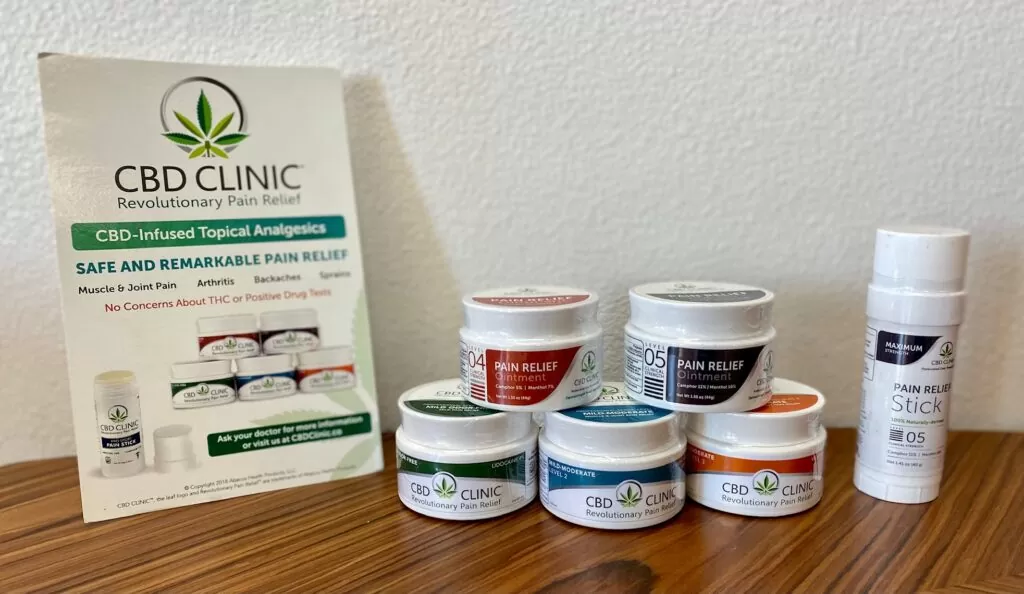
South Dakota hemp payment processing is a specialized underwriting category for hemp retailers, ecommerce brands, CBD sellers, hemp stores, smoke shops, and other high-risk merchants selling hemp-derived products in Sioux Falls, Rapid City, Aberdeen, Brookings, Watertown, Mitchell, Pierre, Yankton, Huron, and Spearfish. Even when a product is federally hemp-derived, card networks and acquiring banks still evaluate the merchant’s product mix, labeling, website claims, age controls, fulfillment process, and refund history. A South Dakota store that sells packaged CBD tinctures may be reviewed differently from a smoke shop selling vapes, gummies, accessories, or products that could be interpreted as intoxicating hemp.
The local market is not theoretical. South Dakota has been reported as the No. 1 producer of hemp fiber in the nation, and operators such as Dakota Hemp near Wakonda and Complete Hemp Processing in Winfred have been cited in coverage of the state’s industrial hemp growth. At the same time, the market is changing quickly. Research reported that South Dakota hemp acreage dropped from 3,900 planted acres and 3,700 harvested acres in 2024 to 1,128 acres in 2025, a 70% decline. For payment underwriting, that volatility matters because banks look for stable suppliers, clear sourcing records, and product documentation that will still make sense when rules shift.
High Wire Payments works with South Dakota hemp merchants by helping organize the application package before it reaches underwriting. That includes reviewing product pages, COAs, invoices, labels, return policies, shipping controls, age gates, and chargeback exposure. We do not promise approval, and we do not advise merchants to sell products that violate state or federal law. The goal is to present the business accurately, avoid avoidable red flags, and match the merchant with acquiring options that understand hemp, CBD, smoke shop, ecommerce, and high-risk retail categories. Merchants can also review related resources for <a href=”/industries/hemp-payment-processing/”>hemp payment processing, <a href=”/industries/cbd-payment-processing/”>CBD payment processing, and <a href=”/industries/smoke-shop-payment-processing/”>smoke shop payment processing.
South Dakota hemp merchants should distinguish industrial hemp production and processing rules from finished-product retail rules. Research references South Dakota Codified Law 38-35, ARSD 12:82, DANR hemp licensing requirements, and a 2024 law banning chemically synthesized THC products. Because rules are changing, merchants should confirm current requirements with counsel, DANR, USDA, and local municipalities before submitting products for processing.
why South Dakota hemp merchants are reviewed as high-risk
Hemp merchants are usually reviewed as high-risk because the legal status of a product does not eliminate payment risk. Banks assess whether the merchant’s inventory could trigger card network scrutiny, consumer disputes, regulatory complaints, or reputational exposure. A hemp store in Sioux Falls that sells non-intoxicating CBD topicals may still be asked for COAs, THC concentration documentation, supplier invoices, and label photos. A Rapid City smoke shop with hemp-derived vapes, prerolls, accessories, and gummies will typically face a deeper review because the product catalog can overlap with categories that banks consider restricted or higher chargeback.
South Dakota’s industrial hemp framework also creates documentation expectations. The DANR Industrial Hemp Program materials state that any person or legal business entity in South Dakota must obtain a license from the department to purchase, receive, or obtain industrial hemp, other than industrial hemp product, for planting, storing, propagating, or processing industrial hemp. The same materials reference the approved State Plan and ARSD 12:82. Although later reporting stated that Senate Bill 39 shifted grower oversight to the USDA and removed state processor oversight, payment underwriters may still ask merchants to explain whether they are retailing finished products, processing raw hemp, or sourcing from licensed growers and processors.
For ecommerce hemp merchants, the review is often broader than the store’s South Dakota location. A Brookings brand selling online may ship to customers in multiple states, each with different rules for cannabinoids, smokable hemp, delta-8, packaging, age verification, and prohibited compounds. Underwriters want to see a written shipping policy that blocks restricted states, a product catalog that avoids banned or chemically synthesized THC products, and checkout controls that reduce underage purchase risk. If the merchant cannot explain where products ship and which items are blocked, the application may stall even if the business is locally licensed and otherwise legitimate.
South Dakota hemp rules that affect payment underwriting
South Dakota’s hemp rules have moved through several phases, which is why current documentation is important. Research from the South Dakota Department of Agriculture and Natural Resources described a state industrial hemp program requiring a non-refundable $50 application fee for growers, state and federal background checks for applicants, key participants, and landowners, and a $500 grower license fee after approval. The same materials described processor applicants submitting a $50 application fee, completing background checks, and paying a $2,000 processor license fee after approval. Grower and processor licenses were described as valid for 15 months from the date of issue.
The same DANR materials described operational requirements that can matter to banks even if a merchant only sells finished goods. Within 30 days of planting, licensees were required to file documentation identifying hemp seed type and variety with the corresponding lot, followed by planting verification inspection of GPS coordinates, acreage or square feet planted, and FSA Farm, Tract, and Field Number. DANR also described grower inspections and sampling not more than 30 days before harvest, with a $250 inspection and sample fee per hemp lot. No harvested lot could be commingled with another harvested lot or other material, and hemp could not leave the licensee’s control until lab results confirmed compliance.
For a payment application, these details translate into a simple underwriting question: can the merchant trace products back to compliant sources? A Watertown hemp shop selling tinctures, salves, drinks, or pet products should be prepared to provide supplier invoices, batch COAs, and labels that match the products being sold. A Mitchell ecommerce merchant should not rely on generic lab reports that do not match current inventory. South Dakota Codified Law 38-35 is also relevant because research notes that it is a Class 2 misdemeanor to purchase, receive, or obtain industrial hemp or product in process for planting, storing, propagating, producing, or processing without a license, while unlicensed possession or distribution of hemp seed is treated differently.
If your South Dakota business sells only finished hemp products, say that clearly. If you grow, store, process, or handle industrial hemp or product in process, disclose that separately and provide current DANR or USDA documentation. Underwriters are more comfortable with a precise business model than a broad claim that all hemp activity is automatically legal.
product categories that need extra care
South Dakota hemp payment processing depends heavily on the product catalog. Lower-risk hemp categories usually include hemp fiber goods, hemp seed products, non-ingestible accessories, and properly labeled CBD topicals with COAs. Consumable products such as CBD tinctures, gummies, beverages, capsules, pet products, and smokeable hemp generally require more documentation. Products associated with delta-8 THC, chemically synthesized THC, synthetic cannabinoids, or intoxicating hemp-derived compounds require the most caution. Research notes that South Dakota legislators passed a 2024 law that closed part of the loophole by banning chemically synthesized versions of THC, and another proposal, SB 61, advanced in 2025 to target intoxicating hemp products such as delta-8 THC and other synthetic THC substances.
Because SB 61 was described in the research as advanced but not yet passed at that time, merchants should not treat a news article as legal advice. Instead, they should maintain a live compliance review of inventory and remove products that are prohibited, mislabeled, or not supported by current COAs. A smoke shop in Aberdeen that sells mixed inventory should separate hemp-derived products from tobacco, nicotine, kratom, accessories, and general retail SKUs in its point-of-sale reporting. Clear categorization helps the processor understand what is being sold and reduces the risk of a merchant being misclassified after boarding.
Product labeling is also a payment issue, not just a regulatory issue. Underwriters commonly review labels for ingredient lists, net quantity, manufacturer or distributor information, batch numbers, THC and cannabinoid disclosures where applicable, required disclaimers, and medical or disease claims. A hemp brand should avoid claims that a product treats anxiety, pain, insomnia, inflammation, cancer, seizures, addiction, or any other medical condition unless the product is legally approved for that claim. Banks are especially sensitive to claims on websites, social media, email campaigns, and product descriptions because those claims can trigger regulatory and consumer complaint risk.
documents South Dakota hemp merchants should prepare
A complete underwriting file can make the difference between a quick review and repeated requests for clarification. South Dakota merchants should prepare documents that explain the business, the ownership structure, the product mix, and the compliance process. If a company operates a storefront in Sioux Falls and an ecommerce site that ships nationwide, the application should describe both channels. If the merchant operates a retail lounge, smoke shop, or hemp store in Rapid City, the file should identify age-restricted products, in-store signage, employee ID-check procedures, and how products are displayed behind the counter or in locked cases.
- Government-issued owner identification for all required beneficial owners
- Entity formation documents and current South Dakota business registration information
- EIN confirmation letter or IRS documentation matching the legal business name
- Processing statements for the most recent three to six months, if available
- Business bank letter or voided check matching the applicant entity
- Current product list separated by CBD, hemp-derived consumables, smokable hemp, accessories, and non-hemp items
- Certificates of analysis for each active hemp or CBD SKU, tied to batch numbers when available
- Supplier invoices and documentation showing compliant sourcing from growers, processors, or finished-product manufacturers
- Website terms, privacy policy, refund policy, shipping policy, and restricted-state shipping controls
- Photos of storefront, signage, product labels, age-verification signage, and checkout or POS setup
Merchants that grow or process hemp should provide additional documents. Based on the research, that may include current DANR or USDA licensing documentation, background-check status where applicable, planting or lot records, inspection documents, lab results, and any municipal approval required for activity within city limits. Even if state oversight changed under Senate Bill 39, payment underwriters may still ask for historical licenses or proof of current USDA registration when the business touches raw hemp, product in process, or processing activity. Finished-product retailers should state clearly that they are not growing or processing if that is the case.
chargebacks, reserves, and ecommerce controls
Chargeback risk is one of the main reasons hemp merchants are reviewed carefully. Disputes can come from delayed shipping, unclear product descriptions, subscription billing complaints, dissatisfaction with effects, confusing refund policies, or customers who do not recognize the billing descriptor. Hemp and CBD merchants should use a billing descriptor that matches the public brand, send order confirmations immediately, provide tracking numbers, and make customer service easy to reach. A merchant selling in Brookings, Watertown, or Mitchell should not assume local reputation will carry over to ecommerce customers in other states.
Underwriters may require rolling reserves, volume caps, or delayed funding depending on the merchant’s history, product catalog, and chargeback ratio. A reserve is not a penalty; it is a risk tool used to cover potential disputes and refunds. High Wire Payments helps merchants review reserve language, monthly volume assumptions, average ticket size, refund exposure, and transaction monitoring. We also help merchants prepare for card-brand thresholds by setting internal chargeback alerts before the ratio becomes a network problem. The earlier a merchant sees dispute patterns, the easier it is to correct product pages, shipping timelines, and customer communication.
Ecommerce controls are especially important for South Dakota hemp-derived product merchants. A strong site should include age gates where appropriate, adult-signature or age-verification shipping options when needed, clear restricted-state rules, accurate COA links, visible refund terms, and no unsupported health claims. Product pages should not hide THC content, use confusing cannabinoid language, or imply that a product is legal everywhere. If a product is not available for shipment to certain states or municipalities, that restriction should be enforced at checkout rather than buried in a policy page.
South Dakota hemp payment processing preparation checklist
Before applying for a South Dakota hemp merchant account, use this checklist to reduce avoidable underwriting delays. The purpose is not to make the business look less high-risk than it is. The purpose is to give the acquiring bank a clean, accurate, and compliance-aware view of your products, ownership, sales channels, and controls.
- Confirm whether your business is a finished-product retailer, ecommerce seller, smoke shop, processor, grower, distributor, or mixed operator.
- Review South Dakota Codified Law 38-35, ARSD 12:82, DANR guidance, USDA hemp oversight, and current local requirements before submitting the application.
- Remove or segregate products that may be considered chemically synthesized THC, synthetic cannabinoids, or otherwise prohibited under South Dakota law.
- Collect COAs for every hemp-derived product and match each COA to the active SKU, batch, potency, and supplier.
- Audit labels for ingredient lists, cannabinoid disclosures, net quantity, manufacturer information, batch numbers, warnings, and required disclaimers.
- Delete medical, disease, or drug-treatment claims from product pages, social media, email campaigns, and printed materials.
- Add age controls, ID-check procedures, and employee training notes for 21+ retail environments and smoke shop settings.
- Create clear refund, shipping, privacy, terms, and restricted-state policies for ecommerce and in-store pickup.
- Prepare recent bank statements, prior processing statements, chargeback data, and explanations for any terminated accounts or MATCH concerns.
- Speak with a high-risk payments specialist before changing gateways, adding new hemp-derived products, or scaling advertising volume.
If your South Dakota hemp business is ready for a payment review, High Wire Payments can help organize the file, identify documentation gaps, and route the application to options that understand hemp retail and ecommerce risk. Start with a review through <a href=”/contact/”>High Wire Payments or compare related solutions for <a href=”/high-risk-merchant-account/”>high-risk merchant accounts, <a href=”/chargeback-management/”>chargeback management, and <a href=”/payment-gateway/”>payment gateway support. Approval is never guaranteed, but a complete and accurate file gives your business a stronger starting point.
South Dakota hemp payment processing markets
High Wire Payments supports hemp retailers, CBD sellers, smoke shops, ecommerce brands, and high-risk merchants across Sioux Falls, Rapid City, Aberdeen, Brookings, Watertown, Mitchell, Pierre, Yankton, Huron, and Spearfish.
How High Wire Payments supports South Dakota hemp merchants
Our role is to help merchants present a complete, accurate, and compliance-aware file for hemp payment processing, gateway setup, chargeback monitoring, and ongoing risk review.
South Dakota product file review
We review hemp, CBD, smokable hemp, vape, accessory, and mixed-inventory product lists before submission. The file is organized so underwriters can see which items are finished hemp products, which require COAs, and which may need removal because of chemically synthesized THC concerns.
COA and label documentation
High Wire helps merchants map certificates of analysis to active SKUs, batch numbers, product labels, and supplier invoices. This reduces the common underwriting problem of generic lab reports that do not match the products listed on the website or in the store.
Chargeback ratio monitoring
We help merchants watch dispute activity with internal alerts before ratios become network-level issues. For hemp ecommerce brands, this includes reviewing refund language, delivery tracking, billing descriptors, and customer-service response patterns.
Age-control and checkout review
For 21+ retail and smoke shop environments, we review age gates, ID-check procedures, employee training notes, signage, and checkout controls. Ecommerce merchants can also document restricted-state shipping and age-verification steps where appropriate.
Gateway and descriptor alignment
We help align gateway settings, payment descriptors, product categories, and transaction routing with the disclosed business model. That is especially important for South Dakota merchants operating both a storefront and an online hemp or CBD catalog.
Ongoing high-risk account support
After boarding, merchants still need to manage product changes, volume increases, refunds, and compliance updates. High Wire can help prepare documentation before adding new hemp-derived SKUs or expanding sales outside South Dakota.
Is hemp legal in South Dakota?
Hemp is legal in South Dakota under specific state and federal rules, but merchants must distinguish industrial hemp activity from finished-product retail. Research references South Dakota Codified Law 38-35, ARSD 12:82, DANR hemp program requirements, and later movement toward USDA oversight for growers.
Do South Dakota hemp retailers need a separate state hemp license?
Finished-product retailers may be treated differently from growers, processors, or businesses handling industrial hemp or product in process. Because research shows licensing rules for purchasing, receiving, storing, propagating, or processing industrial hemp, retailers should confirm their exact activity with DANR, USDA, local officials, or counsel.
What changed with South Dakota Senate Bill 39?
Research states that Senate Bill 39 shifted South Dakota grower oversight to the USDA and was supported by the South Dakota Department of Agriculture and Natural Resources because the state program was not financially sustainable. Payment underwriters may still ask for current USDA documentation or historical DANR documents if the business grows or processes hemp.
Can South Dakota smoke shops process payments for hemp-derived products?
Some smoke shops can be reviewed for high-risk payment processing, but the product mix matters. Underwriters will look closely at vapes, smokable hemp, delta-8, synthetic THC, accessories, age controls, labeling, COAs, and whether prohibited products are excluded.
Are delta-8 or intoxicating hemp products allowed in South Dakota payment processing?
Research notes that South Dakota passed a 2024 law banning chemically synthesized versions of THC, and that SB 61 advanced in 2025 to target intoxicating hemp products such as delta-8 THC and other synthetic THC substances. Merchants should not submit products that may be prohibited and should verify current law before selling or processing payments.
Why do processors ask South Dakota hemp merchants for COAs?
COAs help show cannabinoid content, batch identity, and whether products match labels and product pages. They also help underwriters understand whether a merchant is selling non-intoxicating hemp products, CBD products, smokable hemp, or higher-risk cannabinoid items.
Can a South Dakota hemp ecommerce brand ship nationwide?
Not without reviewing each destination’s rules. Ecommerce hemp merchants should maintain restricted-state shipping controls, age verification where appropriate, accurate product descriptions, and checkout blocks for jurisdictions where certain cannabinoids or smokable products are not allowed.
What South Dakota cities are common markets for hemp payment processing?
High Wire Payments reviews hemp merchants in Sioux Falls, Rapid City, Aberdeen, Brookings, Watertown, Mitchell, Pierre, Yankton, Huron, Spearfish, and surrounding communities. Local zoning, business licensing, and municipal rules should still be confirmed before selling age-restricted or cannabinoid products.
Will High Wire Payments guarantee approval for my South Dakota hemp store?
No. Hemp is a high-risk category, and approval depends on the merchant’s products, documentation, processing history, chargebacks, ownership profile, compliance controls, and acquiring-bank appetite. High Wire helps prepare and route applications, but does not guarantee approval.
What should I fix before applying for South Dakota hemp payment processing?
Clean up product pages, remove unsupported health claims, collect batch-specific COAs, verify labels, document age controls, publish refund and shipping policies, and separate prohibited or questionable products from the application. If you process, store, or grow hemp, prepare current DANR or USDA documentation as applicable.
Get a South Dakota hemp payment processing review
High Wire Payments helps South Dakota hemp retailers, ecommerce brands, CBD sellers, smoke shops, hemp stores, and high-risk merchants prepare underwriting files with COAs, labels, age controls, shipping policies, and chargeback documentation. Request a review before you launch, switch processors, or add new hemp-derived products.
Apply Now