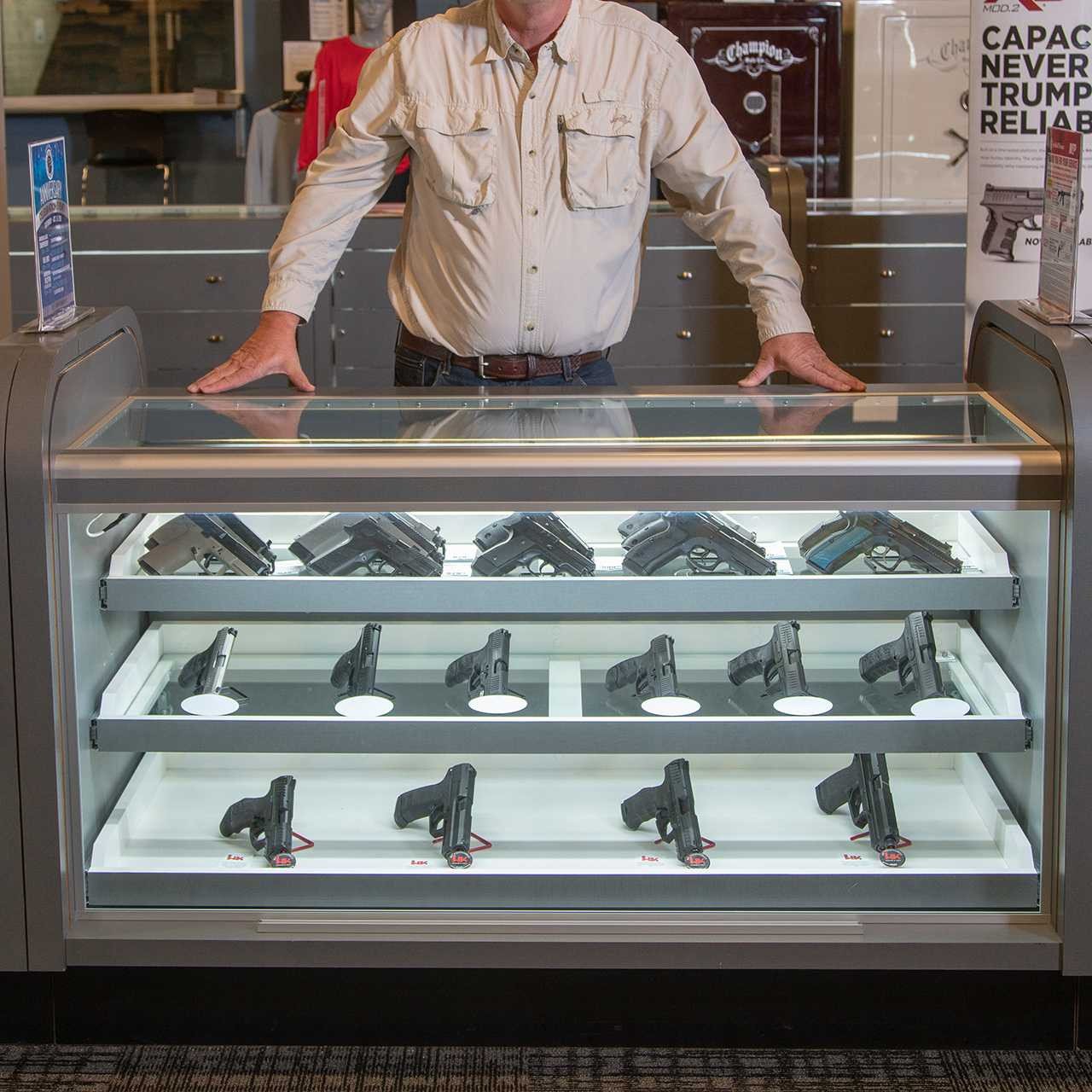
We help Pennsylvania gun shops, ranges, training centers, ammunition sellers, and accessories merchants prepare documentation, reduce avoidable declines, and explain their compliance controls clearly to processors.
pennsylvania firearms credit card processing high-risk merchants.
Pennsylvania firearms retailers, ranges, instructors, and online stores need payment processing that fits federal firearms rules, Pennsylvania procedures, card-brand scrutiny, and chargeback risk. High Wire Payments helps merchants organize underwriting, age controls, product labeling, fraud prevention, and compliant transaction flows before an acquiring bank reviews the account.
PA
Firearms Market
21+
Carry License Applicants
5 yrs
PA Carry License Term
SB 916
Theft Penalty Proposal
Pennsylvania firearms businesses operate in a large, diverse market that includes storefront gun shops in Philadelphia, Pittsburgh, Allentown, Erie, Reading, Scranton, Bethlehem, Lancaster, Harrisburg, Altoona, and York, plus rural sporting goods stores, training academies, gunsmiths, indoor ranges, and ecommerce catalog operations. Payment processing for this vertical is not the same as a standard retail merchant account. Underwriters evaluate the federal firearms license, ownership history, product categories, shipping practices, refund policy, chargeback exposure, website language, age controls, and whether firearms, ammunition, parts, accessories, classes, rentals, or range memberships are sold through the same business.
Pennsylvania’s legal environment also matters during underwriting. Research sources note that no license is required simply to possess rifles, shotguns, or handguns in Pennsylvania, while the Pennsylvania State Police explains that a person who is 21 years of age or older may apply for a License to Carry Firearms, and that license is valid for five years. For retail payments, the key issue is not only whether a product may be sold, but whether the merchant can show that the business follows background-check procedures, shipping restrictions, identity verification, and clear product labeling. Processors want to see that controls are documented, repeatable, and visible.
High Wire Payments builds Pennsylvania firearms payment programs for businesses that need card acceptance, ACH where appropriate, gateway support, virtual terminal access, recurring billing for memberships or training programs, and risk monitoring. The goal is not to bypass compliance or promise approval. The goal is to present a complete, accurate underwriting file and route transactions through providers that understand firearms retail. A Pennsylvania shop selling handguns, long guns, optics, ammunition, safes, knives, range time, and classes will usually need a more detailed review than a general merchandise store because the product mix, chargeback profile, and regulatory scrutiny are different.
A firearms merchant account review is stronger when the business can show its FFL, ownership records, processing history, sales channels, refund terms, website controls, product categories, and compliance procedures before the application is submitted.
Pennsylvania firearms payments are reviewed as high-risk
Firearms businesses are commonly treated as high-risk by acquiring banks because transactions can involve regulated products, high-ticket purchases, age-restricted items, chargeback disputes, online fraud attempts, and reputational review. A Pennsylvania firearms merchant may be perfectly lawful and still face declines from mainstream processors that do not support the category. The same issue affects related businesses such as shooting ranges, FFL transfer dealers, training academies, tactical gear retailers, gunsmiths, ammunition sellers, and businesses that sell accessories online. Underwriting focuses on whether the merchant is transparent about the full product mix and whether the payment flow matches the law and card-brand expectations.
The research also shows why security and loss prevention are part of the payments conversation. Pennsylvania Senate Bill 916 was highlighted by Sen. Frank Farry, Pennsylvania Attorney General Dave Sunday, Rep. Joe Hogan, and Middletown Township law enforcement at LugerMan Gun Shop in Langhorne after a May 2023 burglary. The proposal would expand heightened burglary penalties when the intent is theft of a firearm, with additional focus on organizers, co-conspirators, juveniles recruited into theft operations, and stolen firearms later used in crimes. For processors, this context reinforces why inventory controls, physical security, employee procedures, and fraud prevention can matter during review.
Pennsylvania also has established firearms operators that combine retail, range, education, and events. The Heritage Guild, for example, describes its Easton, Pennsylvania center as a firearms and archery sales and range operation with retail stores, new and previously owned firearms, collectable and antique firearms, training, pro-shop services, range access, classes, online waivers, and safety-video procedures. That type of mixed model can be attractive to customers, but it must be explained clearly to the processor. Card acceptance for a range membership, a beginner handgun class, a firearm transfer, and an accessory sale may involve different risk signals even when they occur at the same location.
What Pennsylvania firearms underwriters look for
A strong Pennsylvania firearms underwriting file starts with the federal firearms license and matching business information. The legal entity, trade name, address, owners, website, point-of-sale descriptors, and bank account should be consistent. If the merchant has multiple locations, such as one store in Lancaster and another in York, each location should be disclosed. If the business sells online and in person, both channels should be described. If the store offers transfers, gunsmithing, ammunition, suppressor-related accessories, range rentals, instruction, or memberships, those categories should be itemized rather than hidden inside generic retail language.
Underwriters also evaluate the website and product presentation. A firearms ecommerce site should have clear product names, accurate SKU-level descriptions, visible refund and cancellation terms, shipping rules, transfer procedures, age restrictions, and instructions explaining that regulated firearms must move through lawful channels. Product labeling matters because vague titles, misleading category names, or missing restrictions can create unnecessary compliance concerns. Accessories, ammunition, optics, magazines, holsters, cleaning supplies, safes, apparel, range bags, and training materials should be separated in a way that helps the processor understand what is being sold and how fulfillment occurs.
Chargebacks are another major concern. Firearms transactions may be higher value, involve special-order items, transfer delays, background-check timing, non-refundable deposits, shipping disputes, or customer misunderstandings about store policies. A Pennsylvania merchant in Pittsburgh or Harrisburg can reduce friction by using signed invoices, itemized receipts, clear restocking fees, delivery confirmations, customer acknowledgments, and documented transfer steps. High Wire Payments helps merchants review these procedures before submission so the underwriter can see that dispute prevention is part of the operating model, not an afterthought added only after chargebacks increase.
Research notes that Pennsylvania requires background checks on all handgun sales, including at gun shows, while that same source states the requirement is not extended to long guns. Merchants should consult qualified counsel and state authorities, but underwriting files should clearly explain how the business handles each product category.
Payment solutions for gun shops, ranges, and ecommerce sellers
High Wire Payments supports Pennsylvania firearms businesses with payment options designed for real operating needs. Storefront merchants often need EMV countertop terminals, PIN debit, contactless payments, tip-free retail settings, batch reporting, and next-day or standard funding depending on approval. Ranges may need point-of-sale payments for lane time, rentals, protective gear, targets, classes, memberships, and event deposits. Ecommerce sellers need a gateway, secure checkout, fraud tools, customer notifications, and a compliant way to manage online orders that must be completed through proper transfer procedures. Each setup should match the merchant’s sales model and risk profile.
For multi-category stores in Allentown, Erie, Reading, Scranton, Bethlehem, or Altoona, the payment system should help separate revenue streams and reporting. A store that sells firearms, ammunition, range services, gunsmithing, and training classes may need product-level reporting to understand which categories produce refunds, chargebacks, or manual reviews. A business that hosts classes may also need deposit payments, date-based cancellation terms, and a way to document attendance or rescheduling. The more clearly payment records connect to the customer agreement, the easier it is to respond to disputes and answer processor questions.
Online firearms merchants need special care because many general ecommerce gateways and platform payment providers restrict firearms, ammunition, gun parts, and related accessories. A site can look modern and still be incompatible with the processor’s acceptable-use policy. High Wire Payments reviews the checkout, product catalog, shipping language, refund policy, descriptor, fraud settings, and customer communications before recommending a processing route. Where ACH or invoicing is appropriate for certain B2B or training transactions, we evaluate that separately. The central principle is simple: the payment method should fit the product, the customer, and the compliance process.
Documents Pennsylvania firearms merchants should prepare
A complete application helps reduce delays and avoid mismatched expectations. Firearms underwriters usually ask for more than a basic merchant application because they need to understand ownership, licensing, fulfillment, sales history, and risk controls. Pennsylvania businesses should prepare documents before switching processors or launching a new store. If the business is new, a detailed business plan, vendor list, lease, inventory plan, and compliance workflow can help replace missing processing history. If the business is established, recent statements and chargeback reports will be important because prior volume and dispute trends influence pricing, reserve decisions, and approval conditions.
- Current federal firearms license with legal name, premises address, and expiration date visible
- Pennsylvania business registration or entity documents showing ownership and trade name
- Government identification for each principal owner listed on the application
- Recent bank letter or voided check matching the merchant’s settlement account
- Three to six months of prior processing statements, if available
- Chargeback and refund history, including explanations for any unusual spikes
- Website URL, ecommerce checkout screenshots, product categories, and shipping policy
- Written firearms transfer, pickup, cancellation, and restocking-fee procedures
- Age-verification, identity-check, and prohibited-customer screening workflow summary
- Security, inventory-control, employee-access, and incident-response procedures
These materials also help Pennsylvania merchants have a more productive pricing conversation. A processor may ask for a reserve, monthly volume cap, ticket-size limit, rolling review, or additional documentation if the file is incomplete. A well-organized merchant can respond with facts rather than estimates. For example, a range in Bethlehem can separate recurring membership charges from retail firearm sales; a shop in Philadelphia can show signed transfer acknowledgments; and an ecommerce seller serving Pennsylvania customers can show that regulated shipments are not treated like ordinary consumer goods. Clarity helps the acquiring bank evaluate the account on its actual risk.
Pennsylvania compliance issues that affect payment acceptance
Payment processing does not replace legal compliance, but processors do look for signs that the merchant understands applicable rules. Pennsylvania firearms businesses should keep current with federal ATF requirements, Pennsylvania State Police procedures, background-check obligations, local business licensing, zoning, range rules, and municipal expectations. Retailers should also watch proposed legislation. The research notes Senate Bill 916 regarding gun store burglaries and a separate 2026 proposal reported by abc27 that would create a six-month sales tax holiday on firearms and ammunition from July 1, 2026, through December 31, 2026. Proposed measures should not be treated as enacted law unless officially adopted.
Age controls should be practical and documented. Staff should understand when identification is checked, how restricted products are handled, who may pick up an item, and when a sale is cancelled. Ecommerce pages should not rely on vague statements buried in a footer. Product pages, checkout acknowledgments, and order emails should tell customers what to expect. This is especially important when a Pennsylvania customer purchases online from a store in Lancaster, Harrisburg, or York and expects immediate shipment or pickup. Payment disputes often arise when the customer did not understand the transfer, background-check, age, or restocking terms before paying.
Merchants should also maintain accurate descriptors and customer-service records. Many chargebacks begin because the cardholder does not recognize the billing name or cannot reach the store quickly. A firearms business should use a descriptor that matches the known trade name where possible, publish a real phone number and email address, respond to customer inquiries, and keep copies of receipts, signed agreements, range waivers, training confirmations, and delivery or transfer documentation. These steps do not eliminate chargebacks, but they improve the merchant’s ability to contest disputes and show the processor that the business is managed responsibly.
preparation checklist for Pennsylvania firearms payment processing
Before applying for a new firearms merchant account, Pennsylvania operators should review the business from the perspective of an acquiring bank. The checklist below is designed for gun shops, ranges, training centers, gunsmiths, ecommerce sellers, and mixed sporting-goods retailers that want to reduce avoidable underwriting questions.
- Confirm that the legal entity, FFL, lease, bank account, website, and merchant application all use consistent information
- List every product and service category, including firearms, ammunition, accessories, range time, rentals, classes, transfers, memberships, and repairs
- Separate in-store, online, phone-order, invoice, and recurring-payment activity by expected monthly volume and average ticket
- Review website product labeling for clear descriptions, restrictions, refund terms, transfer instructions, and customer acknowledgments
- Document age-verification, identity-check, background-check, pickup, cancellation, and denied-sale procedures
- Prepare recent processing statements and explain any chargeback, refund, fraud, or volume spikes
- Check that the billing descriptor, receipt footer, customer-service phone number, and refund policy are recognizable and consistent
- Use fraud tools such as AVS, CVV, velocity filters, manual review thresholds, and shipping-address review for ecommerce orders
- Train employees to save signed invoices, range waivers, class confirmations, transfer records, and customer communications for dispute response
- Schedule periodic reviews of chargeback ratios, refund rates, product mix, and processor notices so issues are addressed early
High Wire Payments can review your Pennsylvania firearms business before you submit an application, switch providers, or add ecommerce, range memberships, training deposits, or a second location. We will identify the documentation underwriters are likely to request, explain processing options, and help align payment acceptance with your compliance workflow. Approval is never guaranteed, but a complete and accurate file gives a firearms business the best chance of a practical review.
Pennsylvania firearms markets we support
We support firearms retailers, ranges, and related businesses across Pennsylvania, including dense urban markets, suburban corridors, college towns, and rural sporting communities.
How High Wire Payments supports Pennsylvania firearms merchants
Our process focuses on documentation, transaction controls, chargeback visibility, and processor-fit analysis for regulated firearms businesses.
FFL-centered underwriting package
We organize the federal firearms license, entity documents, owner information, website review, product categories, and sales-channel summary into a processor-ready file. This helps a Pennsylvania merchant explain firearms, ammunition, transfers, range services, and training without vague retail descriptions.
Chargeback ratio monitoring
We help merchants track chargeback counts, dollar exposure, refund patterns, and dispute reasons so issues are addressed before they become processor problems. Alerts can be structured around internal thresholds such as 0.7% to give the business time to correct customer-service, descriptor, or fulfillment issues.
Firearms ecommerce gateway review
We review product pages, checkout acknowledgments, age gates, shipping language, transfer instructions, refund terms, and restricted-product labeling. The goal is to reduce avoidable declines from gateways that are not aligned with firearms or ammunition sales.
Range and membership payment setup
For Pennsylvania ranges and training centers, we help separate lane fees, rentals, classes, memberships, and retail purchases in reporting. Clear transaction categories make reconciliation easier and support better dispute response when a customer challenges a deposit, class fee, or recurring membership.
Descriptor and receipt alignment
We review the billing descriptor, receipt footer, customer-service phone number, refund policy, and store name so cardholders recognize the charge. This is especially important for firearms businesses with one legal name, a different trade name, and multiple locations.
Reserve and volume-cap planning
If an acquiring bank requests a rolling reserve, ticket cap, or monthly volume limit, we help the merchant understand the operational impact. We also help prepare volume forecasts for new stores, ecommerce launches, and second-location expansion in Pennsylvania.
Can a Pennsylvania gun shop accept credit cards for firearms?
Yes, many firearms businesses accept cards, but they usually need a processor that supports the category. Mainstream payment platforms may restrict firearms, ammunition, or related accessories, so the merchant should disclose the full product mix during underwriting.
Do Pennsylvania firearms retailers need a separate state dealer license for payment processing?
Payment processors primarily look for the federal firearms license and accurate business documentation. Pennsylvania requirements should be reviewed with qualified counsel and state authorities, but underwriters will still expect clear evidence of lawful operations, background-check procedures, and compliant sales practices.
What Pennsylvania firearms laws are relevant to underwriters?
Underwriters may consider whether the merchant understands Pennsylvania procedures for firearms sales and customer eligibility. Research sources note that Pennsylvania requires background checks on all handgun sales, including at gun shows, and the Pennsylvania State Police states that License to Carry Firearms applicants must be 21 or older and that the license is valid for five years.
Can a Pennsylvania shooting range process memberships and class deposits?
Yes, if the processing setup supports the business model. Ranges should clearly document membership terms, cancellation rules, waiver procedures, training schedules, refund policies, and how retail sales are separated from range or instruction revenue.
Will a processor approve a Pennsylvania firearms ecommerce website?
Approval is not guaranteed, but a firearms ecommerce site is stronger when it has clear product labeling, transfer instructions, age controls, shipping restrictions, refund terms, and customer-service contact information. The gateway and processor must also permit the products being sold.
What documents should a Pennsylvania FFL prepare before applying?
Prepare the FFL, business registration, owner IDs, bank documentation, processing statements, chargeback history, product category list, website URL, refund policy, shipping policy, and written age-control and transfer procedures. A complete file reduces follow-up questions.
Are ammunition sales treated differently from firearm sales by processors?
They can be. Ammunition is often reviewed as a restricted or high-risk product category, especially online, so merchants should disclose it separately and show clear shipping, age, and customer-eligibility controls.
How do chargebacks affect a Pennsylvania firearms merchant account?
High chargeback ratios can lead to higher reserves, tighter volume caps, processor warnings, or account termination. Firearms merchants should keep signed invoices, acknowledgments, delivery records, transfer documentation, class confirmations, and customer communications for dispute response.
Does Pennsylvania Senate Bill 916 change payment processing requirements?
Senate Bill 916 was highlighted as proposed legislation to increase penalties for gun store burglaries and related firearm theft activity. It does not by itself create a payment-processing requirement, but it underscores why security, inventory control, and incident procedures matter to firearms businesses.
Can High Wire Payments help firearms businesses in Philadelphia, Pittsburgh, and other PA cities?
Yes. High Wire Payments works with Pennsylvania firearms merchants across markets such as Philadelphia, Pittsburgh, Allentown, Erie, Reading, Scranton, Bethlehem, Lancaster, Harrisburg, Altoona, and York, with solutions based on the merchant’s products, sales channels, and underwriting profile.
Prepare your Pennsylvania firearms merchant account
High Wire Payments can review your FFL documentation, website, product categories, chargeback history, age controls, and payment flow before you apply. Get a compliance-aware processing review for your Pennsylvania gun shop, range, training center, or firearms ecommerce business.