Payment processing fees for high-risk merchants.
Explore the various fees associated with payment processing to effectively manage your business’s expenses.
21+
Years in Business
50%
Average Cost Savings
100%
Dedicated Support
85%
Client Retention Rate
What are payment processing fees?
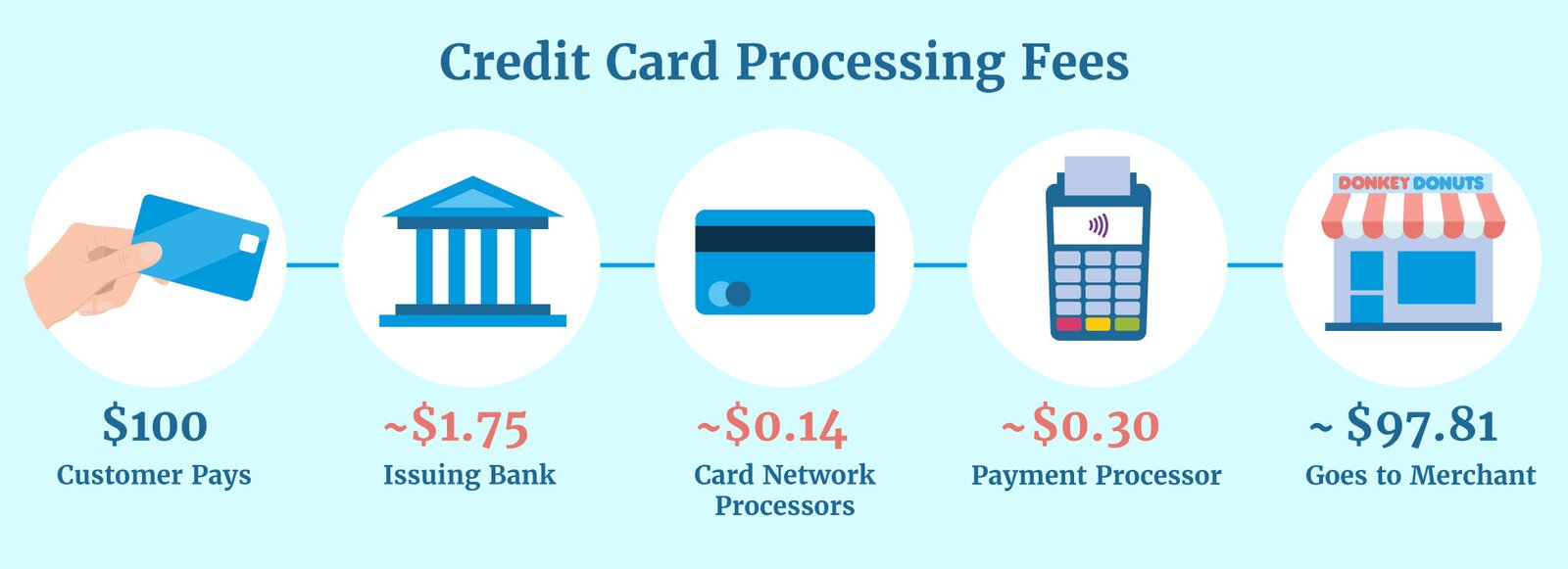
Payment processing fees include all costs associated with processing credit and debit card transactions for your business. Understanding how these fees work is crucial, especially for high-risk merchants who may face different structures and additional costs.
Fees vary based on several factors, including the type of card used and the merchant’s transaction history. Components of these fees include:
- Interchange fees: A percentage of each transaction paid to the card-issuing bank.
- Processor markup: An additional fee charged by the payment processor, which can be a set percentage or a flat fee.
- Transaction fees: Fees charged for each individual transaction processed through the card network.
- Gateway fees: Costs associated with using a payment gateway, especially important for online transactions.
- Monthly fees: Regular charges for maintaining the merchant account.
Understanding interchange fees
Interchange fees are often the largest portion of payment processing costs. These are charged by the card networks like Visa or Mastercard and are paid to the cardholder’s bank. Interchange fees typically range from 1% to 3% of the transaction amount, depending on the card type and transaction risk.
Processor markup
Processor markup is how payment processors make their profit and can vary widely depending on your negotiation power and business type. For high-risk merchants, processor markups may be higher due to the increased risk of chargebacks and fraud.
Transaction fees
Transaction fees are charged every time a transaction occurs and may be charged as a flat rate per transaction or as a percentage of the transaction value. Understanding this fee structure allows businesses to estimate their expected costs accurately.
Gateway fees
For online payments, a payment gateway facilitates the processing of transactions securely. This service often incurs monthly fees that should be factored into overall transaction costs. Different gateways may offer various pricing structures, making it essential to evaluate options based on your specific needs.
Monthly fees
Most payment processors charge a monthly account maintenance fee, which can vary widely. These fees may include the costs of customer service, account management, and access to detailed analytics related to transactions.
Reserves
High-risk merchants may be subject to reserve requirements, where a certain percentage of total sales is held back to cover potential chargebacks. This further impacts cash flow and should be carefully considered when choosing a processing solution.
Frequently asked questions about payment processing fees
A chargeback occurs when a customer disputes a transaction, resulting in the reversal of that charge. Businesses should manage chargebacks efficiently to avoid fees.
Businesses can negotiate better rates by demonstrating transaction histories, comparing providers, and understanding the full fee structures involved.
High-risk categories are subject to higher fees due to the greater likelihood of chargebacks, resulting in more stringent fees imposed by processors.
Why trust High Wire Payments?
High Wire Payments is dedicated to providing robust payment processing solutions tailored for high-risk merchants. Here’s why you can trust us:
Expert Support
Our team provides dedicated support for all your payment processing needs.
Transparent Pricing
We offer a clear pricing structure with no hidden charges.
Tailored Solutions
Customized solutions that cater specifically to high-risk merchants.
Continuous Innovation
We leverage the latest technology to ensure secure, fast transactions.
What are interchange fees?
Interchange fees are the fees paid to the cardholder’s bank and are a crucial part of the total cost of transaction processing.
Can I negotiate processing fees?
Yes, businesses should always explore negotiation opportunities, especially based on transaction volume.
What types of businesses are considered high-risk?
High-risk businesses may include those in industries like travel, adult services, and nutraceuticals.
How can I avoid chargebacks?
Implementing strong customer service practices and clear communication can help reduce chargebacks.
Ready to streamline your payment processes?
Get in touch with our payment processing experts today and discover tailored solutions for managing fees effectively.
Apply Now →