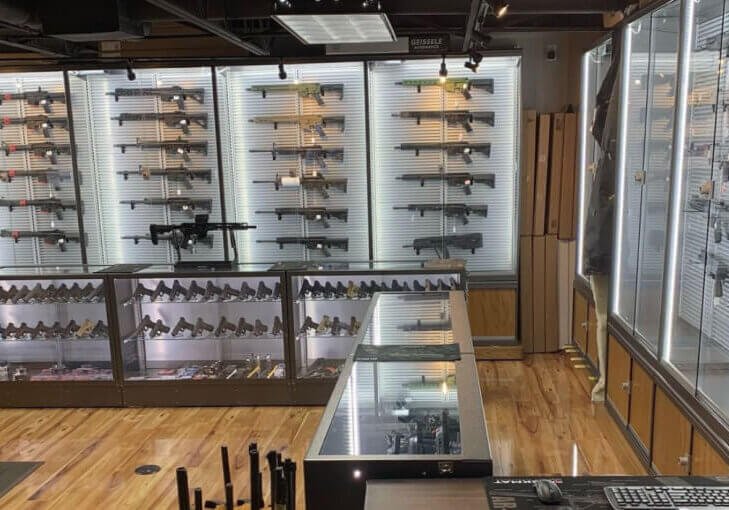
Underwriters look for a valid FFL, clear transfer procedures, compliant product pages, ammunition controls, refund policies, and evidence that online firearm orders ship only to licensed dealers.
north carolina firearms credit card processing high-risk merchants.
North Carolina gun stores, FFL dealers, ammunition sellers, ranges, and firearms accessory merchants need payment processing built around underwriting, product controls, chargeback prevention, and documented compliance. High Wire Payments reviews firearms businesses with attention to federal transfer rules, North Carolina carry laws, ecommerce restrictions, and card network risk expectations.
NC
Firearms Market
2023
Pistol Permit Repeal
NICS
Dealer Background Checks
21+
CHP Eligibility
North Carolina firearms credit card processing is a specialized underwriting category for gun stores, FFL dealers, ammunition retailers, gunsmiths, shooting ranges, training providers, optics sellers, and ecommerce firearms businesses. Merchants in Charlotte, Raleigh, Greensboro, Durham, Winston-Salem, Fayetteville, Cary, Wilmington, High Point, Greenville, Asheville, and Concord operate in a market where customer demand can be steady, but payment acceptance is often more difficult than ordinary retail. Banks and processors review firearms merchants closely because transactions may involve regulated products, age-sensitive sales, shipping restrictions, ATF transfer rules, card-not-present fraud exposure, and politically sensitive acquiring policies.
North Carolina is often described as a gun-friendly state, but that does not make firearms payment processing simple. Research for the state shows that open carry is generally legal without a permit for people who are at least 18 and can lawfully possess a firearm. Concealed carry remains permit-based: North Carolina requires a Concealed Handgun Permit or a recognized out-of-state permit for concealed carry, and the applicant must generally be 21. The state also repealed its long-standing pistol purchase permit system in late 2023, meaning dealer sales now rely on federal NICS background checks rather than the former sheriff-issued purchase permit process. Payment underwriters expect merchants to understand these distinctions and explain how lawful sales are handled.
High Wire Payments approaches firearms and ammunition merchant accounts as a compliance documentation project, not a quick plug-in. A Charlotte gun shop with in-store POS traffic, a Raleigh FFL transferring online firearm orders, a Wilmington ammunition ecommerce site, and an Asheville training range all present different risk profiles. The goal is to match the merchant with processing tools and acquiring relationships that understand the category, while building a file that shows lawful operations, transparent product descriptions, responsible age controls, accurate labeling, chargeback management, and clear customer communication.
The late-2023 repeal of North Carolina’s pistol purchase permit requirement did not remove federal dealer obligations. FFL dealers still need proper transfer procedures, NICS or qualifying permit handling where applicable, shipping controls, and records that support lawful sales.
why north carolina firearms merchants are reviewed as high risk
Firearms merchants are usually classified as high risk because the acquiring bank must evaluate more than ordinary product-market fit. Underwriters review whether the business sells firearms, ammunition, magazines, optics, suppressor-related accessories, parts, tactical gear, training, range memberships, gunsmithing services, or a mix of these categories. They also review whether the merchant sells in person only, online only, or through a hybrid model. A gun counter in Greensboro with swipe and dip transactions may present less card-not-present fraud exposure than an ecommerce ammunition site shipping from Fayetteville, but both must show that product and customer controls are in place.
The North Carolina market includes established retail examples that show how broad the category can be. Carolina Caliber Company in Winterville describes itself as Eastern North Carolina’s outdoor shooting sports store and highlights rifles, handguns, shotguns, ammunition, optics, scopes, sights, holsters, tactical gear, reloading supplies, firearm cleaning equipment, knives, and hearing protection. The company also describes more than 60 years of industry experience, third-generation family ownership, and services such as appraising, buying, selling, trading, and repairing firearms. Those details are exactly the type of operational context an underwriter wants to understand because inventory mix affects risk classification, website review, and documentation requests.
Another North Carolina example, Carolina Gun Runners, emphasizes high-end firearms and accessories, knowledgeable counter support, a Silencer Shop kiosk for SBR and suppressor processing, and range-related membership amenities. That type of model may combine retail sales, NFA-adjacent customer workflows, accessories, training, and range services. A processor will want to know which products are sold directly, which products require third-party or federal processing, which transactions are deposits versus final purchases, and how refunds are handled if a transfer is delayed, denied, or canceled.
north carolina laws and payment risk considerations
Payment processing is not legal advice, but it must be built around accurate legal context. North Carolina no longer requires the former sheriff-issued pistol purchase permit for handgun purchases as of the late-2023 repeal referenced in the research. For dealer sales, background checks are handled through the FBI NICS system unless an applicable exception is recognized under current federal guidance. That matters for ecommerce and in-store merchants because payment approval does not equal firearm transfer approval. A customer may pay for a firearm online, but the firearm still has to be shipped to or transferred through a licensed FFL, and the actual transfer must satisfy the applicable background check and identification requirements.
Open carry in North Carolina is generally legal without a permit for people who are at least 18 and not otherwise prohibited, but concealed carry is still licensed-only. North Carolina Concealed Handgun Permits are issued through the sheriff’s office in the county of residence, with research noting approximate fees of $90 for a new permit, $75 for renewals, a 45-day issue-or-deny period after required documentation is received, and a five-year validity period. These facts are relevant to customer questions, but they do not change payment underwriting by themselves. Underwriters focus on whether the merchant’s sales process follows federal and state obligations, not on whether the end customer may lawfully carry after the sale.
North Carolina also has sensitive-place rules that can affect training, event, and range-adjacent businesses. Research identifies restrictions involving schools, government buildings, the State Capitol grounds, and certain assemblies such as parades or funerals. It also notes that counties may regulate the display of firearms on public roads, sidewalks, alleys, or other public property. A Durham firearms instructor, Winston-Salem event vendor, or Asheville range operator should keep local policies, event rules, and municipal requirements separate from the card acceptance file, but the policies should be consistent. If a website advertises classes, transfers, rentals, or off-site events, the terms should be clear enough that an underwriter can understand what is being sold and where the service occurs.
A card authorization only confirms a payment event. It does not confirm that a firearm may be transferred. Firearms merchants should separate checkout language from FFL transfer, NICS, denial, return, storage, and restocking policies.
firearms ecommerce, ammunition sales, and card-not-present controls
Ecommerce firearms processing is one of the most scrutinized areas in the category. A North Carolina merchant that accepts online orders for firearms should clearly state that firearms ship only to licensed FFL dealers, not directly to the consumer. The checkout path should collect the receiving FFL information, explain when the receiving dealer must send a license copy, and disclose that the buyer must complete the transfer process with the receiving dealer. Product pages should avoid misleading statements and should include accurate manufacturer names, model numbers, calibers, barrel lengths where relevant, magazine capacity, condition, and any state-specific shipping restrictions the merchant applies.
Ammunition payment processing has a different risk profile. Ammunition sellers often face higher chargeback and shipping-dispute exposure because customers may order heavy items, time-sensitive inventory, or products that cannot be returned once shipped. A Wilmington ammunition seller, a Fayetteville tactical retailer, or a Greenville outdoor sports ecommerce business should use age confirmation, shipping address screening, inventory accuracy, clear hazmat or carrier disclosures where applicable, and detailed return policies. If the merchant sells reloading supplies or components, the website should distinguish those items from completed ammunition and identify any restricted shipping categories.
Card-not-present controls are especially important for firearms and ammunition because friendly fraud, stolen-card purchases, and delivery disputes can affect processing stability. High Wire Payments evaluates whether the merchant uses address verification, CVV checks, velocity limits, fraud scoring, manual review for high-dollar orders, signature requirements where appropriate, and documented customer communication. The processor file should show how the merchant handles mismatched billing and shipping information, first-time customers placing unusually large orders, repeated declined attempts, and orders that involve firearms plus high-value optics or accessories.
documents north carolina ffl dealers should prepare
A strong firearms merchant application is built before the first underwriting question arrives. North Carolina FFL dealers and ammunition merchants should prepare a complete package showing ownership, licensing, product controls, fulfillment process, website compliance, and chargeback readiness. Underwriters may ask for more information than a standard retail account because the acquiring bank must understand the business model and confirm that the merchant is not selling prohibited products, misrepresenting restricted items, or using vague descriptors that confuse customers.
- Current Federal Firearms License copy with the legal name and premises address matching the application where applicable
- North Carolina business registration or formation documents and any assumed-name documentation used for the store or website
- Government-issued identification for each principal owner and beneficial ownership information
- Recent business bank statements showing deposit history, reserves, average balances, and account ownership
- Processing statements from the last three to six months if the business already accepts cards
- Website URL, product category list, checkout screenshots, and examples of firearms, ammunition, optics, accessories, and service pages
- Written FFL transfer policy explaining shipping to receiving dealers, customer identification, NICS handling, denial outcomes, storage fees, and restocking fees
- Ammunition age-control and shipping policy, including customer eligibility language and restricted destination disclosures
- Refund, cancellation, chargeback, warranty, and return policies written in plain language for online and in-store transactions
- Supplier invoices, distributor relationships, or manufacturer authorization documentation for major inventory categories
For a Cary gun store or Concord FFL, the best documentation is consistent across the application, website, receipts, and customer terms. If the legal entity name differs from the storefront name, the processor needs to see the connection. If the website sells accessories nationally but firearms are fulfilled through dealer transfers, that should be described clearly. If the merchant accepts deposits for special orders, suppressor-related processes, gunsmithing, or training classes, the timing of the payment and the refund policy should be documented.
chargebacks, reserves, and transaction monitoring for firearms merchants
Chargebacks are a central reason firearms and ammunition merchants are evaluated carefully. A customer may dispute a charge because a transfer was delayed, a background check was denied, ammunition arrived late, the wrong magazine or optic was ordered, a special-order firearm was backordered, or the customer misunderstood a restocking fee. In many cases the merchant may have acted lawfully, but the processor still sees the dispute as financial risk. The best defense is a transaction trail that includes product descriptions, signed receipts, delivery confirmations, customer acknowledgments, FFL transfer terms, and clear communication before shipment.
High Wire Payments helps firearms merchants review chargeback ratios, dispute reason codes, refund timing, and reserve expectations before the account becomes unstable. Some acquiring banks may require a rolling reserve, volume cap, delayed funding, or additional review for ecommerce ammunition, high-ticket optics, or new FFL businesses. Those requirements are not punishments; they are risk controls. A merchant in Raleigh with years of processing history and low disputes may be reviewed differently from a new online ammunition seller in High Point with no card history and nationwide shipping.
Descriptor clarity is also important. The business name that appears on the cardholder’s statement should be recognizable to the customer. If a firearms business operates under a holding company name, a different range name, and a separate ecommerce domain, disputes can rise simply because customers do not recognize the charge. Receipts, order confirmations, email templates, and statement descriptors should align. That operational detail is small, but it can reduce preventable chargebacks and improve the account narrative during underwriting review.
north carolina firearms payment preparation checklist
Before applying for a firearms merchant account, North Carolina operators should prepare the business as if an acquiring bank will review every public-facing statement. The checklist below is designed for retail gun stores, FFL transfer dealers, ecommerce ammunition sellers, gunsmiths, training businesses, and range operators that want a cleaner underwriting process.
- Confirm that the legal entity, DBA, FFL, bank account, website footer, and customer receipts use consistent business information
- Document whether the business sells firearms, ammunition, suppressor-related items, optics, parts, accessories, training, range memberships, gunsmithing, or transfers
- Add clear website language stating that firearms ship only to licensed FFL dealers and that payment approval does not guarantee transfer approval
- Publish refund, denial, cancellation, storage, restocking, special-order, and transfer-fee policies before checkout
- Use age confirmation and eligibility language for ammunition and other age-sensitive products
- Maintain accurate product labeling with caliber, model, condition, manufacturer, capacity, and restriction notes where relevant
- Enable AVS, CVV, fraud scoring, velocity limits, manual review for high-value orders, and documented approval workflows
- Keep supplier invoices and distributor records available for inventory categories that underwriters may question
- Track chargebacks monthly and create alerts before ratios approach card network thresholds or acquirer-specific limits
- Prepare recent bank statements, processing statements, ownership documents, FFL records, website screenshots, and policies in one underwriting folder
High Wire Payments can review a North Carolina firearms merchant account package before submission, identify missing documents, and help position the business accurately for underwriting. The review does not guarantee approval, but it can reduce avoidable delays and help gun stores, FFL dealers, ammunition sellers, and related businesses present a clear, compliance-aware payment profile.
North Carolina firearms payment markets
High Wire Payments supports firearms and ammunition merchants across North Carolina, including retail, ecommerce, transfer, range, and accessory models in major metro and regional markets.
Firearms-specific payment support for North Carolina operators
High Wire Payments focuses on documentation, risk controls, and processing structure for regulated firearms and ammunition businesses.
FFL documentation review
We review the FFL, business registration, DBA, bank account, website footer, and application data for consistency before underwriting. This helps prevent delays caused by mismatched legal names, premises addresses, or ownership details.
Firearm transfer policy mapping
We help merchants present the difference between payment approval and firearm transfer approval. The review covers FFL-to-FFL shipping language, NICS outcomes, denial procedures, storage fees, restocking fees, and customer acknowledgments.
Ammunition checkout controls
High Wire Payments reviews age-confirmation language, restricted-destination notices, shipping disclosures, and return policies for ammunition sellers. The goal is to reduce disputes and show underwriters that the merchant controls regulated, age-sensitive products.
Chargeback ratio monitoring
We help merchants monitor disputes by reason code, transaction type, and product category, with early alerts before chargeback levels become an account stability issue. Firearms merchants can use the reporting to identify preventable disputes tied to shipping, descriptors, returns, or transfer delays.
Ecommerce fraud controls
We review AVS, CVV, velocity limits, high-ticket manual review, billing-shipping mismatch procedures, and order confirmation language. These controls are especially important for online ammunition, optics, and accessory sales with card-not-present exposure.
Retail and range payment structure
For stores and ranges, we help separate POS sales, memberships, training deposits, gunsmithing invoices, and ecommerce activity where appropriate. Clear transaction categories can make reporting cleaner and improve the merchant’s underwriting narrative.
Can North Carolina gun stores get firearms credit card processing?
Yes, many North Carolina gun stores can apply for firearms credit card processing, but the account is reviewed as high risk. Underwriters usually request the FFL, business documents, product list, website policies, bank statements, and chargeback history before deciding.
Does the 2023 North Carolina pistol purchase permit repeal make underwriting easier?
The late-2023 repeal removed the former state pistol purchase permit requirement, but it did not remove federal dealer obligations. Payment underwriters still expect FFL dealers to document NICS handling, transfer policies, denial procedures, and lawful fulfillment.
Do North Carolina FFL dealers need a separate payment account for online firearm sales?
Not always, but ecommerce firearm sales should be disclosed clearly during underwriting. A merchant that sells firearms online, ships to receiving FFLs, and also operates a retail counter may need gateway settings, product controls, and policies that differ from standard in-store POS processing.
Can a North Carolina ammunition seller accept credit cards online?
Ammunition merchants can apply for card processing, but underwriters will closely review age controls, shipping policies, product descriptions, fraud tools, and return terms. Heavy shipments, restricted destinations, and card-not-present disputes make ammunition a higher-risk category.
What documents do North Carolina firearms merchants need for underwriting?
Typical documents include the FFL, North Carolina business registration, owner ID, bank statements, prior processing statements, website screenshots, product category list, supplier invoices, transfer policy, refund policy, and ammunition age-control policy. New merchants may also need a written explanation of projected volume.
Can a Charlotte or Raleigh gun store process range memberships and firearm sales on the same account?
It depends on the acquirer and the way the business is structured. Underwriters may want to distinguish retail firearms, ammunition, memberships, training deposits, and gunsmithing services so chargebacks and transaction types can be monitored accurately.
Is open carry legality in North Carolina relevant to merchant processing?
Open carry is generally legal in North Carolina without a permit for lawful possessors who are at least 18, but that fact does not replace merchant compliance. Processors are more focused on lawful sales, transfer procedures, customer eligibility controls, and dispute risk.
Does North Carolina concealed carry require a permit?
Yes. Research indicates that North Carolina remains a licensed concealed carry state and requires a North Carolina Concealed Handgun Permit or recognized out-of-state permit for concealed carry. This is separate from the merchant’s payment account, but firearms businesses should avoid confusing carry-permit guidance with sales or transfer requirements.
Can merchants sell suppressor-related items or SBR services with card processing?
Some merchants sell accessories or facilitate suppressor and SBR-related workflows, such as businesses using a Silencer Shop kiosk model, but the activity must be fully disclosed. Underwriters will want to understand what is sold, what requires federal processing, when payment is collected, and how refunds are handled if approval is delayed or denied.
Will High Wire Payments guarantee approval for a North Carolina firearms merchant?
No. Firearms accounts require underwriting, and approval depends on the merchant’s documentation, product mix, processing history, policies, risk controls, and the acquiring bank’s current guidelines. High Wire Payments helps prepare and present the file, but does not promise guaranteed approval.
Prepare your North Carolina firearms merchant account
If your business sells firearms, ammunition, accessories, transfers, range memberships, training, or gunsmithing services, High Wire Payments can review your payment profile before underwriting. Share your FFL status, website, product categories, processing history, and policies for a practical compliance review.