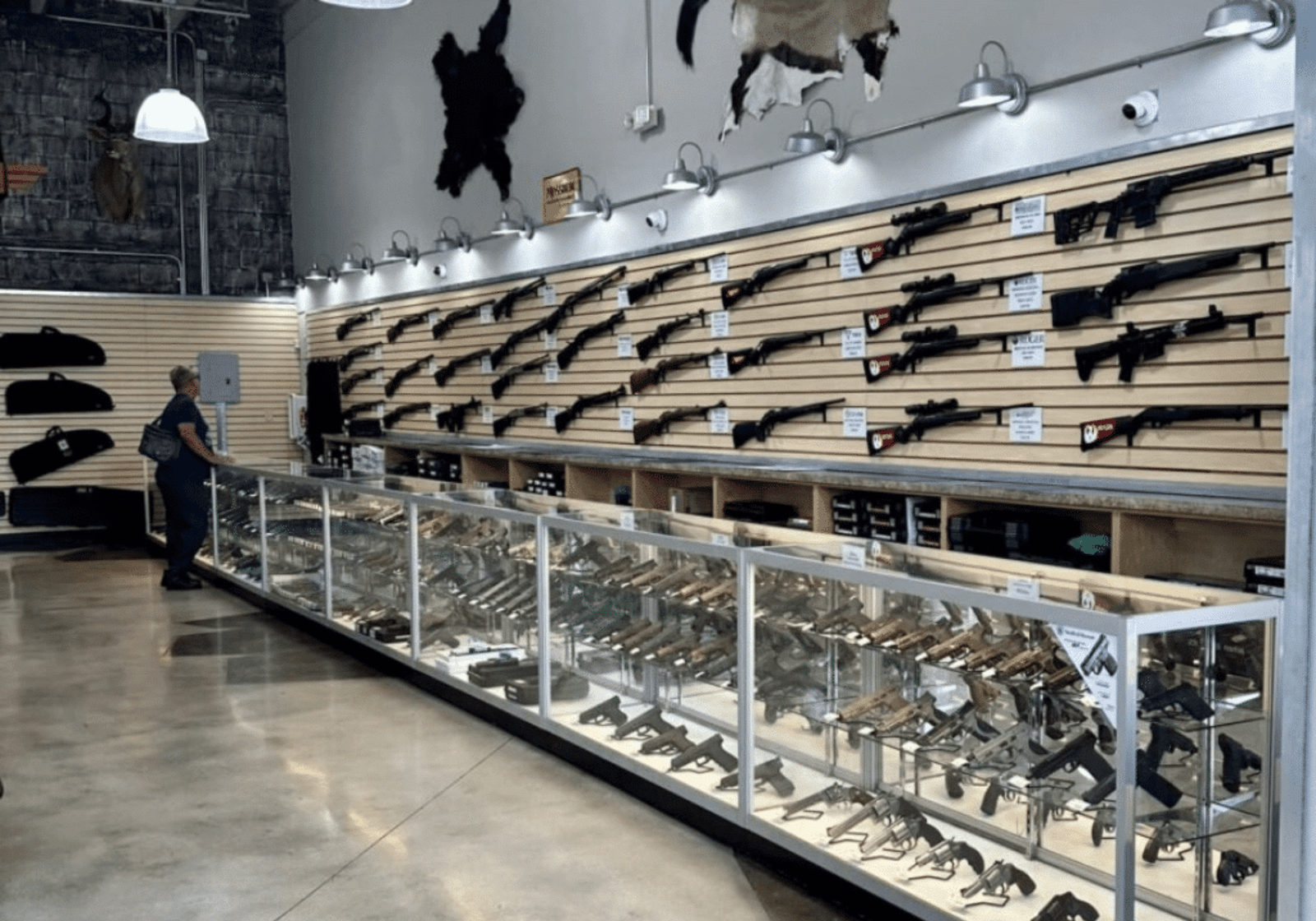
new mexico firearms credit card processing high-risk merchants.
Firearms retailers in New Mexico need payment processing that understands FFL documentation, background-check workflows, chargeback exposure, age controls, product labeling, and changing state rules. High Wire Payments helps gun shops, ranges, online accessory sellers, and ammunition merchants prepare cleaner underwriting files without promising approval.
NM
state review
7-day
waiting period
FFL
core document
21+
key age control
New Mexico firearms credit card processing requires more preparation than a standard retail account, especially for gun shops, ranges, ammunition sellers, gunsmiths, and online firearm-accessory merchants operating in Albuquerque, Las Cruces, Rio Rancho, Santa Fe, Roswell, Farmington, Hobbs, and Clovis. Even when a business is properly licensed, firearms transactions are commonly treated as high-risk because underwriters must evaluate federal firearms licensing, card-not-present fraud, shipping limitations, age controls, chargebacks, product descriptions, and the merchant’s ability to document lawful sales practices.
The New Mexico regulatory environment is also active. Research sources note that New Mexico requires background checks for all firearm purchases at the point of sale, has an Extreme Risk law, requires a concealed carry permit with training that includes firing an actual gun, has enacted secure storage and child access prevention requirements, and prohibits auto sears. The New Mexico Department of Public Safety has also identified a mandatory 7-day waiting period for firearm purchases under Section 30-7-7.3. These facts matter to payment underwriting because a processor may ask how the merchant documents delays, cancellations, customer communications, and refunds.
Firearms merchants should also watch pending legislative activity without treating proposals as final law. In February 2026, KOAT reported that Senate Bill 17, the Stop Illegal Gun Trade and Extremely Dangerous Weapons Act, passed the New Mexico Senate and was heavily debated. The proposal was described as limiting sales of most modern semiautomatic rifles, limiting magazine capacity to 10 rounds, and adding dealer rules such as in-store cameras with recordings retained for at least two years, employees aged 21 or older, and a state-created training program. Research also referenced New Mexico’s 2026 gun control push as stalled, which is why operators should verify current requirements before changing inventory or compliance procedures.
A payment application is not a legal opinion. Before submitting a firearms merchant account, confirm current New Mexico requirements with counsel, ATF guidance, and local authorities, then align your checkout, refund, shipping, and product-labeling practices with what your business actually sells.
why firearms merchants in New Mexico are reviewed as high-risk
Firearms businesses can be legitimate, well-run, and fully licensed while still receiving high-risk treatment from acquiring banks. The reason is not simply the product category. It is the combination of regulated goods, public-safety concerns, age-sensitive purchases, potential chargebacks, card-not-present exposure, and reputational sensitivity for banks and card networks. A New Mexico shop selling hunting rifles in Farmington may have a different risk profile than an eCommerce merchant shipping accessories from Albuquerque, but both need to explain what they sell, where they sell it, and how restricted products are controlled.
Underwriters typically look for a clean separation between firearms, ammunition, regulated parts, non-regulated accessories, range fees, training, gunsmithing, and general outdoor merchandise. If product labels are vague, a bank may not understand whether a SKU is a firearm, a frame or receiver, a magazine, ammunition, optics, holsters, cleaning supplies, apparel, or a class fee. Clear product labeling helps reduce underwriting friction and can also improve dispute responses because the receipt, invoice, shipping record, and customer acknowledgment tell the same story.
Chargeback risk is another major issue. Firearms orders often involve higher average tickets, special-order items, deposits, layaway programs, delayed transfers, waiting periods, or third-party FFL transfers. A customer may dispute a transaction if a background check is delayed, if a transfer is denied, if a restocking fee is not understood, or if an online accessory shipment is delayed. High Wire Payments focuses on helping New Mexico merchants present policies, descriptors, order logs, and evidence workflows in a way that makes underwriting review more complete.
New Mexico firearm rules that affect payment operations
Payment processing does not replace firearms compliance, but the two are connected. New Mexico’s point-of-sale background-check requirement for all firearms means a merchant’s transaction timing, sales receipt, and customer communications should be consistent with its transfer process. If the card is charged before a transfer is complete, the store should be able to explain when funds are collected, what happens if the sale cannot proceed, and whether deposits, cancellation fees, or restocking fees apply. This is especially important for stores in Santa Fe, Rio Rancho, and Las Cruces that serve both local and traveling customers.
The mandatory 7-day waiting period identified by the New Mexico Department of Public Safety under Section 30-7-7.3 should also be reflected in customer-facing procedures. A firearms retailer should not let a checkout page imply immediate delivery or same-day transfer if state law requires a waiting period. For in-store sales, signage and receipts should make timing clear. For online reservations or special orders, the website should distinguish between payment authorization, inventory hold, background-check process, waiting-period timeline, and final transfer at an eligible location.
New Mexico is also described in the research as having no current laws regulating or restricting assault weapons, large capacity magazines, bump stocks, or personally made or unserialized firearms, while separate sources show active debate over future restrictions. Underwriters may ask how a merchant monitors state-level changes, removes restricted SKUs if needed, and communicates inventory changes to customers. A practical answer is not political; it is operational. Maintain a written compliance calendar, document who reviews legal updates, and make sure website categories, product labels, and fulfillment rules can be updated quickly.
Standard retail processors often evaluate only business identity, volume, and basic fraud indicators. A firearms-ready review also considers FFL status, ATF-facing procedures, New Mexico waiting-period workflows, background-check documentation, shipping limits, age controls, product labeling, chargeback evidence, and whether firearm, ammunition, accessory, range, and training revenue are clearly separated.
age controls, product labeling, and online checkout safeguards
Age controls should be visible in both retail and eCommerce workflows. Federal firearm sales by FFLs generally require minimum ages that depend on the product type, including 21 for handguns and 18 for many long guns, while ammunition categories and state rules may require additional controls. New Mexico research also noted that SB 17, if enacted as described, would require gun store employees to be 21 or older and complete a state-created training program. Because proposals can change, merchants should maintain current written procedures rather than relying on memory at the counter.
Product labeling is equally important. A firearms merchant should not use unclear descriptions such as “part,” “kit,” “gear,” or “miscellaneous item” when the product is a regulated component, ammunition, magazine, or serialized firearm. Payment underwriters, fraud teams, and chargeback analysts need to understand what was sold. Strong SKU labels can include category, manufacturer, model, caliber or gauge when relevant, serial-number handling procedures for firearms, and whether the item is shipped directly, transferred through an FFL, or picked up in store after required steps are complete.
Online checkout needs additional controls because card-not-present transactions carry higher fraud and dispute exposure. Firearms should not be described as shipping directly to an end consumer if the transaction requires FFL transfer. Ammunition and accessories should have clear shipping restrictions, adult-signature practices when applicable, and cancellation language. Merchants in Roswell, Hobbs, and Clovis should also consider rural delivery realities, because shipping delays, address mismatches, and customer confusion can quickly become chargebacks if the merchant cannot show order confirmations, tracking, and signed policy acceptance.
documents New Mexico firearms merchants should prepare before applying
A complete underwriting package reduces back-and-forth and helps the acquiring bank understand the business before it reviews transaction history. The goal is not to overwhelm the processor with unrelated files. The goal is to show that the merchant is licensed, transparent, operationally mature, and capable of handling restricted-product sales in a controlled way. If the business has multiple locations or sells across several channels, the package should explain which activity occurs in Albuquerque, which inventory is fulfilled from another New Mexico city, and which items are online-only accessories.
- Current Federal Firearms License with the legal entity name and premises address matching the application
- Government-issued owner identification and ownership information for all required beneficial owners
- New Mexico business registration or formation records, including DBA documentation if used
- Recent processing statements or bank statements showing volume, refunds, and chargeback activity
- Written firearm transfer workflow that addresses background checks and the 7-day waiting period under Section 30-7-7.3
- Refund, cancellation, layaway, special-order, restocking-fee, and denied-transfer policies
- Website URLs, checkout screenshots, product categories, and examples of firearm, ammunition, accessory, range, and training SKUs
- Shipping and fulfillment policy, including FFL-transfer language and any adult-signature or restricted-destination controls
- Chargeback response samples, customer receipts, order confirmations, and evidence templates
- Store security summary, including camera, safe, alarm, access-control, and record-retention practices where applicable
If a business is new, it may not have processing history. In that case, the underwriting file should be even clearer about expected monthly volume, average ticket, highest ticket, product mix, sales channels, and refund practices. A range in Rio Rancho that collects membership dues, lane fees, ammunition sales, and class deposits needs a different explanation than a small gunsmith in Clovis or an online accessories seller in Las Cruces. The more precise the file, the easier it is for a reviewer to route the account appropriately.
comparison table for New Mexico firearms payment options
Standard aggregators may be convenient for low-risk retail, but they often rely on broad prohibited-use policies or automated monitoring that can freeze funds after firearms-related keywords, unusual ticket sizes, or customer complaints appear. A firearms-aware merchant account is underwritten before processing begins, which means the bank reviews the FFL, website, product mix, policies, and expected volume in advance. That does not remove risk, and it does not guarantee approval, but it usually creates a more informed review path.
In a practical comparison table, the differences look like this: a general processor may ask for a business name and bank account, while a firearms-ready underwriter asks for FFL documentation and product categories; a general processor may treat a delayed transfer as an unusual refund pattern, while a firearms-aware setup expects clear rules for waiting periods and denied transfers; a general processor may not understand accessories versus regulated items, while a tailored underwriting file separates firearms, ammunition, optics, holsters, training, range fees, and gunsmithing.
High Wire Payments helps merchants prepare for this more detailed review by organizing documentation, clarifying descriptors, mapping payment flows, and identifying policy gaps before the application is submitted. For example, if a Santa Fe shop uses deposits for special orders, the customer-facing terms should say whether the deposit is refundable, when the 7-day waiting period begins, and what happens if the customer does not complete the transfer. If a Farmington merchant sells accessories online, the checkout should avoid unclear labels and should show shipping restrictions before payment.
readiness checklist for New Mexico firearms merchant processing
Use this checklist before applying for a firearms merchant account in New Mexico. It is designed for storefront gun shops, ranges, gunsmiths, training providers, ammunition retailers, and eCommerce accessory sellers that want a cleaner underwriting review and fewer avoidable questions.
- Confirm the legal entity, DBA, FFL name, premises address, website footer, bank account, and application all match or are clearly explained
- Document how your store handles New Mexico point-of-sale background checks and the mandatory 7-day waiting period
- Separate product categories for firearms, ammunition, magazines, accessories, optics, apparel, gunsmithing, range fees, and training
- Publish clear refund, denied-transfer, cancellation, layaway, special-order, and restocking-fee policies before checkout
- Add age-control language and ID-verification procedures for in-store, online, and pickup transactions
- Make FFL-transfer language clear for online firearm reservations or shipments to receiving dealers
- Review product labels so receipts and invoices accurately describe what was purchased without vague or misleading terms
- Prepare three months of statements if available and calculate current chargeback ratio, refund ratio, average ticket, and highest ticket
- Create a dispute evidence folder with receipts, signed acknowledgments, tracking, transfer notes, and customer communication logs
- Assign a staff member to monitor New Mexico legislative updates, including changes related to SB 17 or dealer-security proposals if they reappear
High Wire Payments can review your New Mexico firearms payment profile, identify documentation gaps, and help structure an application for appropriate high-risk underwriting. If your business serves customers in Albuquerque, Las Cruces, Rio Rancho, Santa Fe, Roswell, Farmington, Hobbs, or Clovis, prepare your FFL, policies, product categories, and processing history before requesting a review.
New Mexico firearms markets we support
High Wire Payments works with firearms and outdoor-sports merchants across New Mexico, including storefronts, ranges, gunsmiths, training providers, ammunition retailers, and online accessory sellers.
Firearms payment support built for New Mexico review
Our process focuses on documentation, policy clarity, chargeback control, and payment workflows that match how regulated firearms businesses actually operate.
FFL-centered underwriting file
We organize the application around the Federal Firearms License, premises address, legal entity, DBA, website, and bank account. If a New Mexico merchant has multiple locations or sales channels, we map which activity belongs to each location.
7-day waiting-period workflow review
We help merchants explain how payments, deposits, cancellations, and final transfers work when New Mexico’s mandatory 7-day waiting period applies. The goal is to make receipts, signage, and checkout language consistent.
Chargeback ratio monitoring
High Wire can help track chargeback ratio trends and flag accounts before ratios become underwriting concerns. Merchants can organize evidence such as signed receipts, order confirmations, tracking, refund notices, and denied-transfer communications.
Product category and SKU clarity
We review whether firearms, ammunition, magazines, optics, holsters, range fees, training, and gunsmithing are clearly labeled. Cleaner product labeling helps underwriters and dispute teams understand what was actually sold.
eCommerce and FFL-transfer controls
For online sellers, we look for checkout language that distinguishes accessory shipments from firearm transfers through an eligible FFL. We also review shipping restrictions, adult-oriented notices, and customer policy acknowledgments.
Policy gap review before submission
Before an application is routed, we identify missing refund terms, unclear descriptors, unsupported volume projections, and weak documentation. This reduces preventable questions, though it does not guarantee approval.
Can a New Mexico gun shop get credit card processing?
Yes, a properly documented firearms business may be eligible for high-risk merchant processing, but approval is not guaranteed. Underwriters usually review the FFL, product mix, website, policies, processing history, chargebacks, and compliance procedures.
Does New Mexico’s 7-day waiting period affect payment processing?
It can. The New Mexico Department of Public Safety identifies a mandatory 7-day waiting period for firearm purchases under Section 30-7-7.3, so merchants should explain when payment is taken, when transfer occurs, and how refunds or denied transfers are handled.
Do New Mexico firearm sales require background checks?
Research sources describe New Mexico as requiring background checks for all firearm purchases at the point of sale. Payment underwriters may ask how the merchant documents the sale process and communicates timing to customers.
Do I need an FFL for firearms merchant services in New Mexico?
If your business sells firearms in a way that requires a Federal Firearms License, the FFL is a core underwriting document. The legal name, premises address, DBA, and website should match the application or be clearly explained.
Can New Mexico ammunition sellers accept cards online?
Some ammunition sellers can be reviewed for card processing, but they should expect high-risk underwriting. Clear age controls, shipping restrictions, product labels, refund terms, and chargeback evidence are important for online ammunition sales.
Is Senate Bill 17 currently something payment underwriters may ask about?
They may ask how the business monitors legal changes. Research reported that Senate Bill 17, the Stop Illegal Gun Trade and Extremely Dangerous Weapons Act, passed the New Mexico Senate in February 2026 and was heavily debated, while other research described the 2026 push as stalled.
Are assault weapons or large capacity magazines restricted in New Mexico?
The research provided states that New Mexico has no current laws regulating or restricting assault weapons, large capacity magazines, bump stocks, or personally made or unserialized firearms. Because proposals can change, merchants should verify current law before selling or listing inventory.
Why did my processor close my firearms account in New Mexico?
Common reasons include prohibited-use policies, unclear product categories, missing FFL documentation, elevated chargebacks, card-not-present fraud, or concern over regulated goods. A new application should address the closure directly and include stronger documentation.
What cities in New Mexico can High Wire review firearms merchants from?
High Wire Payments can review merchants across the state, including Albuquerque, Las Cruces, Rio Rancho, Santa Fe, Roswell, Farmington, Hobbs, and Clovis. The underwriting package should reflect the actual location, sales channel, and product mix.
What should a New Mexico firearms website show before taking payment?
The site should show accurate product labels, FFL-transfer language, age-control notices, shipping restrictions, refund and cancellation terms, denied-transfer policies, and customer contact information. These details help reduce disputes and improve underwriting clarity.
Prepare your New Mexico firearms payment file
High Wire Payments can review your FFL, policies, product categories, website, chargeback history, and New Mexico-specific workflows before you apply for high-risk merchant processing. Start with a documentation review and a practical underwriting checklist.
Apply Now