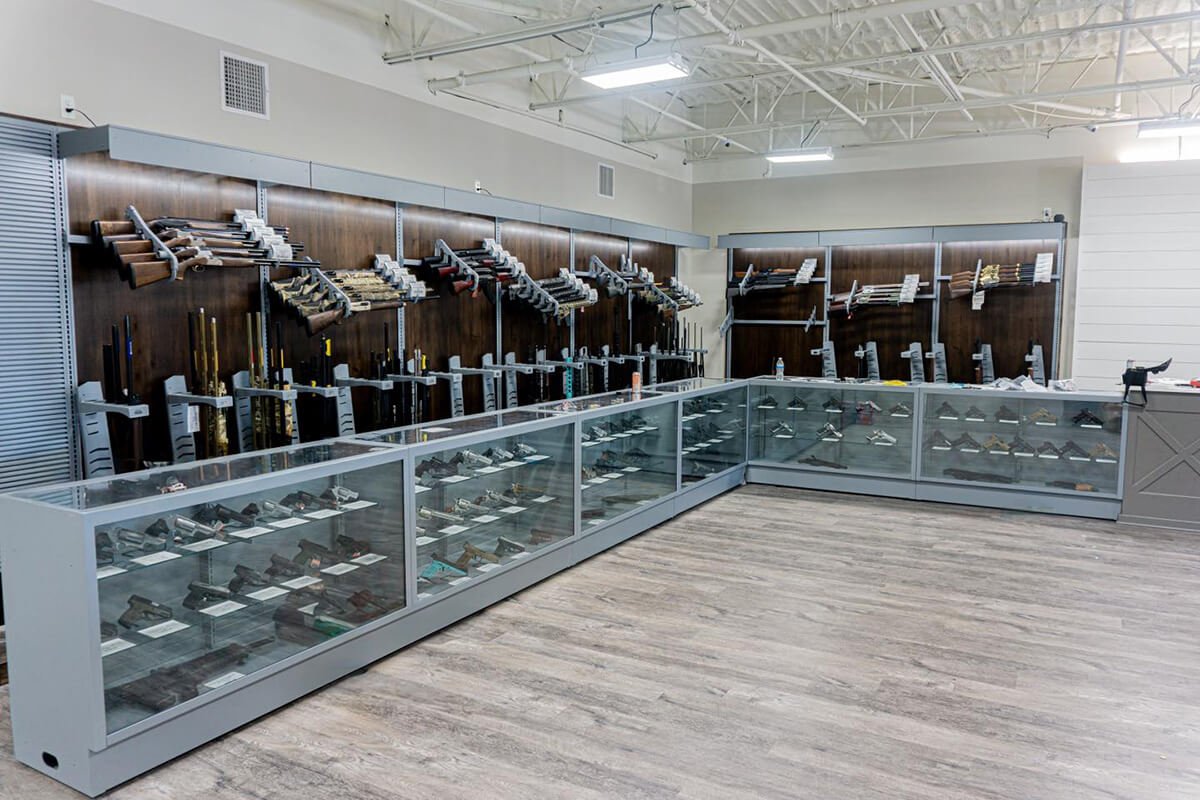
From Las Vegas retail traffic during SHOT Show week to online ammunition orders shipping from Reno or Henderson, firearms payments require clear policies, documentation, and risk controls before a processor will review the account.
nevada firearms credit card processing high-risk merchants.
High Wire Payments helps Nevada gun stores, FFL dealers, ammunition retailers, ranges, shooting sports businesses, and firearms e-commerce merchants prepare payment files for high-risk underwriting, chargeback review, age controls, product restrictions, and compliant card-not-present sales.
NV
State Market
FFL
Dealer Review
21+
Key Age Controls
CNP
E-Commerce Risk
Nevada firearms payment processing is a specialized need for gun stores, FFL dealers, ammunition retailers, shooting ranges, gunsmiths, tactical accessory sellers, and firearms e-commerce merchants operating in Las Vegas, Henderson, Reno, North Las Vegas, Sparks, Carson City, Fernley, and Elko. The state has a visible firearms economy, with local dealers serving residents, tourism-driven retail traffic, training customers, competitive shooters, hunting communities, and law enforcement-adjacent buyers. Because the products are regulated, processors do not review these merchants like ordinary sporting goods stores. They review licensing, fulfillment practices, refund policies, chargeback exposure, website content, product restrictions, and whether the merchant can document that sales are lawful and controlled.
Nevada’s market is also nationally visible because Las Vegas hosts major shooting sports industry events. NSSF lists the 2026 SHOT Show for January 20–23, 2026 in Las Vegas, and the 2027 SHOT Show for January 19–22, 2027 at the Venetian Expo and Caesars Forum. That matters for payment underwriting because many Nevada merchants see seasonal spikes around trade shows, conventions, tourism periods, training events, and product launches. A processor reviewing a Nevada firearms merchant may ask whether a volume increase is normal, whether higher tickets are tied to optics or firearm purchases, and whether online orders are being shipped only through lawful channels.
High Wire Payments works with firearms merchants that need a compliance-aware path to accepting cards. That does not mean guaranteed approval, instant onboarding, or a way around bank rules. It means the merchant file should clearly explain what the business sells, how it verifies customers, how firearms are transferred, how ammunition is shipped, how restricted items are blocked, and how disputes are handled. For a Nevada FFL in Las Vegas or a shooting sports e-commerce merchant in Reno, the difference between a declined application and a reviewable file is often documentation.
Processors generally want to see a valid FFL where applicable, clear product categories, age-verification controls, shipping and transfer procedures, website terms, refund policies, chargeback management, and evidence that the business is not selling prohibited or unsupported items through the card account.
why Nevada firearms merchants are considered high-risk
Firearms businesses are typically placed in high-risk payment categories because the industry combines regulated products, higher average tickets, chargeback sensitivity, shipping restrictions, and reputational review. A Nevada gun store may be a lawful, established local business, but the acquiring bank still has to evaluate federal firearms requirements, card network rules, product mix, fulfillment workflow, and the likelihood of disputes. A retail sale completed at a counter in Henderson is very different from an online ammunition order shipped to an out-of-state buyer, and both need to be described correctly.
The underwriting concern is not limited to firearms themselves. Ammunition, magazines, optics, reloading supplies, parts, accessories, gunsmithing deposits, range memberships, training classes, and online layaway programs all carry their own payment risk profile. Some items may be allowed by one processor but not another. Some payment providers will support accessories but not firearms. Some will consider FFL-to-FFL firearm sales but not direct ammunition e-commerce. Nevada merchants that combine retail, range, training, and online catalog sales need to separate those activities clearly so the processor understands exactly what is being boarded.
Chargebacks are a central issue. Firearms and optics often involve higher-dollar purchases, and a single dispute can have an outsized effect on a smaller merchant’s chargeback ratio. Card-not-present transactions add risk because customers may dispute delivery timing, background-check outcomes, restocking fees, transfer delays, order cancellations, or misunderstandings about where a firearm can be shipped. Strong descriptors, signed receipts, published transfer policies, order confirmations, and clear refund language help reduce avoidable disputes.
Nevada firearms rules that affect payment review
The research provided for this page notes several Nevada firearms law points that matter for payment processing context. Nevada does not require a state permit simply to possess a rifle, shotgun, or handgun. Open carry is generally legal in Nevada unless otherwise restricted by federal or state law. Concealed carry permits are required for concealed carry and are issued at the county level. Nevada also has state preemption of local firearm restrictions, which means merchants should understand the difference between statewide rules, federal rules, county permit processes, and property-specific restrictions.
The research also notes a 2007 Nevada law, approved unanimously in both legislative houses and signed by then-Governor Jim Gibbons, that limits state emergency powers related to lawful firearms and ammunition. The Nevada Independent reported that the law prohibits state government, during a declared emergency, from confiscating firearms or adopting policies that impose additional restrictions on the lawful possession, transfer, sale, carrying, storage, display, or use of firearms, ammunition, or firearm components. That history does not remove payment underwriting requirements, but it is a real Nevada-specific legal backdrop for firearms and ammunition sellers.
Payment processors are not law firms and do not decide whether a firearm sale is legal. They do, however, review whether a merchant has policies that demonstrate compliance. Nevada dealers should be ready to explain how they handle background checks, transfers, age verification, denied transactions, abandoned firearms, ammunition sales, in-store pickup, and out-of-state shipping. E-commerce merchants should make it obvious that firearms ship only to appropriate FFLs where required and that buyers are responsible for complying with applicable laws before completing a transaction.
A merchant account review is not a legal opinion. Nevada firearms merchants should maintain current legal guidance, ATF compliance procedures, and county or municipal awareness while using payment controls to support documented, lawful sales.
Las Vegas, Reno, and the Nevada firearms market
Las Vegas is one of the most important firearms retail markets in Nevada because it combines local buyers, tourists, training businesses, ranges, and national industry visibility. The research identifies Accuracy Gun Shop at 5903 Boulder Highway in Las Vegas, a long-running operator that opened in 1972 and has promoted new and used firearms, buy-sell-trade activity, gunsmithing, reloading supplies, and online shopping. Established operators like that illustrate why underwriters often ask for business history, storefront details, inventory mix, and whether online sales are tied to a physical retail operation.
Henderson and North Las Vegas add additional local retail demand within the broader Clark County market. Merchants in these cities may serve commuters, first-time buyers, training customers, private-party transfer customers, and accessory shoppers. The payment file should not simply say “sporting goods.” It should describe whether the business sells firearms, ammunition, magazines, optics, holsters, safes, cleaning supplies, range memberships, training courses, or gunsmithing services. That level of detail helps avoid a mismatch between the approved account and the actual transaction activity.
Northern Nevada has a different profile. Reno and Sparks merchants often serve local residents, outdoor recreation customers, hunting communities, competitive shooters, and online buyers. Carson City dealers may see a mix of local traffic and regional demand, while Fernley and Elko businesses may be tied closely to rural firearm ownership, ranching, hunting, and long-distance customers. A Nevada merchant account should account for these local differences, especially when a business has both walk-in sales and e-commerce revenue.
documents Nevada firearms merchants should prepare
A strong firearms merchant application is built before the processor asks questions. Underwriters want to see that the business is real, properly licensed where required, financially stable, and operationally controlled. They also want a clear explanation of what the merchant will process through the account. If a Nevada FFL sells firearms in-store but wants online card acceptance only for accessories, that should be stated. If the merchant sells ammunition online, the application should include age-verification procedures, shipping limitations, and policies for restricted jurisdictions.
- Federal Firearms License information, if the business sells or transfers firearms as an FFL
- Nevada business registration and legal entity documents
- Storefront lease, utility bill, or proof of operating location
- Owner identification and beneficial ownership information
- Recent bank statements showing operating history and deposits
- Recent processing statements, if the merchant currently accepts cards
- Website URL, shopping cart access, and product category list for e-commerce review
- Refund, cancellation, restocking fee, and transfer-fee policies
- Age-verification, shipping, and FFL-transfer procedures
- Chargeback history, customer service contacts, and dispute response workflow
The application should also include screenshots or live links showing required disclosures. For firearms e-commerce, the processor will typically review whether the checkout flow explains that firearms must ship to an FFL where applicable, whether ammunition shipping restrictions are visible, whether prohibited products are excluded, and whether customers can easily find customer service contact information. Hidden terms, vague product descriptions, missing refund policies, or checkout flows that imply direct-to-consumer firearm shipment can delay review or lead to a decline.
chargeback controls for Nevada gun stores and FFL dealers
Chargeback management is especially important for Nevada firearms merchants because disputes can arise from misunderstandings rather than fraud. A buyer may order a firearm online and later learn that their chosen receiving FFL charges a transfer fee. A customer may fail a background check and dispute the purchase because they do not understand the store’s restocking policy. An ammunition order may be delayed by carrier rules, address verification, or weather. A range customer may dispute a membership renewal if the billing descriptor is unclear. These are preventable issues when the merchant has strong customer communication.
High Wire Payments encourages Nevada merchants to use clear billing descriptors, written order confirmations, signed in-store receipts, delivery tracking, customer service logs, and published cancellation terms. Retail locations in Las Vegas, Henderson, Reno, and Sparks should train staff to document special orders, deposits, layaways, transfer fees, and gunsmithing work orders. E-commerce merchants should keep evidence of age checks, address verification, shipment tracking, FFL selection, and customer acceptance of terms. When a dispute is filed, the response package should match the exact reason code and provide concise evidence.
Monitoring ratios matters as much as responding to individual disputes. A firearms merchant can be operationally compliant but still lose payment access if chargeback volume rises above network or processor tolerance. Businesses with seasonal volume around SHOT Show, holiday sales, hunting seasons, or product shortages should watch refund timing and customer communication closely. Issuing a prompt refund under a published policy may be less expensive than allowing a frustrated customer to file a chargeback.
preparation checklist for Nevada firearms payment processing
Before applying for a firearms merchant account, Nevada gun stores, ammunition sellers, FFL dealers, and shooting sports e-commerce merchants should prepare the file as if an underwriter has never seen the business before. The goal is to make the account easy to understand, not to hide risk. A complete file helps the processor determine whether the business fits its firearms policy and what controls should be attached to the account.
- Confirm which products will be processed: firearms, ammunition, accessories, optics, training, range fees, gunsmithing, or memberships
- Gather FFL documentation and confirm that the legal business name matches the merchant application
- Write a plain-language description of how Nevada in-store sales, online orders, and transfers are handled
- Add clear age-verification language to the website and train staff on age-restricted sales procedures
- Publish shipping restrictions, FFL-transfer requirements, cancellation terms, and restocking fees before checkout
- Remove unsupported products from the card-processing flow if the processor will not allow them
- Prepare bank statements, processing statements, tax documents, and ownership information for review
- Set up customer service procedures for delayed background checks, denied transfers, returns, and order status questions
- Monitor chargeback ratios and respond quickly with signed receipts, order records, tracking, and customer communications
- Review state, federal, county, and municipal requirements with qualified counsel or compliance resources before expanding online
High Wire Payments can review a Nevada firearms merchant profile and help identify the documents, policies, and operational details that should be organized before submission. The review is educational and underwriting-focused; it is not a promise of approval and not a substitute for legal advice. For gun stores in Las Vegas, FFL dealers in Henderson, ammunition retailers in Reno, or shooting sports businesses in Elko, a better-prepared file gives the processor a clearer basis for review.
Nevada firearms payment markets we support
High Wire Payments works with firearms and shooting sports merchants across Nevada, including major metro areas, tourism-driven retail zones, and regional outdoor markets.
How High Wire Payments supports Nevada firearms merchants
Our review process focuses on documentation, risk controls, and payment operations that underwriters can evaluate.
FFL file organization
We help Nevada dealers organize FFL information, ownership records, business registration, product categories, and storefront details into a cleaner underwriting file. This is especially useful for merchants that combine in-store sales, transfers, gunsmithing, and online catalog activity.
Firearms e-commerce review
We review checkout language for FFL-transfer disclosures, ammunition shipping limits, age controls, refund terms, and customer service visibility. The goal is to reduce ambiguity before a processor evaluates the website.
Chargeback ratio monitoring
We help merchants watch dispute trends tied to deposits, delayed transfers, denied background checks, shipping delays, and high-ticket accessory orders. Merchants can use alerts and reporting to respond before disputes create account pressure.
Retail and card-not-present separation
Nevada businesses often process both counter sales and online orders. We help identify when retail, e-commerce, range memberships, training fees, or accessories should be described separately for underwriting clarity.
Policy and descriptor review
We review billing descriptor clarity, refund language, restocking fee disclosures, transfer-fee notices, and customer communication workflows. These details can reduce preventable chargebacks and help customers recognize charges.
Seasonal volume explanation
Las Vegas merchants may see activity tied to SHOT Show, tourism, conventions, and product launches. We help prepare volume explanations so spikes are presented as part of the business model rather than unexplained risk.
Can Nevada gun stores get firearms-friendly credit card processing?
Some processors will review Nevada firearms merchants, but the account is usually treated as high-risk. Underwriters will look for FFL documentation where applicable, clear product categories, chargeback controls, and compliant sales procedures.
Do Nevada FFL dealers need a separate state license for payment processing?
The research provided notes that Nevada does not require a state permit simply to possess rifles, shotguns, or handguns, but payment processors still require documentation of the business and FFL status where applicable. Merchants should also confirm any federal, county, municipal, or operational requirements with qualified guidance.
Can a Nevada firearms e-commerce merchant accept cards online?
Online firearms and ammunition sales can be reviewed, but the website must clearly explain transfer rules, shipping restrictions, age controls, refund policies, and customer responsibilities. Firearms generally need appropriate FFL-transfer handling where required.
Why did a mainstream payment provider decline my Nevada gun shop?
Many mainstream processors restrict firearms, ammunition, or regulated weapons-related products in their underwriting policy. A decline does not always mean the business is unlawful; it often means the processor does not support the category or the file lacked enough documentation.
What Nevada cities do you support for firearms merchant accounts?
High Wire Payments can review firearms merchants in Las Vegas, Henderson, Reno, North Las Vegas, Sparks, Carson City, Fernley, Elko, and other Nevada markets. Local details such as storefront location, product mix, and sales channels should be included in the file.
How does SHOT Show in Las Vegas affect payment underwriting?
SHOT Show brings national firearms industry attention to Las Vegas, with NSSF listing the 2026 event for January 20–23, 2026 and the 2027 event for January 19–22, 2027. Merchants with seasonal spikes around trade shows should explain volume patterns, higher tickets, and event-related sales activity.
Can Nevada ammunition retailers accept credit cards?
Ammunition retailers may be reviewed by firearms-friendly processors, but age controls, shipping rules, product descriptions, and restricted-jurisdiction policies matter. E-commerce ammunition sellers should make those controls visible before checkout.
Are shooting ranges and training businesses considered high-risk?
Many shooting ranges and firearms training businesses are reviewed as high-risk because they are connected to regulated products and may process memberships, rentals, deposits, classes, and retail sales. Clear waivers, refund terms, descriptors, and service descriptions help underwriting.
What chargeback issues are common for Nevada FFL dealers?
Common disputes involve delayed transfers, denied background checks, special orders, restocking fees, deposits, shipping delays, and unclear billing descriptors. Written terms, signed receipts, tracking, and customer service logs help merchants respond.
Does payment approval mean my Nevada firearms business is legally compliant?
No. Payment approval is not a legal opinion and does not replace ATF compliance, state-law review, or local legal guidance. A merchant account only means the processor has agreed to review and potentially support the payment activity under its own rules.
Prepare your Nevada firearms merchant account for review
High Wire Payments helps Nevada gun stores, FFL dealers, ammunition retailers, shooting ranges, and firearms e-commerce merchants organize the documentation, policies, and chargeback controls processors expect to see. Start with a compliance-aware review before you submit a high-risk payment application.