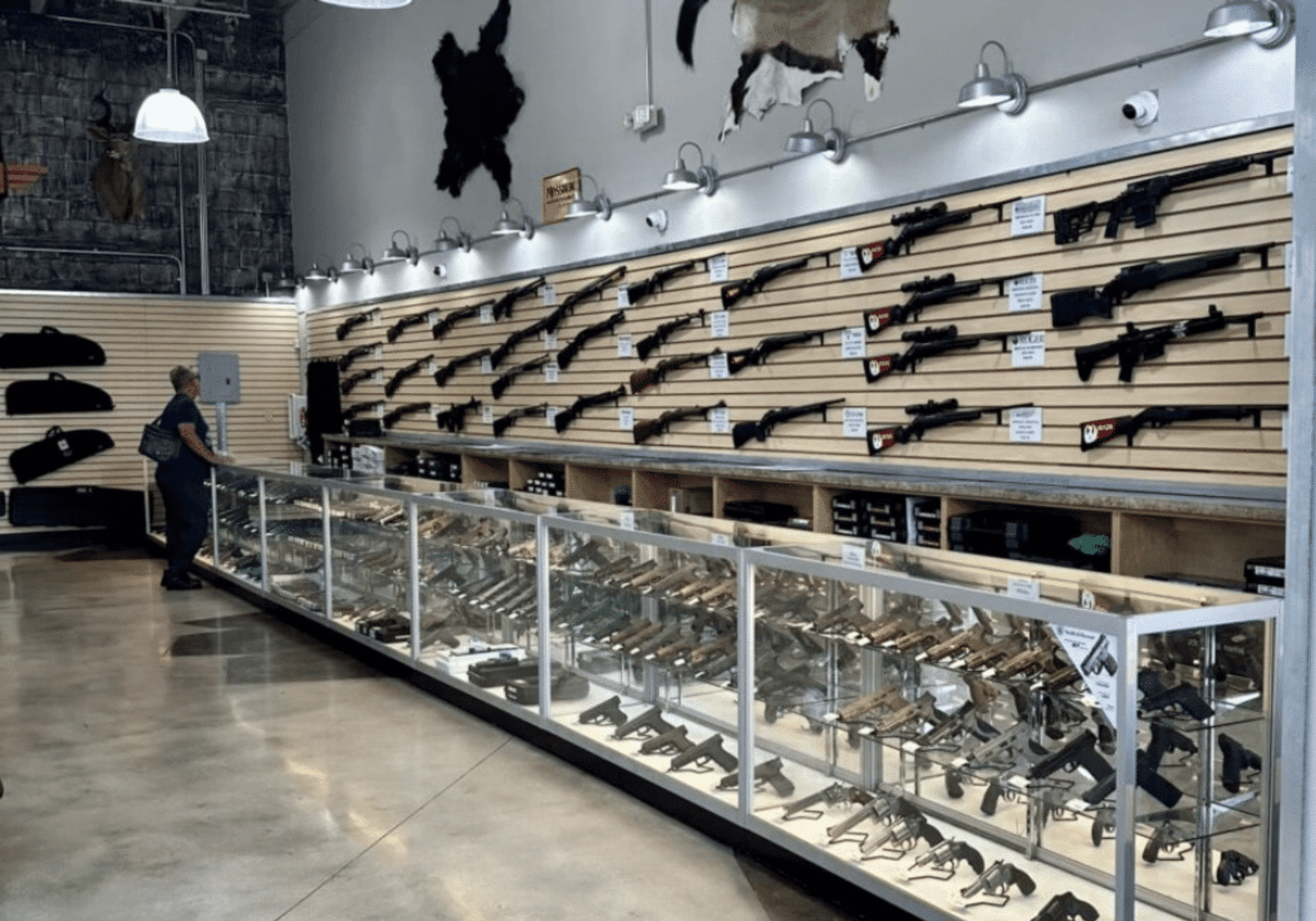
We review FFL status, website language, prohibited-product controls, chargeback history, ammunition shipping practices, and product labeling before submitting a file to high-risk underwriting.
missouri firearms credit card processing high-risk merchants.
Missouri gun stores, FFL dealers, ammunition merchants, outdoor retailers, and firearms e-commerce businesses need payment processing that respects underwriting, ATF recordkeeping, age controls, shipping rules, and chargeback exposure. High Wire Payments helps operators prepare compliant merchant files without promising approval or ignoring firearms-specific risk.
MO
Firearms Market
FFL
Dealer Review
2017
Permitless Carry
ATF
Federal Records
Missouri firearms merchants operate in a large, locally varied retail environment that includes independent gun stores in Kansas City, indoor range pro shops in St. Louis, outdoor retailers in Springfield, college-town sporting goods sellers in Columbia, and FFL transfer counters in Independence, Lee’s Summit, O’Fallon, St. Joseph, and St. Charles. For payment processing, that mix matters. A Missouri firearms merchant account is not reviewed like a standard apparel, hardware, or general sporting goods file; underwriters evaluate the products sold, the fulfillment model, the FFL holder, and the controls used before a transaction is accepted.
Firearms credit card processing is considered high risk because the category combines regulated products, elevated fraud review, age-sensitive sales, federal transfer requirements, and politically sensitive bank policy. The issue is not simply whether Missouri allows lawful firearm sales. A processor still needs to understand the difference between an in-store handgun sale, an online ammunition order, a parts-and-accessories catalog, a serialized receiver transfer, a suppressor transaction, and a hunting retailer that also sells camping gear, optics, knives, and apparel.
High Wire Payments works with Missouri gun stores, FFL dealers, ammunition merchants, outdoor retailers, and firearms e-commerce businesses by focusing on underwriting readiness. That means organizing the merchant application, matching the business model to a realistic processing channel, reviewing chargeback exposure, and identifying compliance gaps that could delay approval. No processor can remove the underlying regulatory burden, and no responsible provider should promise guaranteed approval, but a better-prepared file can reduce avoidable declines and post-approval interruptions.
Missouri is a permitless carry state, but that does not make every firearms merchant automatically acceptable to every acquiring bank. Payment underwriting still examines FFL documentation, ATF-related records, website disclosures, age controls, product categories, fulfillment rules, refund policies, and chargeback history.
missouri firearms payment processing and high-risk underwriting
A Missouri firearms merchant account review starts with the merchant’s exact sales model. A brick-and-mortar FFL in St. Charles that processes mostly card-present counter sales has a different risk profile than a Kansas City e-commerce business selling ammunition, magazines, optics, gun parts, and accessories to customers across state lines. A Springfield outdoor retailer with a broad catalog may have seasonal hunting volume, while a St. Louis dealer may see more transfer fees, range memberships, training payments, and layaway transactions.
Underwriters usually want to know whether the merchant sells complete firearms, ammunition, receivers, suppressors, parts, magazines, knives, tactical gear, reloading supplies, air guns, archery products, or general outdoor merchandise. The research provided includes a real Missouri operator, Black Market Arms, whose public catalog shows how broad a firearms retail inventory can be: handguns, rifles, shotguns, ammunition, reloading equipment, magazines, optics, gun storage, holsters, shooting supplies, gun care, airsoft, archery, survival gear, knives, hunting and fishing products, and tactical gear. That kind of mixed inventory must be described clearly.
The broader industry also affects underwriting. Shooting Industry reported that firearms retailers were seeing trends carry over from late 2025 into 2026, including softer firearm demand in some shops, continued strength in handgun sales, strong bulk ammunition activity, and growing interest in suppressors after the reported January 1, 2026 elimination of the federal $200 tax stamp for suppressors, short-barreled rifles, short-barreled shotguns, and Any Other Weapons under federal law. Those trends matter because changing product mix can change average ticket size, return behavior, fraud exposure, and chargeback risk.
missouri firearms laws that affect merchant onboarding
Payment processors do not replace legal counsel, the ATF, or state regulators, but they do ask whether the merchant understands the rules that affect sales. Research sources identify Missouri as a permitless carry state and a shall-issue state, with permits issued at the county level for reciprocity purposes. Giffords notes that since 2017, Missouri has allowed people to carry concealed, loaded firearms in public without a background check or permit. For merchants, that carry framework is separate from federal dealer obligations, customer eligibility, transfer procedures, and documentation.
NRA-ILA’s Missouri summary states that open carry is legal without a permit, but local governments may ban open carrying unless the person has a valid Missouri-issued permit. That is an important reminder for retailers in cities and municipalities such as Kansas City, St. Louis, Columbia, Independence, Lee’s Summit, O’Fallon, St. Joseph, and St. Charles: state law may allow certain conduct, while local rules, property policies, event rules, range rules, or landlord requirements may still affect store operations. Underwriters prefer merchants that can explain how they monitor location-specific requirements.
Missouri operators should also be aware of specific prohibited items referenced in state law summaries. NRA-ILA reports that it is a crime to knowingly possess, manufacture, transport, repair, or sell a bullet or projectile that explodes or detonates upon impact. A payment processor will not adjudicate the criminal code, but underwriting may ask whether the merchant’s product catalog excludes prohibited ammunition types, whether listings are reviewed before going live, and whether staff understand which products cannot be sold.
Missouri’s permitless carry environment can be favorable for lawful firearms commerce, but card acceptance is still controlled by bank risk policy. A compliant merchant file should show FFL authority, product controls, ATF-aware procedures, and customer-facing policies that match the actual business model.
what underwriters review for missouri gun stores and ffl dealers
For a Missouri FFL dealer, the first underwriting question is usually licensing. The merchant file should include the Federal Firearms License, legal business name, DBA, ownership information, physical premises, website domain, processing history, anticipated monthly volume, average ticket, high-ticket transactions, and whether sales are card-present, keyed, invoiced, e-commerce, or a combination. If the business is a range, training facility, gunsmith, pawn-related dealer, or outdoor retailer, that should be explained rather than hidden.
Federal reporting obligations may also be relevant to underwriting posture. The ATF states that the Gun Control Act of 1968 requires FFLs to send a report to ATF when there is a sale or other disposition of multiple firearms. That requirement is not a payment-processing rule, but processors may still ask whether the dealer has documented procedures for ATF compliance, employee training, and retained records. A merchant that can describe these controls gives the bank more confidence than one that treats compliance as informal.
Firearms merchants also need website and receipt language that matches the risk. E-commerce pages should explain that firearms must ship to a receiving FFL where required, that buyers must comply with all federal, state, and local laws, that age restrictions apply, and that orders may be cancelled if eligibility, address, product, or transfer requirements are not satisfied. For ammunition merchants, shipping restrictions, carrier limitations, hazardous-material considerations where applicable, and state-by-state limitations should be visible before checkout, not buried after the payment is captured.
documents missouri firearms merchants should prepare
A well-prepared Missouri firearms merchant account package gives underwriting enough information to evaluate risk without repeated document requests. This is especially important for merchants moving from a terminated account, launching e-commerce, expanding from accessories into firearms, adding ammunition, or combining a retail store with online sales. Incomplete files often create longer review cycles, and vague product descriptions can trigger unnecessary concern even when the business is lawful and well managed.
- Current Federal Firearms License showing the legal entity, premises address, license number, and expiration date.
- Missouri business registration, assumed-name filing if applicable, and local business license or occupancy documentation when available.
- Government-issued identification for owners and controlling parties, plus ownership percentages for the merchant application.
- Three to six months of recent processing statements, including chargeback counts, refunds, and any reserve notices if the business has processing history.
- Three to six months of business bank statements that support the stated volume, seasonality, and average ticket size.
- A complete product-category list separating firearms, ammunition, receivers, suppressors, magazines, parts, optics, knives, archery, airsoft, apparel, and outdoor gear.
- Website URLs, checkout screenshots, refund and cancellation policies, shipping policies, FFL transfer language, and age-restriction disclosures.
- ATF compliance procedures, multiple-sale reporting workflow, bound-book or electronic-record procedures, and staff training notes if available.
- Supplier invoices or distributor agreements for firearms, ammunition, accessories, reloading supplies, optics, and other regulated inventory.
- Chargeback response examples, delivery confirmation practices, fraud-screening rules, customer-service workflow, and high-ticket review procedures.
High Wire Payments helps Missouri merchants organize these materials before a file is submitted. The goal is not to overwhelm the bank with unrelated paperwork; it is to show the processor the exact risk profile. A St. Joseph ammunition merchant with no serialized firearm transfers should not be described the same way as a St. Louis FFL selling handguns, or a Columbia outdoor retailer that sells firearms only in-store but processes camping gear online.
chargebacks, fraud controls, and firearms e-commerce risk
Chargebacks in firearms retail often arise from delayed transfers, misunderstanding of FFL shipment rules, buyer ineligibility, declined background checks, backordered ammunition, restocking fees, delivery disputes, or customers who believe a special-order item should be refundable. E-commerce merchants face additional pressure because card-not-present transactions have higher fraud exposure and more documentation requirements. Underwriting therefore looks closely at order confirmation emails, delivery evidence, refund language, customer-service response time, and whether a merchant captures payment before or after key eligibility steps.
Fraud controls should be practical and documented. Missouri firearms e-commerce merchants should use address verification, CVV checks, velocity limits, IP and device review, manual review for high-ticket orders, mismatch checks for billing and shipping information, and order holds when a customer attempts unusual quantities of ammunition or multiple regulated items. For businesses selling firearms online, the checkout should collect the receiving FFL information or explain the required transfer process clearly before the customer pays.
Ammunition and accessories can produce their own chargeback issues. Bulk ammunition orders may carry higher ticket sizes and shipping costs, and the customer may dispute an order if carrier delays occur or local rules prevent delivery. Optics, magazines, parts, reloading supplies, and tactical accessories may also be subject to state-by-state restrictions outside Missouri. A strong merchant file explains how the business screens destination states, blocks prohibited products, labels items accurately, and responds to disputes with invoices, tracking, delivery proof, and customer communications.
payment options for missouri gun stores, ranges, and outdoor retailers
The right payment setup depends on how the business sells. A Kansas City gun store may need countertop terminals, mobile readers for compliant off-site events, and a gateway for accessory sales. A Springfield range may need recurring billing for memberships, in-person retail checkout, and online class registration. A Lee’s Summit FFL may need invoice links for deposits, transfer fees, gunsmithing work, and special orders. An O’Fallon outdoor retailer may need separate reporting for firearms, ammunition, archery, apparel, and general outdoor merchandise.
Firearms e-commerce requires more careful gateway configuration than general retail. The payment page should support fraud filters, tax and shipping rules, product-category restrictions, order notes, FFL transfer instructions, and clear cancellation policies. If the business sells both regulated and nonregulated products, reporting should make it easy to identify volume by category. That helps with reserve discussions, chargeback analysis, and future underwriting if the merchant changes inventory or expands into new states.
Missouri merchants should also think about continuity. Some mainstream payment providers, shopping carts, and aggregators restrict firearms, ammunition, or accessories even when the products are lawful. A business can be disrupted when an account is closed after a compliance review or when a platform policy changes. High-risk merchant services are not a shortcut around rules, but they can align the account with a bank that is willing to review firearms activity directly instead of treating it as a surprise.
missouri firearms merchant account preparation checklist
Before applying for firearms payment processing in Missouri, review the business the way an underwriter will review it. The stronger your documentation, policies, and product controls are before submission, the fewer avoidable questions you are likely to receive. Use this checklist for gun stores, FFL dealers, ammunition merchants, outdoor retailers, range pro shops, gunsmiths, and e-commerce sellers.
- Confirm that the legal business name, DBA, EIN, bank account, FFL, website footer, and application all match or are clearly explained.
- Separate card-present, keyed, invoiced, recurring, and e-commerce volume estimates so underwriting can price risk accurately.
- List every product category and identify which items are firearms, ammunition, receivers, suppressors, regulated parts, accessories, or general outdoor goods.
- Publish clear age controls, eligibility language, FFL transfer instructions, refund terms, cancellation rules, and shipping restrictions before checkout.
- Document how employees handle ATF recordkeeping, multiple-sale reporting obligations, inventory controls, and customer identification procedures.
- Use fraud tools such as AVS, CVV, order velocity limits, high-ticket review, shipment holds, and address mismatch alerts.
- Review Missouri-specific issues, including local open-carry ordinances where relevant, and confirm that store policies reflect the municipality and premises.
- Prepare chargeback evidence templates with invoices, terms acceptance, tracking numbers, delivery confirmation, customer emails, and FFL transfer documentation.
- Avoid product claims or website language that implies prohibited sales, evasion of background checks, or shipment of firearms directly to unqualified buyers.
- Set internal monitoring for chargeback ratio, refund spikes, unusual ammunition orders, and sudden changes in average ticket size or monthly volume.
If your Missouri firearms business is opening a new store, adding e-commerce, changing processors, or recovering from an account closure, High Wire Payments can review the file and identify likely underwriting concerns before submission. The review is educational and documentation-focused: it does not guarantee approval, but it helps your team present a clearer, more compliant payment-processing request.
Missouri firearms payment markets we review
High Wire Payments reviews merchant files for firearms and outdoor retailers across Missouri, including major metro areas, suburban corridors, and regional hunting markets.
How High Wire supports Missouri firearms merchants
Specific payment-processing capabilities for gun stores, FFL dealers, ammunition sellers, and firearms e-commerce businesses operating under high-risk underwriting.
FFL-first underwriting file review
We organize the merchant application around the Federal Firearms License, legal entity, premises address, product categories, and sales channels. That helps the underwriter distinguish a Missouri FFL dealer from a general sporting goods store or accessories-only seller.
Firearms e-commerce gateway controls
We review checkout language, FFL transfer instructions, age controls, state shipping notices, fraud filters, AVS, CVV, and high-ticket order review. The goal is to prevent unclear online sales practices from becoming avoidable chargebacks or compliance questions.
Chargeback ratio monitoring
We help merchants track dispute patterns by product type, transaction channel, and reason code. Firearms merchants can use alerts around rising dispute activity, refund spikes, delayed shipments, and high-dollar ammunition orders before the issue becomes a processing problem.
Ammunition and accessory risk separation
We help Missouri merchants present firearms, ammunition, receivers, suppressors, optics, magazines, reloading supplies, knives, archery, and outdoor goods as separate product categories. Clear categorization supports more accurate underwriting and better monthly reporting.
Policy and website readiness
We review refund policies, cancellation terms, delivery language, product labeling, legal disclaimers, and checkout disclosures before submission. This is especially important for e-commerce merchants shipping ammunition or accessories outside Missouri.
Processing continuity planning
We help merchants avoid reliance on platforms that prohibit firearms activity after the fact. For Missouri stores expanding from counter sales into online sales, we review realistic processing options, reserve considerations, volume expectations, and documentation needed for future growth.
Can a Missouri gun store get credit card processing?
Yes, lawful Missouri gun stores can apply for firearms merchant services, but the account is usually reviewed as high risk. Underwriters will ask for the FFL, business documents, product categories, policies, processing history, and chargeback information before making a decision.
Do Missouri FFL dealers need a special merchant account?
Most FFL dealers need a processor that knowingly supports firearms activity rather than a generic aggregator account. The merchant file should clearly disclose firearm sales, transfers, ammunition, accessories, and any online activity.
Is Missouri a permitless carry state, and does that affect payment processing?
Research sources identify Missouri as a permitless carry state, with concealed carry allowed since 2017 without a background check or permit for carrying purposes. Payment processing is separate; banks still review the merchant’s FFL status, product mix, website controls, and chargeback risk.
Can Missouri local governments regulate open carry?
NRA-ILA reports that open carry is legal without a permit in Missouri, but local governments may ban open carrying unless the person has a valid Missouri-issued permit. A retailer in Kansas City, St. Louis, Columbia, or another municipality should review local rules and premises policies with counsel.
Can Missouri ammunition merchants process online payments?
Ammunition merchants can apply for high-risk payment processing, but underwriting will review age controls, shipping restrictions, carrier practices, product labeling, fraud filters, and chargeback history. Bulk ammunition orders often require stronger fraud and delivery documentation.
What documents should a Missouri firearms e-commerce business prepare?
Prepare the FFL if firearms are sold, business registration, owner identification, processing statements, bank statements, supplier invoices, product-category list, website screenshots, refund policy, shipping policy, and FFL transfer language. Underwriters may also ask about ATF compliance procedures and chargeback controls.
Can a Missouri outdoor retailer process firearms and non-firearms products together?
Possibly, but the product mix must be disclosed clearly. A retailer selling firearms, ammunition, optics, knives, archery, camping gear, and apparel should separate categories in reporting so the bank understands what volume is regulated and what volume is general retail.
Do ATF multiple-sale reporting rules matter for payment underwriting?
They can matter indirectly. The ATF states that the Gun Control Act of 1968 requires FFLs to report certain multiple firearms sales or dispositions, and underwriters may ask whether the dealer has documented compliance procedures.
Why do firearms merchants get declined by mainstream payment providers?
Some providers restrict firearms, ammunition, parts, or tactical accessories by internal policy even when the business is lawful. Others are not set up to underwrite FFL documentation, regulated inventory, age controls, shipment restrictions, or firearms-related chargeback evidence.
Can High Wire Payments guarantee approval for a Missouri firearms merchant account?
No. High Wire Payments does not guarantee approval, because banks and processors make final underwriting decisions. We help Missouri firearms merchants prepare stronger files, identify compliance gaps, and match the application to realistic high-risk processing options.
Prepare your Missouri firearms merchant account file
High Wire Payments can review your FFL documentation, product categories, website policies, chargeback history, and payment setup before submission. If you operate a Missouri gun store, ammunition business, outdoor retailer, range pro shop, or firearms e-commerce site, start with a compliance-aware underwriting review.