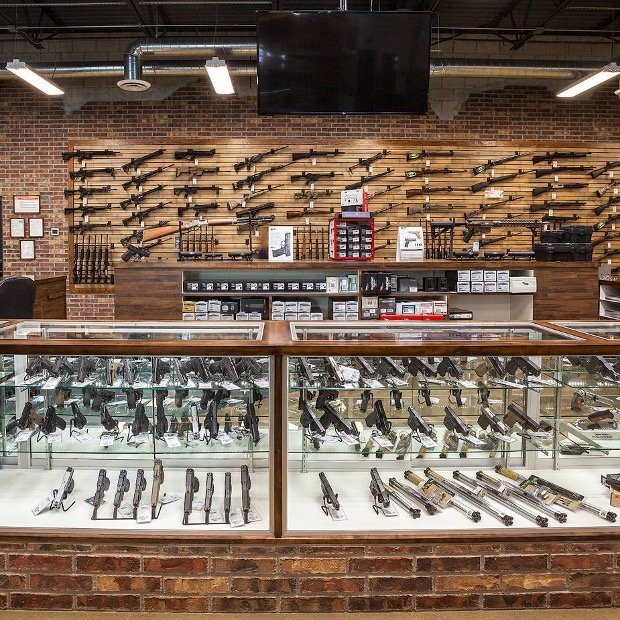
mississippi firearms credit card processing high-risk merchants.
High Wire Payments helps Mississippi firearms retailers, FFL dealers, ammunition sellers, shooting ranges, sporting goods stores, and firearms ecommerce businesses prepare for underwriting with clear documentation, age controls, chargeback procedures, and compliance-aware payment workflows.
MS
State Market
FFL
Dealer Documentation
21+
Handgun Controls
ATF
Federal Oversight
Mississippi firearms credit card processing is a specialized underwriting category for FFL dealers, ammunition sellers, shooting ranges, sporting goods stores, and ecommerce brands selling firearms-related products. Operators in Jackson, Gulfport, Southaven, Hattiesburg, Biloxi, Meridian, Tupelo, and Olive Branch may serve hunters, competitive shooters, law enforcement customers, collectors, and recreational range members, but payment processors still review the category as elevated risk. The review is not only about whether firearms are legal to sell. It is about whether the merchant can document licensing, buyer restrictions, product descriptions, delivery controls, chargeback exposure, and refund practices in a way an acquiring bank can understand.
Mississippi is often described as a permissive firearms state. Research summaries note that no state permit is required to possess a rifle, shotgun, or handgun, while convicted felons remain prohibited unless they have received a pardon, federal relief from disability, or a certificate of rehabilitation. Mississippi also repealed the requirement to get a permit before carrying a concealed handgun in public in 2016, according to public gun-law research. Those state-level facts can affect customer behavior and local demand, but they do not remove the federal obligations that matter in merchant underwriting. FFL status, ATF records, Form 4473 practices, NICS background check procedures, age restrictions, shipment limitations, and prohibited-person controls remain central to payment review.
The risk profile is also shaped by public scrutiny. A 2024 Clarion Ledger report based on a USA TODAY Freedom of Information Act request stated that 21 Mississippi gun sellers appeared on an ATF list of outlets subject to additional scrutiny in 2023. The reported threshold was at least 25 guns traced to a crime in a year that had been purchased within the prior three years, a metric commonly referred to as time to crime. Inclusion on that list was reported to trigger additional quarterly reports on used firearm purchases. That kind of scrutiny does not prove wrongdoing, but it shows why banks want a clear compliance narrative from Mississippi firearms merchants before approving card acceptance.
A strong underwriting file explains what you sell, where you sell it, who may buy it, how orders are verified, how regulated products are transferred, and how disputes are handled. For FFL dealers and ammunition ecommerce sellers, vague product catalogs or incomplete policies can slow review.
why firearms merchants in Mississippi are reviewed as high-risk
Firearms merchants are considered high-risk because the category combines regulated products, political sensitivity, card-brand scrutiny, shipping limitations, chargeback exposure, and reputational risk for the acquiring bank. A Mississippi gun shop may be fully licensed and well managed, yet still be declined by a general-purpose processor that does not support firearms. The same issue applies to ammo sellers, gunsmiths, firearm accessory retailers, indoor ranges, outdoor ranges, pawn-and-gun operators, and sporting goods stores with mixed inventory. If the payment application simply says retail sales without explaining the firearms portion, the account can be approved incorrectly and then frozen after the first product review or chargeback investigation.
Underwriters usually want to understand whether the merchant is selling complete firearms, ammunition, optics, magazines, holsters, parts, suppressors, range memberships, training classes, gunsmithing services, or general outdoor gear. Each product mix creates a different risk profile. A storefront FFL in Tupelo with in-person transfers is reviewed differently than a Gulfport ecommerce business shipping ammunition across state lines. A shooting range in Biloxi that sells lane rentals and memberships may need different billing descriptors than a Southaven retailer that sells firearms, ammo, and accessories at the same counter. High Wire Payments helps organize those distinctions so processors do not have to infer the model from incomplete statements.
Mississippi state law references also matter. The Mississippi Department of Public Safety Driver Service Bureau publishes firearm permit laws and codes, including MS Code 45-9-101 for license to carry concealed, MS Code 97-37-1 concerning deadly weapons, MS Code 97-37-7 concerning persons permitted, MS Code 97-37-15 involving parent or guardian responsibilities, and MS Code 45-9-151 concerning the docket of deadly weapons seized. These codes are not a substitute for federal ATF compliance, but they help frame the local environment. A processor reviewing an account in Jackson or Meridian will still look for the merchant’s internal controls, not merely the general legality of firearm ownership in Mississippi.
underwriting expectations for FFL dealers, ammo sellers, and shooting ranges
A Mississippi FFL dealer should expect underwriting to ask for licensing documents, ownership details, business formation records, recent bank statements, processing history if available, and website access if ecommerce is involved. The account file should clearly identify the Federal Firearms License holder, the licensed premises, the legal business name, any trade names, and the expected transaction types. If the merchant sells at gun shows, that should be described accurately. For example, the Jackson Gun Show was promoted for the Mississippi Trade Mart on May 30-31, 2026, and events like that can create weekend volume spikes. Processors prefer knowing about event-based sales in advance rather than seeing unexplained processing surges.
Ammunition sellers need especially clear age and shipping controls. Even where Mississippi law is permissive, ecommerce merchants still need to manage state-by-state shipping restrictions, carrier rules, adult-signature practices where applicable, hazardous-material considerations, and product descriptions that do not misrepresent what is being sold. Checkout pages should include age acknowledgments, prohibited-person acknowledgments, address restrictions, refund limitations, and a clear statement that the buyer is responsible for compliance with applicable law. Product labeling should be specific at the SKU level: caliber, grain, quantity, manufacturer, remanufactured status if relevant, and whether the product is ammunition, component, accessory, or inert training item.
Shooting ranges and training businesses are reviewed through both retail and service lenses. A Hattiesburg range may process lane rentals, memberships, private instruction, safety classes, firearm rentals for on-premises use, merchandise, and ammunition. Those categories should not be blended into a vague descriptor that creates confusion on customer statements. Clear descriptors reduce chargebacks because customers recognize the charge. Written range rules, waiver procedures, cancellation policies, and membership renewal terms also matter. If recurring billing is used for memberships, the merchant should provide opt-in language, renewal notices, and easy cancellation instructions to reduce disputes.
Mississippi firearms merchants may see higher volume around hunting seasons, tax refund periods, gun shows, and holiday promotions. Underwriters are more comfortable when expected spikes are documented with event calendars, inventory plans, and average ticket estimates.
ecommerce firearms payments and shipping controls in Mississippi
Firearms ecommerce is usually the most heavily reviewed version of this category. A website that sells complete firearms must clearly state that firearms ship only to a valid receiving FFL where required, that the buyer must complete required background check and transfer procedures, and that orders may be canceled if the receiving dealer or buyer information cannot be verified. Mississippi merchants should make the checkout path easy to audit. The processor should be able to see product pages, cart language, FFL transfer instructions, prohibited-product rules, refund policies, and customer service contact details without guessing how fulfillment works.
Ammunition ecommerce is different but still requires a disciplined file. The merchant should maintain a restricted-state matrix, a shipping policy that matches actual carrier practices, and records showing that the checkout system blocks addresses where the merchant does not ship. If the business serves customers from Olive Branch, Southaven, and other parts of north Mississippi while also shipping nationally, the underwriting packet should separate in-store pickup, intrastate delivery if offered, and interstate ecommerce shipments. Processors dislike ambiguity because disputes often arise when customers believe an item can ship to them but fulfillment later determines it cannot.
Website content should be direct and non-sensational. Avoid product claims that sound like violence-oriented marketing, do not encourage unlawful use, and do not obscure regulated items behind novelty descriptions. Firearms, ammunition, magazines, suppressor-related products, unfinished parts, and regulated accessories should be labeled accurately. If the catalog includes non-firearm sporting goods, camping products, knives, apparel, fishing equipment, or outdoor accessories, those categories should be separated so the processor can understand the percentage of regulated inventory. A Biloxi sporting goods store with a firearms counter is not the same risk profile as a pure-play online ammunition seller, but both need product clarity.
documents Mississippi firearms merchants should prepare before applying
The strongest Mississippi firearms merchant applications are organized before the processor asks questions. Underwriting teams are trying to verify legal operation, product fit, ownership, financial stability, and dispute controls. A clean file can prevent back-and-forth delays, especially for newer stores, businesses changing processors, and ecommerce sellers moving from marketplace-style sales to direct card acceptance. The goal is not to overwhelm the bank with unnecessary material. The goal is to provide enough evidence that the merchant understands its obligations and has practical controls in place.
- Current Federal Firearms License copy showing the legal entity, premises address, and license type
- Business formation documents, Mississippi Secretary of State records if applicable, EIN confirmation, and trade name documentation
- Government ID and ownership information for all required beneficial owners and control persons
- Recent business bank statements and prior processing statements, including chargeback history if available
- Written product list separating firearms, ammunition, accessories, range services, gunsmithing, training, and sporting goods
- Website URLs, checkout screenshots, age acknowledgments, FFL transfer instructions, and shipping restriction pages
- Refund, return, cancellation, layaway, special-order, and transfer-fee policies provided in customer-facing language
- ATF compliance overview describing Form 4473, NICS, acquisition and disposition records, and denied-transfer handling at a high level
- Range rules, waiver language, membership terms, and recurring billing authorization language if the business operates a shooting range
- Chargeback response procedures, customer service contact process, delivery documentation, and descriptor strategy
For Mississippi dealers that sell used firearms, the compliance file should be especially clear. The Clarion Ledger report noted that ATF scrutiny of certain sellers can include additional quarterly reporting on used firearm purchases when trace-related criteria are met. Even if a particular merchant is not subject to that requirement, underwriters may ask how used inventory is acquired, documented, and resold. A pawn-and-gun store in Meridian or a trade-heavy retailer in Jackson should be ready to explain acquisition procedures and recordkeeping at a practical level.
chargebacks, descriptors, and transaction monitoring for firearms sales
Chargebacks in firearms payments often come from recognizable patterns: the customer does not recognize the descriptor, the product could not ship to the requested destination, the customer failed a transfer requirement and expects a full refund, a special-order item has a restocking fee, an ammo shipment is delayed by carrier rules, or a range membership renewal was forgotten. These disputes are manageable when policies are written clearly and the evidence trail is complete. A Mississippi firearms merchant should keep order confirmations, FFL transfer communications, pickup signatures, shipment tracking, customer acknowledgments, and refund correspondence in a format that can be retrieved quickly.
Billing descriptors should match the customer experience. If the storefront sign says one name but the descriptor uses a separate legal entity, the merchant should add receipt language and customer service messaging so buyers recognize the charge. This is important for sporting goods stores with multiple departments and for ranges that process memberships separately from retail purchases. Descriptor confusion can produce avoidable disputes even when the sale was legitimate. High Wire Payments reviews descriptor options, receipt language, and customer service workflows so Mississippi merchants can reduce preventable chargebacks before they affect account stability.
Monitoring also matters because firearms merchants may see high average tickets. A rifle, optic, ammunition case, range membership, or suppressor-related transfer service can create larger transaction amounts than a typical retail purchase. Large tickets are not automatically a problem, but they should match the expected business model. If a Tupelo FFL adds ecommerce ammunition sales or a Gulfport range begins selling annual memberships online, processing volume, average ticket, refund rate, and chargeback ratio should be watched closely. Early detection gives the merchant time to adjust customer communication before the processor initiates a risk review.
Mississippi firearms payment preparation checklist
Before applying for firearms payment processing in Mississippi, use a preparation checklist that aligns the legal, operational, and payment sides of the business. This is especially important for mixed models such as an FFL dealer that also sells ammunition online, a sporting goods store with a gun counter, or a shooting range that offers training, memberships, rentals, and retail checkout.
- Confirm that the legal business name, DBA, FFL record, bank account, website footer, and merchant application are consistent
- Separate product categories so regulated firearms, ammunition, accessories, and general sporting goods are easy to identify
- Add age acknowledgments and prohibited-person language to ecommerce checkout and in-store special-order workflows
- Publish FFL transfer instructions, including buyer responsibilities, transfer fees, failed-transfer handling, and cancellation terms
- Document shipping restrictions for ammunition and accessories, including states or locations where orders are blocked
- Prepare customer-facing refund, return, restocking, layaway, and special-order policies before taking card payments
- Use clear billing descriptors and receipt language that match the storefront, range, or ecommerce brand customers recognize
- Keep chargeback evidence organized, including tracking numbers, pickup records, signed acknowledgments, emails, and refund logs
- Disclose seasonal or event-based volume spikes, including gun shows, hunting season promotions, and range membership drives
- Review recurring billing language for range memberships, training subscriptions, or club programs before activating automatic payments
High Wire Payments works with Mississippi firearms retailers, FFL dealers, ammo sellers, shooting ranges, sporting goods stores, and firearms ecommerce businesses that need a more disciplined payment review. We do not promise approval, and underwriting standards vary by acquiring bank and product mix. We can help you assemble the file, identify gaps, and present your business in a way that reflects how regulated firearms commerce actually operates in Mississippi.
Mississippi firearms markets we support
High Wire reviews firearms payment files for merchants serving Jackson, Gulfport, Southaven, Hattiesburg, Biloxi, Meridian, Tupelo, Olive Branch, and surrounding Mississippi communities.
firearms payment controls built for Mississippi operators
Our review focuses on the concrete controls banks expect to see from regulated firearms merchants, not generic retail descriptions.
FFL-focused underwriting packets
High Wire organizes the FFL, entity records, owner details, product mix, transfer policy, and expected transaction flow into one review file. This helps distinguish a compliant Mississippi FFL from an unsupported or vaguely described retail account.
Chargeback ratio monitoring
We help merchants monitor dispute activity with early attention to ratios approaching 0.7%, documentation gaps, descriptor confusion, and recurring refund triggers. The goal is to address preventable disputes before they become an account stability issue.
Ecommerce checkout review
For firearms and ammunition websites, High Wire reviews age acknowledgments, FFL transfer instructions, shipping restriction language, refund terms, and product labeling. This gives underwriters a clearer view of how regulated items move from cart to fulfillment.
Range and membership billing support
Shooting ranges often process lane fees, memberships, rentals, classes, and retail sales. High Wire helps separate transaction types, review recurring billing authorization language, and align descriptors with the name customers see at the facility.
Seasonal volume planning
Mississippi firearms merchants may see spikes around hunting seasons, promotions, and gun shows such as events at the Mississippi Trade Mart in Jackson. We help document expected ticket sizes and volume changes so they are not mistaken for abnormal activity.
Used firearm and transfer documentation
Public reporting shows ATF scrutiny can focus on time-to-crime trace patterns and used firearm reporting for certain sellers. High Wire helps merchants explain used inventory intake, transfer workflows, and recordkeeping practices at an underwriting level.
Can a Mississippi gun store accept credit cards for firearms sales?
Yes, a Mississippi gun store can accept cards when it has a processor and acquiring bank that support firearms. The merchant still needs a complete underwriting file with FFL documentation, product details, policies, and chargeback controls.
Do Mississippi FFL dealers need a separate state gun dealer license for payment processing?
Research indicates Mississippi does not impose a separate state dealer licensing requirement like some other states. Underwriters will still require the federal FFL, business registration records, and any applicable local business licenses or zoning documentation.
Is a state permit required to possess a rifle, shotgun, or handgun in Mississippi?
Public summaries of Mississippi law state that no state permit is required to possess a rifle, shotgun, or handgun. That does not change federal restrictions, including prohibited-person rules and the FFL dealer’s background check and recordkeeping obligations.
How does Mississippi permitless carry affect firearms merchant underwriting?
Mississippi repealed the requirement to obtain a permit before carrying a concealed handgun in public in 2016, according to public gun-law research. Payment underwriting still focuses on the merchant’s sales process, licensing, product controls, shipping practices, and dispute management.
Can a Mississippi ammunition ecommerce business get payment processing?
Ammunition ecommerce can be supportable, but it is heavily reviewed. The website should show age controls, shipping restrictions, product labeling by caliber and quantity, refund terms, customer service information, and procedures for blocking restricted destinations.
Will ATF trace scrutiny affect a Mississippi firearms merchant account?
It can affect how an underwriter views the file, especially if the merchant sells used firearms or has high firearm volume. A 2024 report stated that 21 Mississippi sellers appeared on an ATF scrutiny list in 2023 based on trace criteria, so clear documentation is important.
Can Mississippi shooting ranges process memberships and lane rentals?
Yes, but range billing should be documented separately from firearm and ammunition retail sales. Underwriters may ask for range rules, waivers, recurring billing terms, cancellation policies, and descriptors that customers will recognize.
What should a Mississippi firearms ecommerce site say about FFL transfers?
The site should state that regulated firearms ship only to a valid receiving FFL where required, that the buyer must complete required transfer procedures, and that failed or canceled transfers may be subject to stated fees. The language should appear before or during checkout.
Can a sporting goods store in Jackson or Gulfport use one merchant account for mixed inventory?
Possibly, but the processor must understand the firearms portion of the inventory. A store selling camping gear, apparel, ammunition, and firearms should separate product categories and disclose the expected percentage of regulated sales.
Does High Wire Payments guarantee approval for Mississippi firearms merchants?
No. High Wire does not guarantee approval because acquiring banks make final underwriting decisions based on the merchant’s documentation, risk profile, processing history, and product mix. We help prepare and present the file in a compliance-aware way.
Prepare your Mississippi firearms payment file
If you operate an FFL dealership, ammunition business, shooting range, sporting goods store, or firearms ecommerce site in Mississippi, High Wire Payments can review your documentation, policies, chargeback controls, and underwriting readiness before submission.
Apply Now