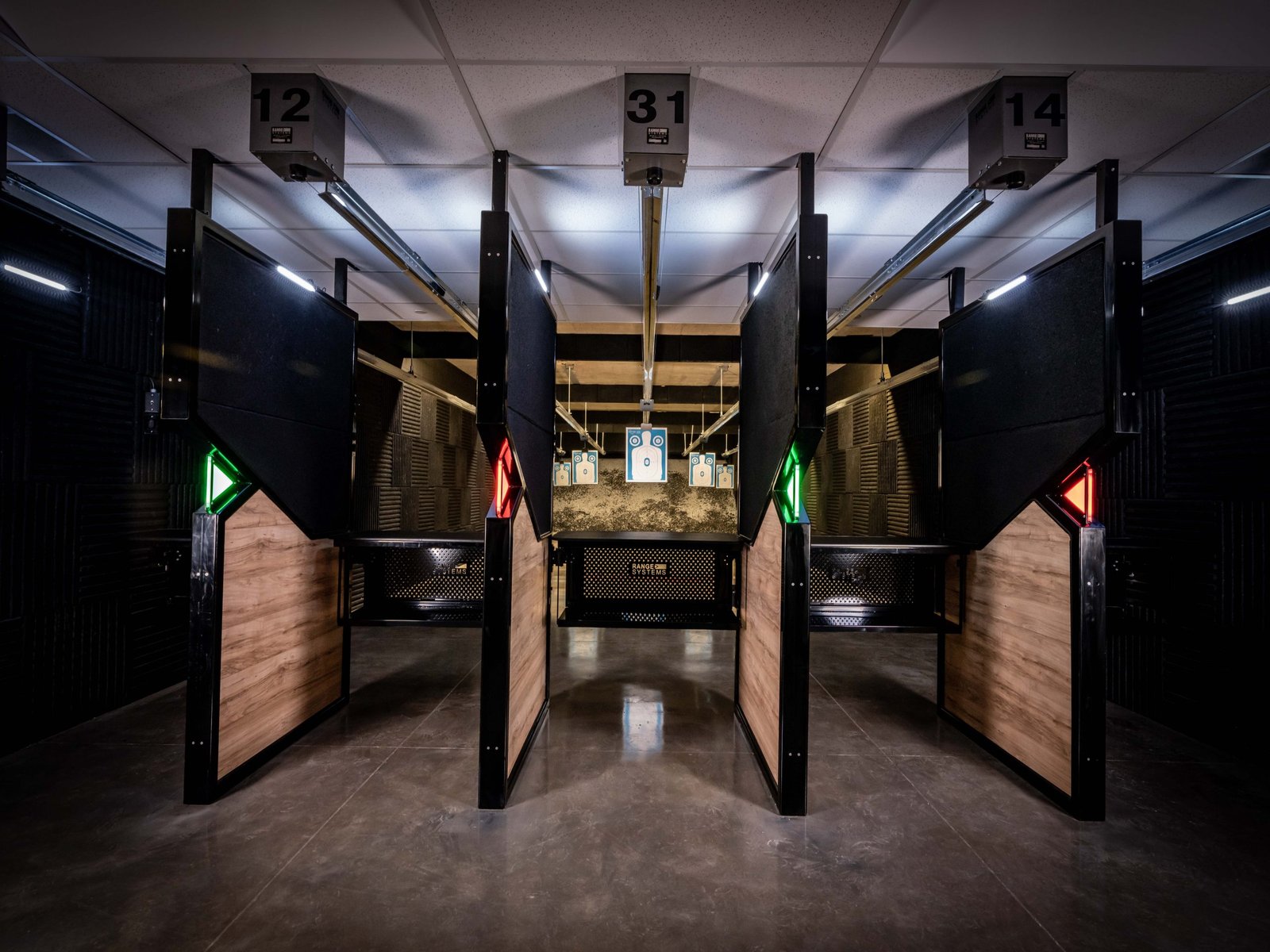
Underwriters review product mix, FFL status, purchase-permit procedures, website controls, refund policies, and chargeback history before approving Michigan firearms merchants.
michigan firearms credit card processing high-risk merchants.
Michigan firearms retailers, ammunition stores, ranges, and online accessory sellers face stricter underwriting than ordinary retail. High Wire Payments helps operators prepare documentation, reduce chargeback exposure, support age controls, and present a compliant processing file for card-present and ecommerce firearm-related sales.
MI
State Market
2023
Major Law Changes
11.9
Gun Deaths Per 100k
37
Gun Law Strength Score
Michigan firearms credit card processing requires a careful fit between the merchant’s business model, its product mix, and the risk tolerance of the acquiring bank. A Detroit gun shop selling handguns, an Ann Arbor retailer offering training accessories, a Grand Rapids ammunition store, and a Lansing range with memberships all look different to an underwriter. The same is true for operators in Warren, Sterling Heights, Flint, Dearborn, Livonia, Troy, Westland, and Farmington Hills. High Wire Payments works with firearms retailers and ammunition stores that need a payment program built around documentation, age controls, transparent product descriptions, and chargeback prevention rather than a generic retail account.
Firearms merchants are usually treated as high-risk because processors must evaluate legal compliance, reputational exposure, fraud potential, return disputes, shipping practices, and the way transactions are coded and monitored. The risk profile can increase when a store sells firearms, ammunition, parts, optics, magazines, suppressors, gunsmithing services, range memberships, classes, or online accessories under the same merchant account. A Michigan retailer may operate legally and still be declined by a mainstream processor if the application does not explain the business clearly, if the website lacks policy pages, or if sales activity appears inconsistent with the stated product category.
Michigan’s firearms environment also changed materially in 2023. Research cited in the prompt notes that Michigan passed several foundational gun safety laws, including an Extreme Risk law and a secure storage law. It also extended the purchase-permit requirement to long gun sales after the state had long required a permit to purchase handguns. Everytown Research lists Michigan with a gun law strength score of 37 and a gun death rate of 11.9 per 100,000 residents, below the national average shown there of 12.8. For payment underwriting, those statistics do not determine approval, but they help explain why banks expect firearms merchants to maintain strong procedures, clear records, and disciplined risk controls.
The research provided notes that Michigan requires a firearm purchase license or concealed pistol license for firearm purchases, including both handguns and long guns, with the 2023 change extending purchase-permit requirements to long guns. It also notes 2023 secure storage and Extreme Risk laws. Payment processors may ask how your store verifies lawful sales, documents procedures, and separates firearm transactions from restricted or unsupported activity.
payment processing challenges for Michigan firearms retailers
The most common challenge is not simply finding a gateway. It is finding a merchant account sponsor that understands firearms retail and is willing to underwrite it. Many standard processors rely on broad prohibited-business lists that include firearms, ammunition, weapons, tactical parts, or related accessories. Others may board a merchant initially but terminate the account after a product review, a chargeback spike, a change in monthly volume, or a website scan that identifies firearms-related inventory. That creates operational risk for Michigan stores that depend on steady card acceptance for in-store sales, online deposits, special orders, training classes, and ammunition purchases.
Chargebacks are another major pressure point. Firearms and ammunition sales often involve high-ticket items, special orders, regulated transfers, restocking fees, shipping limitations, or customer misunderstandings about pickup requirements. A customer in Dearborn may order an accessory online and dispute the charge after a shipping delay. A customer in Troy may misunderstand a layaway or special-order deposit. A range member in Livonia may dispute recurring billing if cancellation terms were not clear. Underwriters look for written refund policies, signed receipts, delivery confirmation, accurate descriptors, and fast response workflows because these controls reduce the likelihood that a dispute becomes a preventable chargeback.
Ecommerce adds additional scrutiny. Firearms merchants may sell accessories, parts, optics, cleaning supplies, range gear, branded apparel, and ammunition online, but processors want to know what is sold, where it ships, whether age controls are used, and whether the merchant avoids unsupported or unlawful product categories. Website product labeling must be precise. Product pages should not blur regulated firearms, restricted parts, ammunition, and ordinary accessories into vague categories. Checkout terms should explain shipping restrictions, transfer requirements, pickup procedures, age rules, cancellation policies, and state-law limitations. A clean, specific website often improves underwriting because it shows that the merchant is not hiding its business model.
Michigan firearms laws and payment underwriting considerations
The research supplied for this page identifies several Michigan-specific facts that matter to a payment file. Michigan has required a permit to purchase handguns and, in 2023, extended that requirement to long gun sales. Michigan also requires a concealed carry permit for carrying a concealed firearm in public, and the Everytown text notes that training is required for that permit. The research also states that Michigan passed an Extreme Risk law and a secure storage law in 2023, and that the state prohibited firearm possession by people convicted of misdemeanor domestic violence. These rules are legal compliance issues first, but they also affect underwriting because processors want to see that retailers have written procedures aligned with state requirements.
The NRA-ILA research excerpt states that Michigan has no current legal restrictions on semi-automatic firearms, capacity limits for magazines, or limitations on so-called ghost guns. That fact should not be stretched into a payment-processing guarantee. Acquiring banks may still restrict certain product categories based on their own risk policies, card-brand expectations, or sponsor-bank requirements. A Michigan firearms merchant should not assume that a product permitted under state law will automatically be supported by every processor. High Wire Payments reviews the product catalog and identifies which items should be disclosed clearly before submission.
Research also referenced the Michigan Legislature’s firearms laws compilation, supplemented through Act 2 of the 2025 Regular Session, and a 2026 proposal that would increase oversight of Michigan gun dealers by requiring a one-year renewable license at each location where guns are sold. Because that 2026 item is described as proposed legislation, not current law, a merchant should monitor it without treating it as an existing licensing requirement. Underwriting files should distinguish between current state requirements, federal FFL obligations, local zoning or business licensing, and pending proposals. That distinction helps avoid inaccurate applications and prevents confusion during bank review.
If a rule is proposed, describe it as proposed. If a state law applies only to certain transactions, describe the procedure accurately. Payment applications for firearms retailers should match the merchant’s actual operations, website, receipts, inventory, and compliance documents.
benefits of High Wire Payments for Michigan firearms merchants
High Wire Payments helps Michigan firearms retailers prepare an approval-ready file before the processor reviews it. That means gathering FFL documentation, business formation records, bank statements, processing history, product lists, store photos, website URLs, refund policies, and chargeback data in a structured package. A complete file does not guarantee approval, but it reduces avoidable back-and-forth and gives underwriters the context they need. For a firearms business, context matters: a clean retail gun shop in Grand Rapids with card-present sales, a range in Lansing with memberships, and an online ammunition accessory seller in Farmington Hills may require different processing setups.
High Wire Payments also helps merchants separate risk categories where appropriate. Some Michigan operators sell firearms in-store, ammunition both in-store and online, and accessories through ecommerce. Others combine range fees, training classes, gunsmithing, rental lanes, and retail merchandise. A single merchant account may not always be the best structure if the product mix creates underwriting confusion or chargeback exposure. High Wire can help present the business model clearly, route transactions through suitable gateway tools, and align descriptor language with the customer’s purchase experience.
Operational support is especially important when sales trends change. Shooting Industry Magazine’s 2026 market coverage noted that handguns continued to outpace long guns at the end of 2025 and were expected to remain strong in early 2026. The same research described a significant suppressor-market uptick after the federal tax stamp for suppressors, short-barreled rifles, short-barreled shotguns, and Any Other Weapons was eliminated effective January 1, 2026. Michigan merchants that experience sudden growth in specific categories should communicate volume changes, average ticket increases, and inventory shifts to their payment provider so bank monitoring does not mistake normal market activity for undisclosed risk.
documents underwriters expect from firearms and ammunition stores
A firearms merchant account application should be treated like a compliance file, not a short form. Underwriters need to verify business identity, ownership, operating history, processing history, financial stability, and product legality. They also need to understand how the merchant controls age-restricted purchases, handles state-specific transfer requirements, documents refunds, and manages customer disputes. Missing documents can delay review, while inconsistent documents can lead to decline or post-approval account holds.
- Federal Firearms License information for each applicable location
- Michigan business formation documents and assumed-name filings, if applicable
- Government-issued identification for all beneficial owners
- Three to six months of business bank statements
- Three to six months of prior processing statements, if available
- Current product list separating firearms, ammunition, accessories, parts, training, range fees, and services
- Written refund, return, cancellation, layaway, and special-order policies
- Website URLs, checkout screenshots, product labeling examples, and shipping restriction pages
- Age-verification procedures for online ammunition or restricted-product sales
- Chargeback history, dispute-response procedures, and customer-service contact information
For brick-and-mortar stores in Detroit, Warren, Sterling Heights, Flint, and Westland, underwriters may also ask for store photos, signage, lease information, security procedures, and evidence that the business is operating at the address listed on the application. For ecommerce merchants, the website must be live, transparent, and consistent with the application. Payment providers generally do not want to underwrite a vague sporting-goods site and later discover that the actual business is a firearms and ammunition seller. Full disclosure at the beginning is safer than remediation after a risk review.
chargebacks, fraud controls, and customer communication
Firearms chargebacks often come from communication failures rather than true fraud. A customer may not understand that a firearm must be transferred through an eligible process, that certain ammunition cannot be shipped to every address, that a special order is non-refundable, or that a background or purchase-permit step is separate from payment authorization. Michigan merchants can reduce disputes by placing policies on product pages, checkout pages, receipts, email confirmations, and in-store signage. The customer should see the same policy language before and after the sale.
High Wire Payments encourages firearms merchants to monitor chargeback ratios before they become a bank problem. Practical controls include AVS and CVV checks for card-not-present transactions, signature capture or digital acceptance for special orders, delivery confirmation for shipped accessories, clear billing descriptors, and rapid customer-service response. If a merchant’s dispute ratio approaches internal thresholds, automated alerts and operational reviews can help identify the source. A spike tied to one product, one ad campaign, or one confusing checkout term can often be corrected before the account becomes unstable.
Fraud controls should be proportional to the product and the channel. In-store firearm purchases have different risks than online ammunition accessories or range memberships. Large-ticket orders, mismatched billing and shipping details, rushed shipping requests, repeated failed payment attempts, and unusual order velocity should receive extra review. For Michigan ecommerce sellers, age controls and restricted-product disclosures are part of the risk picture. Product labeling should be accurate, and the checkout should not make claims that conflict with state or federal law.
Michigan firearms merchant preparation checklist
Before applying for firearms payment processing in Michigan, prepare the business as if an underwriter will review the store, the website, the bank activity, and the compliance procedures together. The stronger the package, the easier it is to explain the merchant’s risk profile accurately.
- Confirm that each location’s FFL and business records match the processing application
- Document how your store handles Michigan firearm purchase-license or concealed pistol license procedures
- Separate firearms, ammunition, accessories, range fees, classes, and gunsmithing in your product list
- Publish clear refund, cancellation, layaway, special-order, and transfer-fee policies
- Add age controls and restricted-product language to ecommerce checkout where applicable
- Use accurate product labeling and avoid vague or misleading category names
- Prepare recent bank statements and prior processing statements for underwriting review
- Review chargeback history and identify any recurring dispute reasons
- Make sure descriptors, receipts, invoices, and customer emails identify the business clearly
- Monitor pending Michigan dealer-oversight proposals without treating proposed laws as current requirements
If your Michigan firearms business needs a processor that understands regulated retail, High Wire Payments can review your current setup, identify underwriting gaps, and help prepare a compliant submission. The process is educational and risk-focused: no processor can promise approval, but a complete, transparent file gives your store a stronger path to stable payment acceptance.
Michigan firearms payment markets we support
High Wire Payments works with firearms retailers, ammunition stores, ranges, gunsmiths, and accessory sellers across Michigan’s major retail markets.
Firearms payment support built for Michigan operators
High Wire Payments focuses on practical underwriting, transparent documentation, and risk controls for Michigan firearms and ammunition merchants.
FFL-centered underwriting files
We organize FFL documentation, ownership records, bank statements, product categories, and policy pages before submission. This helps Michigan underwriters understand exactly what is sold, where it is sold, and how transactions are controlled.
Chargeback ratio monitoring
High Wire can help merchants monitor dispute trends and set alerts before chargebacks become a sponsor-bank issue. We review descriptors, refund language, delivery proof, and special-order procedures to reduce preventable disputes.
Ecommerce age-control review
For online ammunition, accessories, and restricted-product sales, we review checkout language, age gates, shipping restrictions, and product labeling. The goal is to align the website with the merchant application and processor expectations.
Product mix segmentation
Michigan stores often combine firearms, ammunition, range fees, training, gunsmithing, and accessories. We help explain those categories clearly and, where appropriate, structure processing so the account does not appear inconsistent or undisclosed.
Policy and descriptor alignment
We compare receipts, billing descriptors, refund terms, cancellation rules, and customer emails against the actual purchase experience. Clear descriptors and policy consistency are important defenses against customer confusion and disputes.
Market-change documentation
If handgun, suppressor, ammunition, or accessory sales increase, High Wire can help document the reason for higher volume or average tickets. This is useful when Michigan merchants see seasonal demand, new inventory categories, or market shifts.
Can Michigan firearms retailers get credit card processing?
Yes, but firearms retailers usually need a high-risk merchant account with an acquiring bank that accepts the category. Approval depends on the FFL, product mix, website controls, processing history, chargeback exposure, and underwriting documentation.
Do Michigan gun stores need to disclose ammunition sales on the application?
Yes. Ammunition sales should be disclosed separately from firearms, accessories, range fees, and gunsmithing services. Underwriters want an accurate product list because ammo sales can affect age controls, shipping rules, and chargeback risk.
How do Michigan’s 2023 firearms laws affect payment underwriting?
The research provided notes 2023 Michigan changes including an Extreme Risk law, a secure storage law, and extension of the purchase-permit requirement to long gun sales. Processors may ask how your store documents lawful sale procedures and communicates customer requirements.
Does Michigan require a purchase license for both handguns and long guns?
Based on the research supplied, Michigan has long required a permit to purchase handguns and passed a 2023 law extending the requirement to long gun sales. Retailers should confirm current procedures with qualified counsel or the appropriate state resources.
Are Michigan firearms merchants automatically declined by standard processors?
Not automatically, but many standard processors prohibit or restrict firearms, ammunition, weapons, and related accessories. A merchant may be approved initially and later terminated if the processor’s risk team identifies unsupported firearms activity.
What documents should a Michigan ammunition store prepare?
Prepare business registration records, owner identification, bank statements, prior processing statements, product lists, website URLs, refund policies, shipping restriction pages, and age-verification procedures. If the store also sells firearms, FFL documentation should be included.
Can a Michigan range process memberships and retail firearm sales together?
Sometimes, but the structure should be reviewed carefully. Range memberships, training classes, firearm retail, ammunition sales, rentals, and gunsmithing may create different risk profiles, and underwriters need to understand each revenue stream.
Do proposed 2026 Michigan dealer-license bills affect current processing?
The research mentions 2026 proposals that would require a one-year renewable license at each location where guns are sold, but describes them as proposals. Merchants should monitor pending legislation and avoid representing proposed requirements as current law.
Why do chargebacks matter so much for firearms payment accounts?
Firearms transactions can involve high tickets, special orders, transfer requirements, and strict refund terms. Banks expect merchants to control disputes with clear policies, accurate descriptors, signed receipts, delivery proof, and responsive customer service.
Does High Wire Payments guarantee approval for Michigan firearms businesses?
No. No responsible provider should guarantee approval for a high-risk firearms merchant account. High Wire Payments helps prepare a stronger, more transparent underwriting file and matches the merchant with processing options that are more appropriate for the firearms category.
Prepare your Michigan firearms payment file
High Wire Payments can review your FFL documentation, product mix, website controls, refund policies, and chargeback history before you apply for a firearms merchant account. Get a compliance-aware review built for Michigan gun shops, ammunition stores, ranges, and accessory sellers.