louisiana firearms credit card processing high-risk merchants.
Firearms, ammunition, optics, accessories, and shooting sports merchants in Louisiana face extra underwriting review even when every sale is lawful. High Wire Payments helps FFL dealers and outdoor retailers prepare compliant payment files, reduce chargeback exposure, and support card-not-present sales without overstating approval outcomes.
LA
Louisiana merchant coverage
FFL
License review focus
2024
Permitless carry change
0.7%
Chargeback alert target
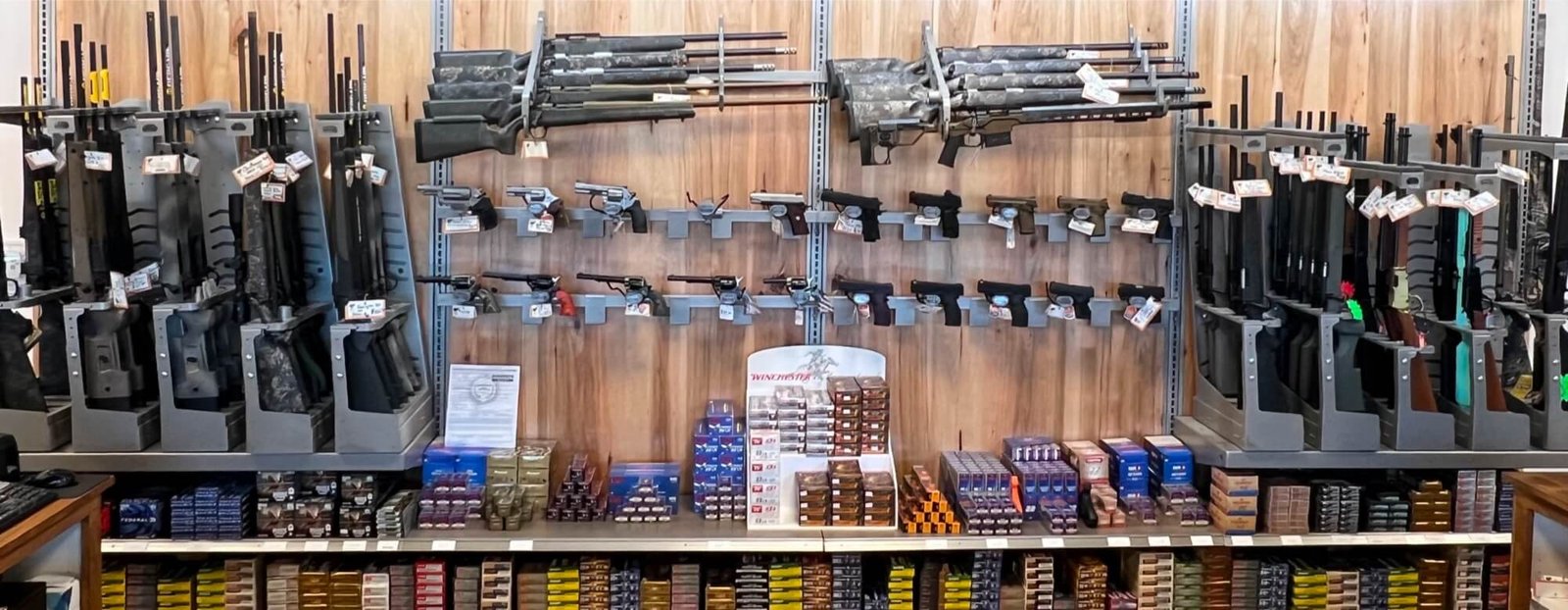
Louisiana firearms payment processing is a specialized fit problem for gun stores, FFL dealers, ammunition retailers, shooting sports businesses, hunting and outdoor merchants, and firearms ecommerce sellers. Operators in New Orleans, Baton Rouge, Shreveport, Lafayette, Lake Charles, Kenner, Bossier City, Monroe, Alexandria, and Houma may sell lawful products, but many mainstream processors still classify firearms and ammunition as elevated risk because of chargebacks, card-brand monitoring, shipping complexity, age restrictions, product restrictions, and reputational underwriting policies.
High Wire Payments approaches the Louisiana firearms category as a compliance and documentation exercise, not a shortcut around underwriting. A gun shop that sells handguns, long guns, ammunition, optics, safes, holsters, magazines, range memberships, training classes, gunsmithing services, and online accessories needs clear separation between regulated and non-regulated inventory. The processor and acquiring bank will want to understand what is sold, where it is shipped, how FFL transfers are handled, how customer identity and age are verified, and how refund or cancellation disputes are managed.
The Louisiana market has a strong local dealer footprint. Research identified Louisiana Firearms as a locally owned and veteran operated firearms dealer and manufacturing business in Baton Rouge, with a published address on Airline Highway and a customer flow that includes browsing selection, choosing a firearm, completing a federally required background check, and checking out. That practical retail workflow is the same type of workflow underwriters want to see documented: the merchant must show that payment acceptance supports lawful commerce and does not bypass federal firearm transfer requirements.
This page is educational and is not legal advice. Louisiana firearms businesses should confirm federal, state, parish, and municipal requirements with qualified counsel, ATF guidance, and their licensing advisors before changing sales practices or ecommerce checkout rules.
Why Louisiana firearms merchants are treated as high-risk
Firearms and ammunition merchants are high-risk because the payment provider must evaluate more than credit card volume. Underwriting may review the federal firearms license, ownership structure, business history, website language, product catalog, shipping restrictions, refund terms, transaction size, card-not-present volume, chargeback history, and any prior processing terminations. A Louisiana sporting goods store with a small selection of hunting ammunition may be reviewed differently from an ecommerce dealer selling firearms, parts, magazines, suppressor accessories, and tactical gear across state lines.
Louisiana law is relatively permissive compared with many states, but permissive state rules do not remove payment risk. Research notes that no state permit is required to possess a rifle, shotgun, or handgun in Louisiana. It also notes that Louisiana Revised Statutes 14:95.1 makes it unlawful for certain people convicted of specified felonies to possess a firearm or carry a concealed weapon for a period tied to completion of sentence, probation, parole, or suspension of sentence. For payment underwriting, these legal details matter because a processor wants to see that the merchant is not presenting card acceptance as a substitute for eligibility checks.
Another Louisiana-specific fact is the 2024 concealed carry change. Research from USCCA states that as of July 4, 2024, anyone at least 18 years old who can legally possess a firearm may concealed carry a firearm without a permit. That does not mean an FFL can relax retail controls. A processor may still expect documented procedures for federal background checks, in-store pickup, FFL-to-FFL transfers, age-aware checkout language, prohibited purchaser policies, and employee training for declined or delayed transactions.
Payment workflows for retail, range, ammunition, and ecommerce sales
A Louisiana gun store in Baton Rouge or Lafayette often needs more than a basic countertop terminal. The merchant may accept deposits on special orders, final payments after background check completion, range fees, membership billing, training class registrations, gunsmithing invoices, in-store ammunition sales, and ecommerce accessory orders. Each payment type carries a different risk profile. Deposits and special orders can create chargebacks if timing is unclear. Memberships can create recurring billing disputes. Ecommerce sales can create shipping and delivery disputes if the website does not explain restrictions before checkout.
Ammunition retailers in Shreveport, Bossier City, Lake Charles, and Alexandria should pay special attention to product descriptions, fulfillment controls, and customer service records. Bulk ammunition orders may have higher ticket sizes and can trigger bank review if volume spikes around hunting seasons, storms, elections, or national news cycles. Clear terms should state when orders are charged, how cancellations work, which carriers are used, which destinations are restricted, and what proof is retained when a shipment is delivered or returned.
Firearms ecommerce sellers need the strictest checkout design. A compliant website should not imply direct shipment of firearms to an unlicensed consumer where that is not permitted. It should explain that regulated firearm transfers must be completed through an appropriate FFL, and it should collect or confirm receiving dealer information before fulfillment. High Wire can review whether the payment application, product catalog, website footer, privacy policy, terms, return policy, shipping policy, and FFL transfer instructions tell the same story.
For category-specific guidance, review /firearms-and-ammunition-payment-processing/ and /firearms-payment-processing/. When your documents are ready, submit a review through /apply/.
Louisiana firearms merchant services comparison
The difference between a standard processor and a firearms-aware payment partner is usually discovered during underwriting, not during a sales call. A general provider may board a merchant under a broad retail profile and then freeze activity after a website scan finds firearms, ammunition, high-capacity accessories, or NFA-related terminology. A better process starts by disclosing the category up front and matching the merchant to an acquiring path that is willing to review the file on its actual facts.
This comparison is not a promise of approval. It is a planning framework. A Louisiana firearms merchant still has to pass underwriting, maintain accurate disclosures, comply with card-brand rules, and operate within applicable law. The benefit of a firearms-aware review is that problems are addressed before the file reaches an acquiring bank, which reduces avoidable declines, reserve surprises, and post-approval account stress.
Specific Louisiana market factors underwriters may ask about
Louisiana firearms businesses serve a diverse market that includes urban retail in New Orleans and Baton Rouge, hunting and outdoor customers around Monroe and Alexandria, range and training demand near Shreveport and Bossier City, and coastal outdoor communities around Houma and Lake Charles. That diversity can be positive, but it also means the merchant application should explain seasonal sales patterns, event-driven promotions, ecommerce traffic sources, and the difference between regulated firearms, ammunition, accessories, apparel, and general outdoor products.
Research from Shooting Industry Magazine on 2026 sales trends noted that handguns were continuing to outpace long guns in several dealer conversations, with ammunition, parts, and suppressor-related interest also drawing attention. The same reporting stated that, effective January 1, 2026, the 200 dollar federal tax stamp for suppressors, short-barreled rifles, short-barreled shotguns, and Any Other Weapons was eliminated under federal law, which retailers expected to influence suppressor demand. If a Louisiana merchant sells NFA-related items, accessories, or services, those terms should be described accurately and supported with lawful transfer procedures.
Underwriters may also consider the public safety and policy environment, even when a merchant is fully compliant. Research from Everytown stated that Louisiana repealed its concealed carry permit requirement in 2024 and that the state does not allow local officials to pass certain local public safety protections. Merchants should not treat that as payment approval context. Instead, they should use it as a reason to keep their own sales policies, prohibited purchaser language, employee training, and transaction records especially clear.
Documents Louisiana gun stores should prepare before applying
A strong Louisiana firearms merchant account file is built before the application is submitted. The goal is to help the underwriter understand who owns the business, what is being sold, how regulated items are transferred, how age and identity controls are handled, what appears on the website, and how disputes are prevented. Missing documents can delay review, and mismatched documents can create a decline even when the merchant is legitimate.
- Federal firearms license with current legal name, premises address, and expiration date
- Louisiana business registration, trade name records, and ownership information
- Government identification for each principal or beneficial owner requested by underwriting
- Recent bank statements matching the business entity and settlement account
- Processing statements from the last three to six months, if currently accepting cards
- Website URL, ecommerce platform details, shopping cart flow, and product category summary
- Written firearms transfer policy explaining FFL-to-FFL shipments and in-store pickup rules
- Ammunition shipping policy with carrier, destination, age, cancellation, and return language
- Refund, cancellation, privacy, terms of service, and customer support policies
- Chargeback history, prior processor notices, reserve history, or termination explanations if applicable
Louisiana merchants with multiple sales channels should separate the evidence by channel. For example, a Kenner storefront that also sells online accessories should provide photos or descriptions of the retail environment, point-of-sale flow, ecommerce checkout, and inventory categories. A Houma hunting and outdoor merchant with firearms, ammunition, fishing gear, apparel, and safety equipment should identify approximate revenue share by category so the processor is not forced to guess based on a few keywords.
Chargebacks, reserves, and account stability for firearms merchants
Chargeback risk in firearms is not limited to fraud. Many disputes start with delivery confusion, special-order timing, buyer remorse, canceled background check outcomes, delayed transfers, misunderstood restocking fees, or recurring membership billing. A customer may claim a product was not received, a deposit should have been refunded, or a class registration was not authorized. The merchant needs evidence that the customer saw the terms, received confirmation, and had a reasonable support path before the dispute reached the issuing bank.
High Wire encourages Louisiana merchants to monitor chargeback ratios before they become a card-brand problem. A practical internal target is to investigate trends around 0.7 percent rather than waiting until ratios approach formal monitoring thresholds. This can include descriptor testing, delivery evidence retention, signed invoices for in-store pickup, order confirmation emails, refund time stamps, customer service notes, and a weekly review of disputes by product category and sales channel.
Reserves are also possible in high-risk firearms processing. A reserve is not a penalty by itself; it is a risk control used by some acquiring banks when ticket size, chargeback history, ecommerce exposure, or business model creates potential liability. The merchant should ask how any reserve is calculated, when it is reviewed, what documentation can support a reduction, and whether the reserve applies to all transactions or only certain channels. Clear expectations are better than surprise funding interruptions.
Louisiana firearms merchant preparation checklist
Before applying for Louisiana firearms merchant services, use this checklist to reduce avoidable underwriting friction. It is designed for local gun stores, FFL dealers, ammunition sellers, range operators, training businesses, hunting merchants, outdoor retailers, and ecommerce sellers that need card acceptance without hiding the true nature of the business.
- Confirm the legal entity, DBA, tax ID, bank account, and FFL information all match or are clearly explained
- Remove unsupported claims, aggressive advertising language, and ambiguous shipping statements from the website
- Create clear product categories for firearms, ammunition, optics, parts, accessories, apparel, training, and range fees
- Document the federal background check and transfer workflow used for regulated firearms
- Publish age-aware and identity-aware language where appropriate for firearms and ammunition purchases
- Explain NFA-related products carefully if suppressors, SBRs, SBSs, AOWs, or related accessories are part of the catalog
- Add complete refund, cancellation, shipping, privacy, and customer support policies to the website footer
- Prepare three to six months of processing statements or a written startup projection if no history exists
- Set internal chargeback alerts, dispute response templates, and documentation retention rules
- Apply through /apply/ after reviewing firearms resources at /firearms-and-ammunition-payment-processing/ and /firearms-payment-processing/
High Wire Payments can review your Louisiana firearms payment profile and identify documentation gaps before the file is submitted for underwriting. If your business is in New Orleans, Baton Rouge, Shreveport, Lafayette, Lake Charles, Kenner, Bossier City, Monroe, Alexandria, Houma, or another Louisiana market, use /apply/ to request a compliance-aware review. Approval is never guaranteed, but a complete and accurate file gives the underwriter a clearer basis for a decision.
Louisiana firearms markets we support
High Wire reviews merchant files for storefront, range, ammunition, outdoor, and ecommerce businesses across Louisiana, including New Orleans, Baton Rouge, Shreveport, Lafayette, Lake Charles, Kenner, Bossier City, Monroe, Alexandria, and Houma.
Firearms-specific payment capabilities for Louisiana operators
These are practical controls designed for high-risk underwriting, card-brand expectations, and day-to-day firearms retail operations.
FFL-centered underwriting file review
High Wire organizes the FFL, entity records, ownership details, sales channels, and product categories before submission. The goal is to prevent a Louisiana gun store from being reviewed as an undisclosed general retailer.
Chargeback ratio monitoring at 0.7 percent
High Wire can help merchants set early alerts when disputes approach 0.7 percent of transactions. That gives the business time to review descriptors, refund rules, delivery evidence, and customer support records before ratios become more serious.
Ecommerce FFL transfer workflow review
For online firearms sellers, High Wire reviews checkout language, receiving dealer instructions, transfer timing, and customer confirmations. This helps the payment file show that card acceptance does not replace required FFL transfer procedures.
Ammunition and restricted shipping policy checks
Louisiana ammunition merchants can document carrier rules, destination restrictions, age-aware checkout language, cancellations, and returns. Clear shipping terms reduce non-receipt disputes and underwriting questions.
Retail POS and card-not-present separation
A storefront in Baton Rouge or Lafayette may have lower risk than an ecommerce catalog with national shipping. High Wire helps separate terminal, invoice, recurring, and online activity so the underwriter can evaluate each channel accurately.
Reserve and funding expectation planning
If a reserve is required, High Wire helps the merchant understand how it may be calculated, reviewed, and documented. The objective is predictable funding communication rather than surprise holds after volume increases.
Can a Louisiana gun store get credit card processing?
Yes, many Louisiana firearms merchants can apply for card processing, but the account must be reviewed as a firearms business. Underwriters usually request the FFL, product categories, website policies, processing history, and chargeback information before making a decision.
Is firearms payment processing considered high-risk in Louisiana?
Yes. The category is commonly treated as high-risk because of regulated products, ecommerce transfer rules, ammunition shipping, chargeback exposure, and bank policy restrictions. Louisiana law may be permissive, but payment providers still apply their own underwriting standards.
Do Louisiana firearms retailers need a state permit to possess firearms for payment underwriting?
Research notes that Louisiana does not require a state permit to possess a rifle, shotgun, or handgun. That fact does not replace federal FFL requirements for dealers or the processor documentation needed to support lawful sales.
How does Louisiana Revised Statutes 14:95.1 affect merchant review?
Louisiana Revised Statutes 14:95.1 addresses possession of firearms or concealed weapons by certain people convicted of specified felonies. For merchant services, it reinforces the need for clear sales procedures, prohibited purchaser policies, and background check workflows where applicable.
Did Louisiana permitless carry in 2024 change payment approval rules?
No. Research states that as of July 4, 2024, certain adults who can legally possess a firearm may concealed carry without a permit, but that does not determine merchant account approval. Banks still review the FFL, product mix, sales model, chargebacks, and website controls.
Can a Louisiana firearms ecommerce site accept cards for gun sales?
It may be possible if the site is accurately disclosed and underwritten for firearms ecommerce. The website should clearly explain FFL-to-FFL transfer procedures, receiving dealer requirements, shipping limits, cancellations, and customer support before checkout.
Can Louisiana ammunition retailers process online ammo orders?
Many ammo retailers can apply, but underwriting will look closely at shipping rules, age-aware language, chargeback history, and product descriptions. Bulk ammunition sales may require stronger documentation because ticket sizes and delivery disputes can be higher.
What documents should a Baton Rouge or New Orleans FFL prepare?
Prepare the current FFL, Louisiana business records, ownership IDs, bank documents, processing statements, website policies, product categories, transfer policy, ammunition shipping policy, and chargeback history. A complete file reduces back-and-forth during underwriting.
Will High Wire guarantee approval for my Louisiana firearms business?
No. High Wire does not offer guaranteed approval and will not advise merchants to hide restricted or regulated products. The role of the review is to prepare an accurate file, identify processor fit, and reduce avoidable underwriting problems.
Where should a Louisiana firearms merchant apply?
Review the category pages at /firearms-and-ammunition-payment-processing/ and /firearms-payment-processing/ first. When your documents and policies are ready, submit the business for review through /apply/.
Prepare your Louisiana firearms merchant account file
If you operate a gun store, FFL dealership, ammunition shop, range, hunting business, outdoor retail store, or firearms ecommerce site in Louisiana, High Wire Payments can review your file for processor fit and underwriting readiness. Apply at /apply/ with accurate documents, policies, and product details.
Apply Now