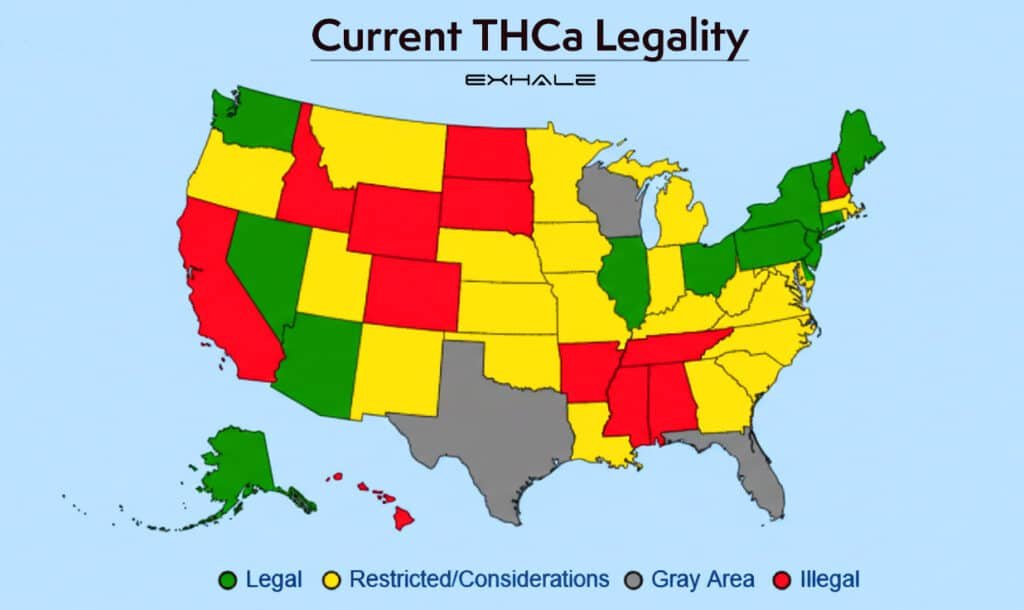
Is THCA Legal? Understanding The Nuances.
Explore the legality of THCA in the United States, including state-specific variations and compliance for hemp-derived products.
50+
States Reviewed
100+
Products Compliant
1000+
Merchants Serviced
24/7
Support Available
THCA, or tetrahydrocannabinolic acid, is a non-psychoactive cannabinoid found in cannabis plants. It is considered a precursor to THC (tetrahydrocannabinol) and only converts to the psychoactive compound when exposed to heat through a process known as decarboxylation. With a growing interest in hemp-derived cannabinoids, many potential sellers and consumers are left wondering about the legal status of THCA.
Understanding the Farm Bill
The Agriculture Improvement Act of 2018, commonly referred to as the Farm Bill, legalized hemp and its derivatives, including THCA, provided that they contain no more than 0.3% THC. This definition of hemp has led to an influx of hemp-derived products in the market, but it has also caused confusion regarding taxation, regulations, and the legality of various cannabinoids, including THCA.
Hemp-Derived Cannabinoid Compliance
While the Farm Bill legalized hemp-derived cannabinoids, ensuring compliance remains essential. Sellers must verify that their THCA products do not exceed the legal THC threshold of 0.3% on a dry weight basis. Additionally, products must be derived from hemp that is grown and processed in compliance with the state regulations.
Total THC Concerns and State Variations
One key aspect of cannabinoid legality is the total THC calculation, which includes both THCA and delta-9 THC content. Some states mandate that products containing THCA must also consider total THC, leading to potential challenges for compliance. These requirements differ significantly from state to state. For example, some states may classify THCA as legal if it meets the 0.3% rule, while others may not allow its sale at all. As many laws are still being adjusted and interpreted, it’s crucial for merchants and consumers to stay informed about their state’s regulations.
Shipping Risks of THCA Products
Shipping THCA products can be risky due to varying laws across states and the potential for misinterpretation. While some states have legalized THCA, others might still classify it as an illegal substance. Therefore, business owners shipping THCA across state lines should carefully assess their legal risks, verifying whether both the sender and recipient are located in states that allow for THCA sales and distribution.
Lab Testing and Product Safety
To ensure compliance with legal standards, it is imperative that THCA products undergo rigorous lab testing. Testing should include not only the levels of THCA and delta-9 THC but also for contaminants like heavy metals, pesticides, and microbial impurities. Lab-tested products provide greater transparency and help consumers make informed choices while ensuring that sellers maintain legal standing.
Age Restrictions
Age restrictions associated with THCA products vary significantly. Merchants may enforce age restrictions to reflect their compliance with local laws, often requiring customers to be 18 or 21 years old, depending on the state’s regulations. Understanding and adhering to these age restrictions is essential for merchant compliance and for protecting minors.
Product Claims and Marketing
When advertising THCA products, businesses must comply with guidelines set forth by the FDA and other regulatory bodies. Claims made about the effects or benefits of THCA must be supported by evidence and should not mislead customers. Proper marketing ensures long-term success and builds consumer trust in products.
Why Payment Processors Treat THCA as High-Risk
Due to the legal complexities surrounding THCA, payment processors often classify it as a high-risk product. This classification arises from the uncertainty about product legality, potential chargebacks, and regulatory scrutiny. Merchants selling hemp-derived products must be prepared to work with payment processors that understand hemp’s evolving landscape and can provide suitable payment solutions.
Merchants Should Consult Legal Counsel
The legality of THCA is subject to change and can vary significantly by state. Merchants aiming to sell THCA products should consult with legal counsel to navigate this complex landscape effectively. This ensures compliance with local laws and helps mitigate risks associated with selling hemp-derived cannabinoids.
Why Trust High Wire Payments?
We provide compliant and adaptable payment solutions for high-risk industries.
Transparent Pricing
No hidden fees—just straightforward pricing plans.
Risk Management
Comprehensive risk assessments to ensure compliance.
Dedicated Support
Expert assistance available 24/7 for your needs.
Is THCA legal in the United States?
Legality varies by state; some states permit it while others do not.
What are the risks associated with selling THCA?
Selling THCA carries significant legal risks and potential for merchant account issues.
Can I purchase THCA products online?
It depends on your state laws; ensure to check before making a purchase.
Are there age restrictions for THCA products?
Yes, these vary by state and local regulations; typically 18 or 21 years old.
What should I look for when purchasing THCA products?
Ensure the product has gone through lab testing and contains less than 0.3% THC.
How can I ensure I’m compliant while selling THCA?
Consult with legal experts and remain aware of your state’s regulations.
Get Started With High Wire Payments
Let us help you navigate the complexities of THCA compliance and payment processing.
Apply Now →