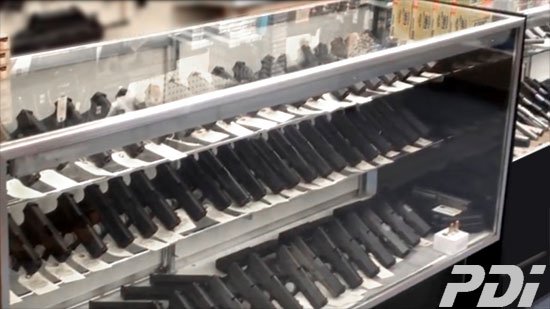
Expect processors to review your FFL, product mix, website policies, fulfillment process, chargeback history, and age-restricted sales controls before approving card acceptance.
indiana firearms credit card processing high-risk merchants.
Indiana FFL dealers, gun shops, ammunition sellers, sporting goods retailers, and online firearms merchants need payment processing built around underwriting, product controls, chargeback prevention, and federal compliance documentation. High Wire Payments helps firearms businesses prepare clean applications without promising approval or bypassing bank risk review.
IN
Indiana firearms merchants
21
handgun buyer age
18
long gun buyer age
2022
permitless carry effective
Indiana firearms credit card processing is a specialized underwriting category for FFL dealers, gun shops, ammunition sellers, sporting goods retailers, gunsmiths, range-adjacent stores, and online firearms-related merchants. Operators in Indianapolis, Fort Wayne, Evansville, South Bend, Carmel, Fishers, Bloomington, Hammond, Gary, Lafayette, and Muncie may sell lawful products in a state with relatively permissive firearms rules, but payment acceptance still depends on bank, processor, card network, and platform risk standards. A clean Indiana business filing or a valid Federal Firearms License does not automatically make a merchant low risk to an acquiring bank.
The payment risk profile is driven by product category, transaction behavior, shipping method, chargebacks, refund disputes, and compliance controls. A traditional sporting goods retailer that sells archery equipment, apparel, safes, optics, ammunition, and a limited firearm inventory may be reviewed differently from an online merchant advertising serialized firearms, suppressor accessories, parts kits, magazines, or tactical components. If a website uses aggressive claims, unclear shipping language, incomplete age controls, or inconsistent product labeling, the underwriting file can be delayed or declined even when the underlying products are legal to sell.
Indiana law and federal law both matter. Research sources note that open carry and concealed carry are legal in Indiana without an additional state carry license for qualified Hoosiers, and permitless concealed carry took effect on July 1, 2022. The same research also notes that Indiana has no state laws regulating semi-automatic firearms, so-called assault weapons, large-capacity magazines, ghost guns, bump stocks, or similar items. Those points help describe the state environment, but they do not remove federal FFL obligations, age restrictions, background check requirements, ATF recordkeeping, or processor restrictions on how firearms-related products can be marketed and fulfilled.
A product can be lawful in Indiana and still require enhanced underwriting. Banks commonly ask for proof of FFL status, age-gating, NICS or transfer procedures, ship-to-FFL controls for online firearm sales, refund policies, and a product catalog review before enabling card processing.
why Indiana firearms merchants are treated as high risk
Firearms merchants are classified as high risk because the category combines regulated goods, age-restricted sales, political sensitivity, fulfillment complexity, and elevated dispute exposure. A chargeback involving a firearm, ammunition order, accessory bundle, or training deposit can require more evidence than a standard retail dispute. The processor may need to see the invoice, customer authorization, signed transfer paperwork when applicable, delivery confirmation, age verification, refund policy acceptance, and communications showing that the customer understood the fulfillment timeline.
Indiana retailers often operate hybrid businesses. A gun shop in Fort Wayne may sell firearms, ammunition, holsters, optics, cleaning kits, and apparel through a physical storefront while also listing inventory online. A sporting goods retailer in Evansville may process in-person card transactions for lawful accessories but require a separate review for ecommerce ammunition sales. A dealer near Bloomington may use a website only to reserve firearms for transfer at the counter. Each model changes the risk profile because underwriting distinguishes card-present retail, ecommerce accessories, ammunition shipment, and serialized firearm fulfillment through an FFL transfer path.
Market conditions also affect payment risk. Shooting Industry reported that many shops were looking toward 2026 after a slower late-2025 retail period, while handguns continued to outpace long guns at multiple stores. The same reporting highlighted increased interest in suppressors as the calendar moved into 2026 after the federal $200 tax stamp for suppressors, short-barreled rifles, short-barreled shotguns, and Any Other Weapons was reported as eliminated effective January 1, 2026. For payment underwriting, that does not mean NFA controls disappear; it means merchants should be prepared to explain how regulated products are sold, documented, and transferred.
Indiana firearms rules that affect payment underwriting
Payment processors are not legal advisors, but they do evaluate whether a merchant appears to understand the rules that apply to its sales model. Research indicates that only Indiana residents or residents of neighboring states who are at least 18 years old can buy long guns, while handgun purchasers must be at least 21 years old and Indiana residents. Those age and residency points should be reflected in counter procedures, ecommerce language, training materials, and customer-facing policies where relevant. If your website suggests that anyone can buy any firearm online and have it shipped directly to a home, that language will be a serious underwriting problem.
The same research notes that Indiana allows open and concealed carry without a permit for qualified individuals and that NFA-regulated weapons and devices are legal in Indiana. A merchant file should still distinguish carry rules from retail transfer rules. Carry eligibility is not the same as purchase eligibility, and purchase eligibility is not the same as online checkout authorization. Underwriters generally want to see that serialized firearms are transferred through appropriate FFL procedures, that ammunition sales include age controls, and that prohibited persons are not invited to purchase restricted goods.
Indiana does not appear from the provided research to impose the same kind of broad state-level firearms product bans seen in some other jurisdictions, but local business licensing, zoning, signage, range rules, and municipality-specific requirements can still matter. A retailer in Indianapolis or South Bend may face different zoning and occupancy questions than a rural dealer. A store in Carmel or Fishers may need to document local approvals, lease permissions, alarm systems, and secure storage practices for its landlord, insurer, and bank. If a city or county requirement applies, include it in the underwriting packet rather than assuming the processor will not ask.
Underwriters review how your store presents restricted products. Clear buyer age language, transfer-to-FFL instructions, ammunition shipping restrictions, product labeling, and refund terms can reduce confusion and help prevent disputes.
FFL dealers, gun shops, ammunition sellers, and online merchants
An Indiana FFL dealer applying for merchant services should expect questions about license type, premises address, ownership, inventory categories, transfer procedures, and whether the business sells online. A physical shop in Lafayette may process mostly card-present sales at a countertop terminal, while an online merchant in Muncie may rely on a gateway, hosted checkout, fraud filters, and AVS matching. A dealer in Hammond or Gary may have a heavy mix of layaway, special orders, and transfers, which can create timing disputes if customer communication is not well documented.
Ammunition sellers need especially clear policies because ammo can be high-volume, heavy, sensitive to shipping costs, and prone to customer service disputes. Chargebacks often arise from delayed shipment, carrier restrictions, address changes, buyer remorse, or misunderstanding about age verification. The merchant should label ammunition products accurately, avoid unsupported performance claims, list caliber and quantity clearly, state shipping limitations, and confirm that the buyer meets applicable age requirements. High Wire Payments reviews these elements before a file is submitted because an underwriter will often look at the same pages.
Online firearms-related merchants also need to separate product classes. Serialized firearms, ammunition, magazines, optics, holsters, parts, gunsmithing services, training classes, range memberships, and apparel do not all carry the same risk. If the business uses one checkout for all categories, the processor may request more controls. If the website is accessory-only, it should not include language implying direct shipment of regulated firearms. If the site lists firearms for reservation or purchase, the checkout flow should explain that transfer occurs through an FFL and that the customer must satisfy all legal requirements before taking possession.
documents Indiana firearms merchants should prepare
The fastest path through firearms underwriting is usually a complete, consistent file. High Wire Payments helps Indiana merchants organize documentation before submission so the processor does not have to chase basic information. The goal is not to hide risk; it is to present the business accurately, explain the sales model, and reduce preventable objections. If your application says sporting goods but your website prominently sells firearms, ammunition, and suppressor accessories, the mismatch can create a decline. If your file clearly identifies the product mix and compliance controls, the underwriter has a better basis for review.
- Current Federal Firearms License showing legal entity name, premises address, and license type
- Indiana business registration or Secretary of State filing for the operating entity
- Government-issued identification for each principal owner listed on the merchant application
- Recent processing statements showing volume, refunds, chargebacks, and card-present versus ecommerce mix
- Three to six months of business bank statements matching the legal entity on the application
- Product catalog or inventory summary separating firearms, ammunition, parts, accessories, training, and apparel
- Website URL, checkout screenshots, age-gate screenshots, and transfer-to-FFL language for online sales
- Written refund, cancellation, shipping, layaway, special order, and transfer fee policies
- Chargeback response examples, delivery confirmation procedures, and signed receipt practices
- Local business license, zoning approval, lease permission, insurance certificate, or range-related documents if applicable
Merchants should also prepare an explanation of seasonal volume. Indiana retailers can experience spikes around hunting seasons, holiday promotions, gun shows, election cycles, law changes, or product-specific demand. Shooting Industry’s 2026 reporting described continued handgun strength and a suppressor-related uptick, while marketplace reporting from Guns.com noted more than 1,100 retail stores selling through its marketplace in the fourth quarter and a collective increase of more than 47% for those dealers. If your volume is expected to rise because of online marketplace listings, NFA accessory demand, or bulk ammunition promotions, disclose that up front so limits and reserves can be discussed realistically.
chargebacks, fraud controls, and firearms fulfillment
Chargeback prevention is central to firearms merchant services because disputes can involve more than product dissatisfaction. A customer may challenge a deposit after failing a background check, dispute a layaway cancellation fee, claim that ammunition arrived late, or misunderstand that a firearm must ship to an FFL rather than a residential address. The merchant’s evidence package should include signed receipts, order acknowledgments, policy acceptance records, tracking numbers, communications, and transfer-related documentation where appropriate. The clearer the record, the easier it is to respond within card network deadlines.
Fraud screening for Indiana online sellers should include AVS, CVV, velocity controls, IP mismatch review, high-ticket order holds, duplicate order detection, and manual review for unusual ammunition quantities or expedited shipping requests. Some merchants also benefit from separating card-present and ecommerce merchant IDs so a dispute spike in one channel does not distort the performance of the other. High Wire Payments can help merchants discuss these options with underwriting, but the final configuration depends on bank approval, product mix, volume, and the gateway tools available.
Product labeling matters because vague listings create disputes and compliance questions. A firearms-related website should identify whether an item is a serialized firearm, ammunition, magazine, accessory, tool, training class, or apparel item. It should describe whether the product ships directly, ships only to an FFL, requires in-store pickup, requires age verification, or is subject to additional legal checks. This is especially important for merchants serving customers across state lines from Indiana, because the buyer’s destination state may have restrictions that do not exist in Indiana. Underwriting looks more favorably on merchants that show controls rather than assuming all sales are permitted.
Indiana firearms payment processing preparation checklist
Before an Indiana gun shop, FFL dealer, ammunition seller, or firearms-related ecommerce business applies for a new merchant account, review the following checklist. The purpose is to reduce avoidable delays, align the application with the actual sales model, and demonstrate that the business understands both payment risk and regulated-product handling.
- Confirm that the legal business name, DBA, FFL, bank account, website footer, and merchant application match or are clearly explained.
- Update website terms to describe firearm transfer procedures, FFL shipment requirements, buyer eligibility, and denied-transfer outcomes.
- Add age controls for firearms, ammunition, and other age-restricted products, including clear buyer age language at checkout.
- Separate product categories so firearms, ammunition, accessories, training, and apparel are not presented as one undifferentiated catalog.
- Publish refund, cancellation, layaway, shipping, special order, and restocking policies before accepting online payments.
- Collect recent processing statements and calculate chargeback ratio, refund ratio, average ticket, high ticket, and monthly volume.
- Document fraud controls such as AVS, CVV, manual review, delivery confirmation, signature capture, and high-risk order holds.
- Prepare explanations for seasonal spikes tied to hunting, holidays, marketplace sales, suppressor demand, or bulk ammunition promotions.
- Review local requirements in Indianapolis, Fort Wayne, Evansville, South Bend, Carmel, Fishers, Bloomington, Hammond, Gary, Lafayette, or Muncie before submitting.
- Remove unsupported claims, confusing shipping promises, prohibited-product language, or outdated policy pages from the website.
High Wire Payments works with Indiana firearms merchants that want a realistic underwriting review before they submit sensitive documentation to a processor. We do not promise approval, ignore compliance concerns, or advise merchants to mislabel products. We help FFL dealers, gun shops, ammunition sellers, sporting goods retailers, and online firearms-related merchants prepare an accurate file, identify likely objections, and pursue payment options appropriate to the business model.
Indiana firearms markets we review
High Wire Payments supports applications from Indiana firearms merchants in major metros, college towns, suburban retail corridors, and regional sporting goods markets.
Firearms payment support built for Indiana operators
Our review focuses on the specific controls banks expect from regulated-product merchants, not generic retail processing promises.
FFL documentation mapping
We compare the FFL, legal entity, DBA, premises address, bank account, and website footer before submission. If the names or addresses do not align, we identify what needs an explanation so the underwriter is not left guessing.
Website and catalog review
We review Indiana firearms websites for clear product labeling across firearms, ammunition, parts, accessories, training, and apparel. We also flag missing ship-to-FFL language, weak age controls, vague refund terms, and checkout copy that could create compliance concerns.
Chargeback evidence planning
We help merchants organize signed receipts, policy acceptance records, delivery confirmation, transfer documentation, and customer communications. This gives Indiana gun shops a stronger response package when disputes involve deposits, denied transfers, special orders, or ammunition delivery.
Card-present and ecommerce separation
When appropriate, we help merchants discuss separate setups for storefront transactions and online sales. A shop in Indianapolis or Fort Wayne with a retail counter and ecommerce catalog may need different controls, descriptors, limits, and gateway settings for each channel.
Age-restricted sales controls
We check that age language is consistent with Indiana and federal requirements, including handgun and long gun buyer age distinctions noted in the research. For ammunition and online orders, we look for checkout acknowledgments and manual review procedures.
Volume and seasonality explanation
We help merchants explain demand spikes from hunting seasons, holiday promotions, handgun demand, marketplace sales, and suppressor-related interest reported in 2026 industry coverage. Clear forecasting helps underwriting evaluate limits, reserves, and expected ticket size.
Can Indiana FFL dealers get credit card processing?
Yes, some Indiana FFL dealers can be reviewed for firearms merchant processing, but approval depends on underwriting. Banks typically review the FFL, business documents, product mix, website policies, chargeback history, and fulfillment controls before making a decision.
Is a separate Indiana state firearms dealer license required for payment processing?
The research provided does not identify a separate statewide Indiana firearms dealer license requirement beyond federal FFL obligations. Underwriters may still ask for local business licenses, zoning approvals, lease permission, or other municipal documents depending on where the shop operates.
What buyer ages should Indiana firearms merchants show on their website?
The provided research states that long gun buyers must be at least 18 and be Indiana residents or residents of neighboring states, while handgun buyers must be at least 21 and Indiana residents. A merchant should confirm current legal requirements with counsel and reflect accurate age language in checkout and store policies.
Does Indiana permitless carry make firearms payment processing easier?
Not by itself. Indiana permitless concealed carry took effect on July 1, 2022, but carry rules are different from retail transfer rules and payment underwriting. Processors still review FFL status, buyer eligibility controls, product labeling, and chargeback risk.
Can an Indiana gun shop sell firearms online with card payments?
Potentially, but the website must make the fulfillment process clear. Serialized firearms generally need appropriate FFL transfer procedures, and the checkout should not imply direct-to-home shipment where that would be improper.
Are ammunition sellers in Indiana considered high risk by processors?
Usually yes. Ammunition sales can trigger enhanced review because of age restrictions, shipping limitations, high-volume orders, fraud exposure, and delivery disputes. Clear product labeling and shipping policies are important.
Can Indiana merchants process payments for suppressors or NFA items?
Research notes that NFA-regulated weapons and devices are legal in Indiana and that 2026 industry reporting highlighted increased suppressor demand after a federal tax-stamp change. Payment acceptance still depends on processor policy, federal compliance, documentation, and careful product handling.
Which Indiana cities do you support for firearms merchant reviews?
High Wire Payments can review firearms merchant files from Indianapolis, Fort Wayne, Evansville, South Bend, Carmel, Fishers, Bloomington, Hammond, Gary, Lafayette, Muncie, and other Indiana markets. Local zoning or business licensing should be checked with the municipality.
Why did my firearms merchant account application get declined?
Common reasons include mismatched business documents, unclear FFL information, prohibited or poorly labeled products, missing age controls, vague refund policies, high chargebacks, or website language that conflicts with the application. A pre-submission review can identify many of these issues.
Does High Wire Payments guarantee approval for Indiana firearms businesses?
No. Firearms merchant processing is subject to underwriting, bank approval, card network rules, and compliance review. High Wire Payments helps merchants prepare accurate documentation and pursue appropriate options, but it does not guarantee approval.
Prepare your Indiana firearms merchant file
If you operate an Indiana FFL, gun shop, ammunition business, sporting goods store, or online firearms-related merchant, High Wire Payments can review your documents, website, chargeback profile, and compliance controls before processor submission.