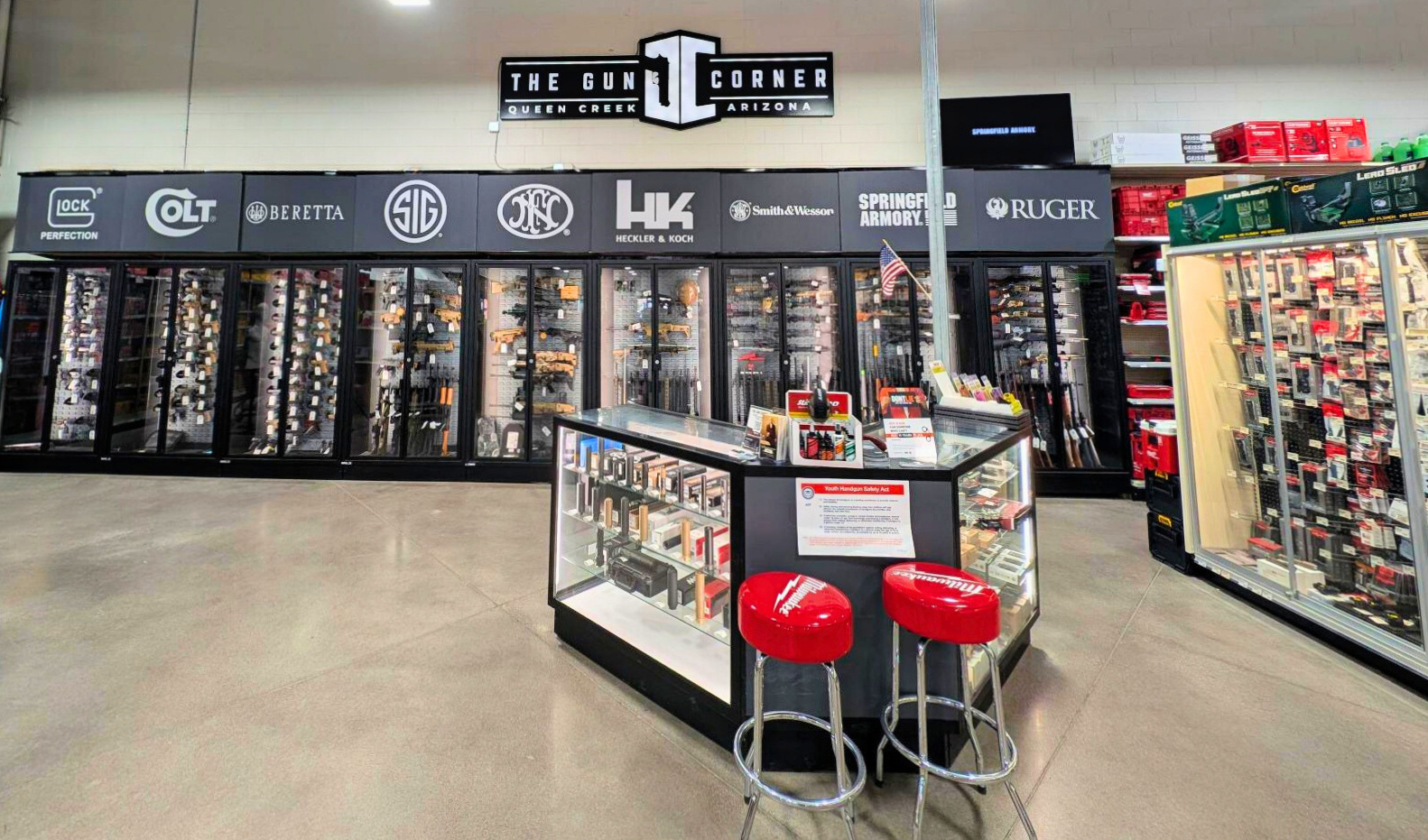
Georgia firearms merchants should expect enhanced review of licenses, product mix, shipping practices, refund terms, and chargeback history. A stronger file helps the acquiring bank understand the business before volume begins.
georgia firearms credit card processing for high-risk merchants.
Georgia firearms retailers, FFL transfer desks, ranges, and ammunition sellers operate in a category banks review closely. High Wire Payments helps merchants prepare underwriting files, reduce chargeback exposure, document age controls, and align product catalogs with card-network and acquiring-bank expectations.
GA
Firearms Market
FFL
Core License Review
21+
Handgun Buyer Controls
0.7%
Chargeback Alert Target
Georgia firearms credit card processing requires more preparation than a standard retail account because FFL merchants sell regulated products, process higher-ticket transactions, and often combine in-store sales with online inventory, transfers, ammunition, optics, training, and range memberships. Operators in Atlanta, Augusta, Columbus, Savannah, Athens, Macon, Sandy Springs, Roswell, Alpharetta, Marietta, Warner Robins, and Valdosta need payment acceptance that can withstand enhanced underwriting, not just a basic terminal approval.
The Georgia market is active and diverse. Research examples include Georgia Gun Store in Gainesville, which publicly lists categories such as firearms, ammo, optics, silencers, gun parts, magazines, reloading supplies, safes and vaults, and used guns. Georgia Gun Club in Buford describes an 8,000 square foot retail store connected to a 100 yard indoor shooting range and training facility. That kind of mixed retail, range, training, transfer, and online-store model is common across the state, but it also creates more questions for banks reviewing the merchant profile.
Firearms merchants are considered high risk because of legal complexity, reputational sensitivity, card-not-present fraud, delivery disputes, denied background checks, layaway cancellations, restocking complaints, and chargebacks on expensive products. High Wire Payments approaches Georgia FFL processing as a compliance file first: the acquirer needs to know who owns the business, which licenses apply, what products are sold, how age and eligibility are controlled, how shipping is handled, and how refund policies are disclosed before a transaction occurs.
Georgia Code 16-11-126(a) allows a person who is not prohibited by law from possessing a handgun or long gun to have or carry a weapon on their property, in their home, motor vehicle, or place of business without a valid weapons carry license. Georgia also passed permitless carry legislation in 2022, and research sources note a 2017 law allowing concealed weapons on college campuses. These facts affect the local firearms environment, but payment underwriting still focuses on federal licensing, compliant sales procedures, card-network risk, and documented merchant controls.
why georgia firearms merchants are treated as high-risk
A Georgia gun shop may look like a traditional retail store from the outside, but the underwriting file looks very different to a bank. Firearms, serialized products, ammunition, magazines, optics, suppressors, Class III items, parts, and accessories can each raise different questions. If the store also operates a range, sells memberships, conducts training, accepts online orders, or manages FFL transfers, the processor must understand which revenue streams are present and which products can be purchased online versus in person.
The research shows how this plays out in the local market. Georgia Gun Club publicly lists transfer pricing, including $25 per firearm for members, $35 per firearm for non-members, $70 per Class III item for members, and $150 per Class III item for non-members, with a minimum 24-hour processing note from receipt Monday through Friday. Those operational details are important because transfers, NFA items, and third-party online purchases can create customer-service disputes if timing, fees, identification, eligibility, and pickup procedures are not clearly disclosed.
Banks also evaluate public perception and regulatory exposure. Advocacy research cited in the supplied materials ranks Georgia with a 5.5 composite gun law strength score and a gun death rate of 17.6 per 100,000 residents, while noting that Georgia repealed its last foundational policy through permitless carry legislation in 2022. High Wire Payments does not make political judgments for merchants, but underwriting teams do consider the broader legal and reputational environment when deciding whether to support firearms, ammunition, and related card-not-present sales.
payment risks for ffl retailers, ammunition sellers, and ranges
The most common risk is not a single transaction; it is a mismatch between the merchant’s actual operation and the way the account was underwritten. A Georgia merchant that applies as sporting goods but sells firearms, ammunition, suppressors, or regulated accessories can create a serious issue if the acquirer later discovers restricted product categories. The better approach is to disclose the full catalog, including online categories, retail inventory, training, range fees, gunsmithing, layaway, used guns, and transfer income.
Chargebacks in firearms retail often come from delayed fulfillment, inventory errors, denied transfers, buyer remorse after a high-ticket purchase, disputed deposits, or misunderstanding of final-sale policies. Ammunition orders add another layer because weight, shipping restrictions, carrier requirements, adult-signature expectations, and state-by-state limitations can cause delays. A customer in Atlanta may expect local pickup, while a customer ordering online from Savannah or Columbus may expect shipping. If the checkout flow does not explain what happens after payment, disputes become more likely.
Card-not-present sales create additional fraud concerns. Firearms and optics are attractive targets for stolen-card purchases because individual orders can be expensive and resold quickly. Ammunition, magazines, and accessories can also generate velocity spikes during demand surges. High Wire Payments encourages Georgia merchants to use AVS, CVV, device review, order velocity thresholds, manual review for mismatched billing and shipping addresses, and signed pickup procedures for local transfers. These controls help show the bank that risk is managed before losses occur.
Firearms merchants should label product pages and receipts clearly: firearm type, caliber, manufacturer, serialized-item status, magazine capacity where applicable, ammunition type, transfer requirement, pickup location, shipping limitation, refund status, and age or eligibility requirement. Clear product labeling does not replace legal compliance, but it materially reduces customer confusion and chargeback exposure.
georgia law context and payment underwriting
Georgia’s firearms laws are often described as permissive compared with many other states, but permissive state carry rules do not eliminate merchant obligations. Retailers still need the appropriate federal firearms license for regulated firearm sales. Transactions involving handguns, long guns, receivers, suppressors, and other regulated products must be handled according to applicable federal and state requirements. Payment processors do not perform background checks, but they do expect the merchant to show that regulated sales are conducted through the required FFL process.
The Georgia.gov firearms license material referenced in the research discusses eligibility for individuals applying for a firearms license, including age-related requirements, Georgia residency, U.S. citizenship or legal residency, and disqualifying felony convictions or pending criminal proceedings. That individual license context is different from a merchant account, but it demonstrates why age and eligibility language matters. A payment underwriting team will ask how the retailer prevents prohibited sales, verifies age where required, and communicates that payment acceptance is not the same as approval to receive a firearm.
Georgia Code 16-11-126(a) and the 2022 permitless carry change may be familiar to customers, especially in cities such as Marietta, Macon, Athens, and Augusta. However, a customer’s ability to possess or carry under state law does not override transfer rules, NICS procedures, FFL policies, store rules, or acquiring-bank restrictions. A Georgia firearms merchant should make that distinction visible at checkout, on receipts, in online terms, and at the pickup counter.
documents georgia firearms merchants should prepare
Underwriting for a Georgia firearms merchant is smoother when the application package is complete before submission. The bank wants to verify the legal entity, ownership, location, industry, licensing, processing history, website content, refund policy, chargeback exposure, and product categories. If the merchant has multiple revenue streams, each should be explained. A range in Alpharetta that sells memberships, training, firearms, ammunition, and accessories should not present the same file as a small ammunition-only ecommerce seller.
- Current Federal Firearms License with the correct business name and premises address
- Special Occupational Tax documentation if the merchant sells or transfers NFA or Class III items
- Georgia business registration and local occupational tax or business license where applicable
- Government-issued identification for owners and beneficial ownership information
- Three to six months of recent processing statements if the business has processed cards before
- Three months of business bank statements showing operating activity and deposits
- Website URLs, online catalog screenshots, and a list of restricted or regulated product categories
- Written age-verification, pickup, transfer, shipping, and background-check procedures
- Refund, cancellation, layaway, restocking, and denied-transfer policies
- Chargeback logs, fraud-prevention tools, and customer-service contact procedures
A strong document package also explains what is not sold. If a Georgia merchant does not sell unserialized frames, certain conversion devices, prohibited accessories, international shipments, or products outside its approved catalog, that should be stated. Underwriters prefer a clear yes-and-no product matrix over vague language. High Wire Payments helps merchants organize those details so the acquiring bank can review the account accurately instead of making assumptions from a website menu or social media page.
local market considerations across georgia cities
Georgia firearms retail is not one uniform market. Atlanta and Sandy Springs merchants may see more card-not-present reservations, training bookings, and urban retail traffic. Alpharetta, Roswell, and Marietta operators often combine suburban retail, range, instruction, accessories, and memberships. Savannah and Valdosta merchants may serve hunters, military families, travelers, and regional buyers. Warner Robins has a strong military-adjacent customer base, while Macon, Augusta, Athens, and Columbus each have different retail corridors, local zoning expectations, and customer pickup patterns.
Local differences matter because underwriting looks at the merchant’s actual customer journey. Does the customer pay online and pick up in store? Does the business ship ammunition? Are firearms shipped only to another FFL? Are range memberships billed monthly? Are training deposits refundable? Are private event bookings paid in advance? Are transfers charged when the firearm is received or when the customer picks it up? Every one of these details affects the processing setup and the risk controls attached to the account.
The supplied research also highlights public operator examples. Georgia Gun Store in Gainesville lists a broad retail catalog that includes ammo, firearms, gear, supplies, optics, silencers, police gear, safes, vaults, reloading supplies, used guns, and layaway instructions. Georgia Gun Club in Buford presents a retail-plus-range model. These examples show why a Georgia firearms processing page cannot assume a single business type. The payment solution must match the specific sales model, not the category label alone.
georgia firearms payment processing preparation checklist
Before applying for high-risk merchant services, Georgia firearms retailers should complete an internal review that mirrors what the acquiring bank will review. The goal is not to guarantee approval; no responsible provider should claim that. The goal is to remove avoidable confusion, document compliance controls, and identify risk issues before the account reaches underwriting.
- Match the legal business name, DBA, FFL, bank account, website footer, and storefront signage wherever possible
- Create a written product matrix that separates firearms, ammunition, optics, accessories, range fees, training, memberships, and transfers
- Confirm that all online firearm purchases route to the required FFL transfer process before pickup or delivery
- Add age, eligibility, background-check, and transfer language to product pages, cart pages, receipts, and customer emails
- Publish clear refund, cancellation, layaway, restocking, special-order, and denied-transfer terms before checkout
- Use AVS, CVV, velocity controls, manual review, and address-mismatch rules for ecommerce orders
- Track chargeback ratios and investigate disputes before they approach card-brand monitoring thresholds
- Keep shipping policies specific for firearms, ammunition, accessories, adult-signature requirements, and local pickup
- Train staff to explain that payment authorization does not mean a firearm transfer has been approved
- Review municipal zoning, signage, range, pawn, training, or occupational-license requirements with local counsel or local authorities
High Wire Payments works with Georgia firearms merchants that want a more complete underwriting presentation for retail, ecommerce, FFL transfers, ammunition sales, accessories, ranges, and training programs. If your current processor is asking new questions, holding funds, rejecting firearms volume, or requesting additional documents, a structured review can help determine the next step without overpromising approval or ignoring compliance realities.
Georgia firearms payment markets we review
High Wire Payments supports underwriting preparation for firearms merchants across Georgia, including retail counters, FFL transfer desks, ammunition sellers, ecommerce shops, training businesses, and range operators.
Specific support for Georgia firearms merchants
Firearms processing requires documented controls. High Wire Payments focuses on the operational details that acquiring banks and risk teams ask to see.
FFL document packaging
We help organize the Federal Firearms License, ownership records, business registration, local license information, and SOT documentation when Class III or NFA transfers are part of the model. The file is prepared so the underwriter can compare the license, premises address, bank account, and website without guessing.
Product catalog review
We review firearms, ammunition, optics, silencers, magazines, reloading supplies, accessories, training, and range fees as separate revenue lines. That helps prevent an account from being approved for one activity while the website shows another.
Chargeback ratio monitoring
High Wire Payments helps merchants monitor dispute activity with early attention around a 0.7% chargeback ratio. The goal is to identify refund, fulfillment, pickup, or denied-transfer issues before they become a card-brand monitoring problem.
Age and eligibility controls
We help document checkout language, staff procedures, pickup disclaimers, and receipt terms that explain age restrictions, background-check steps, and transfer requirements. This is especially important when customers pay online before completing an in-person FFL process.
Ecommerce fraud controls
Georgia firearms and ammunition sellers can use AVS, CVV, velocity limits, manual order review, address-mismatch checks, and local-pickup verification. These controls help reduce stolen-card risk on high-ticket firearms, optics, and bulk ammunition orders.
Policy and descriptor alignment
We review billing descriptors, website footers, refund terms, shipping rules, layaway policies, and transfer-fee disclosures. Clear alignment helps customers recognize charges and gives the processor a more consistent view of the business.
Can a Georgia gun store get credit card processing for firearms sales?
Yes, but firearms sales are usually reviewed as high-risk and require enhanced underwriting. The merchant should be prepared to provide its FFL, ownership documents, product catalog, policies, and processing history before approval is considered.
Do Georgia FFL merchants need a separate state license for payment processing?
The federal FFL is the core license underwriters expect for regulated firearm sales. Georgia weapons carry licenses are individual carry credentials, not merchant account documents, and local business, occupational, zoning, pawn, range, or SOT requirements may still apply depending on the operation.
Does Georgia permitless carry in 2022 make firearms payment processing easier?
Not necessarily. Georgia’s 2022 permitless carry legislation affects carry rules, but banks still evaluate firearms merchants based on federal licensing, sales procedures, chargeback risk, product categories, website content, and card-network requirements.
Can Georgia ammunition sellers process online credit card payments?
Ammunition ecommerce can be supported only when the processor and acquiring bank are comfortable with the product category and controls. Merchants should document age screening, shipping limitations, carrier practices, refund terms, and fraud controls such as AVS, CVV, and manual review.
How should a Georgia FFL handle online firearm orders paid by card?
The checkout and receipt should state that payment authorization does not complete the firearm transfer. The customer must still follow the required FFL transfer, identification, eligibility, and background-check procedures before taking possession.
Can a Georgia shooting range process memberships and retail firearms on the same account?
Sometimes, but the account must be underwritten for the full business model. Range fees, memberships, training deposits, retail firearms, ammunition, rentals, and transfers may need to be disclosed as separate revenue streams.
What chargeback issues are common for Georgia firearms retailers?
Common disputes involve delayed fulfillment, denied transfers, special orders, layaway cancellations, restocking fees, unclear shipping terms, and customers not recognizing the billing descriptor. Clear written policies and prompt customer service reduce preventable chargebacks.
Can Georgia merchants sell Class III or suppressor-related items with card processing?
Class III and NFA-related activity receives additional scrutiny. Merchants should provide SOT documentation where applicable, describe transfer procedures, disclose timing expectations, and clearly separate these items from ordinary accessory sales.
Will a standard retail processor support a Georgia gun shop?
Many standard processors restrict or decline firearms, ammunition, or regulated accessory sales after review. A Georgia merchant should be transparent at application rather than applying as a generic sporting goods or retail business.
Which Georgia cities do firearms merchants ask High Wire Payments about most often?
We commonly review files for merchants in Atlanta, Augusta, Columbus, Savannah, Athens, Macon, Sandy Springs, Roswell, Alpharetta, Marietta, Warner Robins, Valdosta, and surrounding communities. Local rules and business licensing can vary, so merchants should confirm municipal requirements in addition to payment underwriting.
Prepare your Georgia firearms merchant account for underwriting
High Wire Payments can review your FFL documentation, product catalog, website policies, chargeback history, and risk controls before submission. The goal is a clearer, more accurate file for firearms, ammunition, range, transfer, and accessory processing.