Funeral Home Payment Processing: Best Practices and Solutions
Explore effective payment processing solutions for funeral homes, ensuring seamless transactions for various arrangements.
21+
Years of Experience
500+
Clients Served
99%
Customer Satisfaction
30+
Supported Payment Methods
In the funeral home industry, efficient payment processing is crucial for maintaining a smooth operation while providing ease for grieving families. This guide will explore various payment options and best practices for funeral homes.
Understanding Funeral Home Payment Processing
Payment processing for funeral homes involves managing transactions that may include deposits, full arrangements, and balances due for services rendered. It is essential to adopt various payment methods to accommodate the different preferences of the families you serve.
Accepting Payments: An Overview
Funeral homes can accept payments through several methods:
- Deposits: Typically, families provide a deposit to initiate services, which can be accepted via credit card, check, or ACH.
- Full Arrangement Payments: Payments can be made in full using credit/debit cards, ACH/eCheck, and even installment plans depending on the agreements made.
- Balances: Final balance payments may be processed through the same channels as initial payments.
- Phone Payments: Funeral homes can process credit card payments over the phone, utilizing a secure payment gateway for PCI compliance.
- Online Payments: Establishing an online payment system allows families to pay at their convenience.
- ACH/eCheck: Some families might prefer ACH payments, which can lower transaction fees and provide a direct bank-to-bank transfer.
- Card Payments: Accepting major credit and debit cards is essential, given their popularity.
- Installment Payments: Provide families flexibility by allowing installment payment plans, expanding your client base.
- Payments from Multiple Family Members: Sometimes, payments may come from several relatives; ensure your payment system can accommodate this.
At-Need vs. Pre-Need Transactions
There are two primary transactions in the funeral services market:
At-Need Transactions
At-need services occur when families require immediate assistance following a death. Payment processing for at-need transactions must be swift and accommodating to ensure ease during a sensitive time.
Pre-Need Transactions
Pre-need services involve arrangements made ahead of time. These can be paid for in full or via payment plans, making flexibility and clarity essential in the processing agreements.
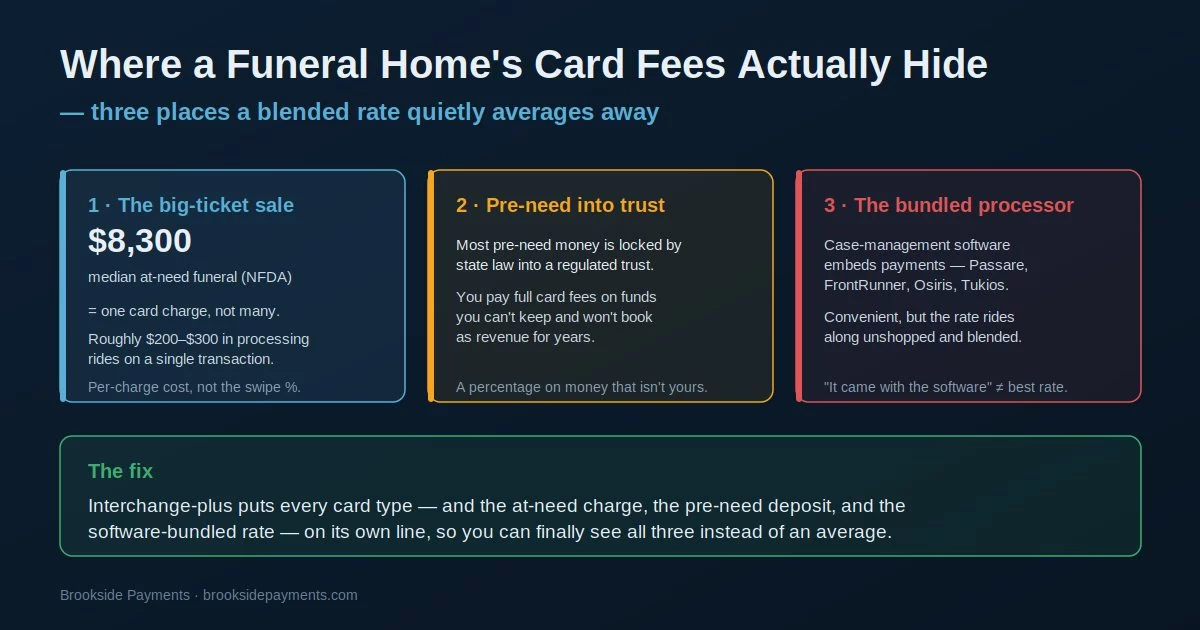
Handling Large-Ticket Underwriting
Because funeral services often involve large-ticket items, proper underwriting is crucial. Work with your payment processor to ensure you can handle large payments while maintaining compliance and security.
Utilizing POS Terminals and Virtual Terminals
Funeral homes should utilize various payment processing technologies to cater to their clients:
POS Terminals
Point-of-sale (POS) systems are essential for in-person transactions. They provide a seamless experience for families visiting your facility.
Virtual Terminals
Virtual terminals enable you to process payments from any location through a secure online portal, allowing greater flexibility and efficiency.
Payment Links
Setting up payment links allows families to complete payments securely online via a link sent to them by email or text message.
Customer Authorization and Itemized Invoices
It’s crucial to have customer authorization for all transactions, alongside clear itemized invoices provided to families that outline all fees and arrangements.
Contracts and Refund and Cancellation Terms
Ensure that families are informed about cancellation and refund terms as part of the contract to mitigate any misunderstandings and protect your business.
Managing Chargebacks and Fraud Controls
Funeral homes must implement strong fraud control measures to handle potential chargebacks. This can involve ensuring all transactions are securely processed and that the necessary documentation is maintained.
Billing Descriptors and Underwriting Documents
Having clear billing descriptors ensures family members understand the charges on their accounts. Proper documentation is vital for the underwriting process as well.
Frequently Asked Questions
To help clarify common concerns, let’s explore some FAQs:
How do I set up a funeral home merchant account?
Contact a reputable merchant services provider to begin the application process. Provide necessary documents such as business licensing and banking information.
What payment options are best for funerals?
Credit/debit cards, ACH/eChecks, and payment plans are optimal for catering to various family preferences.
Why Trust High Wire Payments?
We provide tailored payment processing solutions specific to the funeral home industry.
Industry Expertise
Our team understands the unique needs of funeral homes.
Compliant Processing
We ensure compliant payment solutions tailored for high-risk industries.
Flexible Solutions
Offering a variety of options to meet the diverse needs of your clients.
What types of payments can we accept?
You can accept credit/debit cards, ACH/eChecks, cash, or checks. Having a variety of options helps cater to different preferences.
How do I handle chargebacks?
Implement clear refund and cancellation policies. Maintain thorough documentation to defend against chargebacks.
What is the fee structure for payment processing?
Fees vary by provider and payment method. Typical fees for credit card transactions involve a percentage of the transaction plus a flat fee.
Can families pay in installments?
Yes, many funeral homes offer payment plans that allow families to pay in installments, making it more manageable.
What documents do I need to set up a merchant account?
Generally, you need a business license, tax ID, and banking information. Each provider will specify their requirements.
Ready to Streamline Your Payment Processing?
Start focusing on what you do best while we manage your payment solutions.
Apply Now →