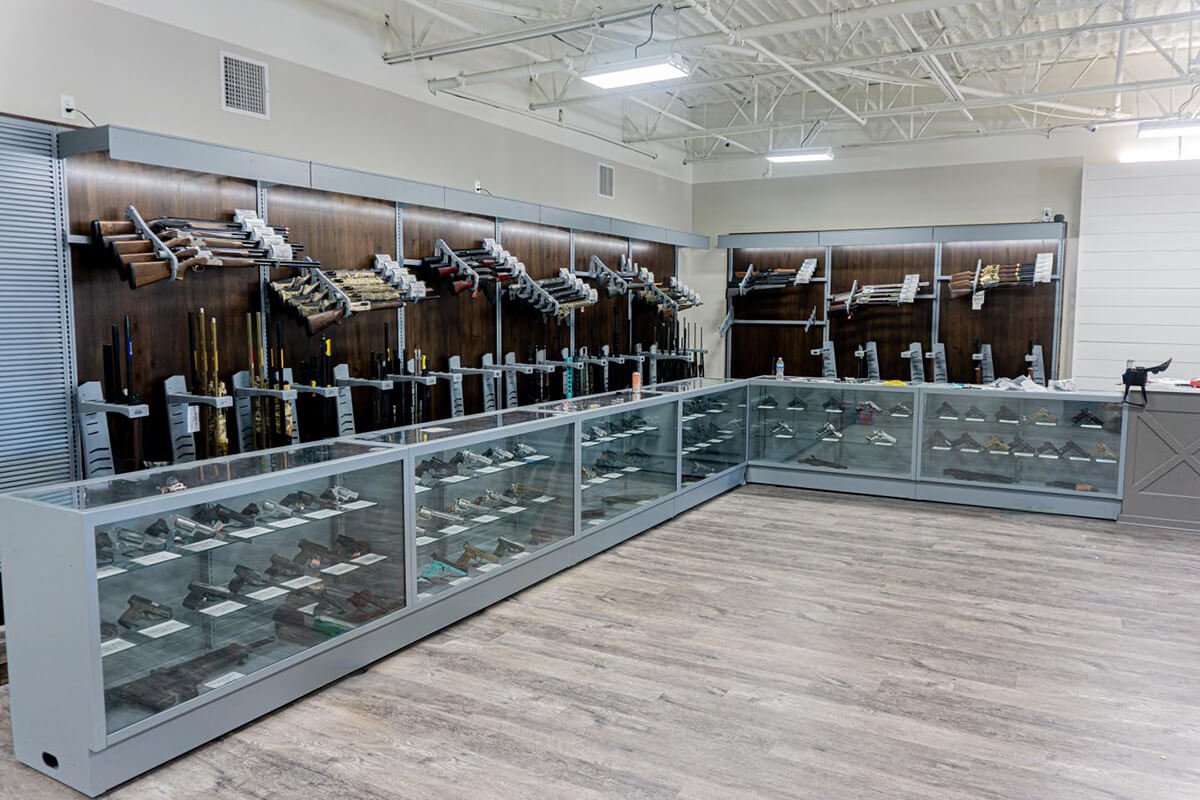
Underwriters look closely at FFL status, online checkout controls, ammunition shipping policies, refund language, chargeback history, and Florida firearm purchase rules before approving or pricing an account.
florida firearms credit card processing high-risk merchants.
Florida firearm merchants operate in a tightly reviewed payments category. High Wire Payments helps gun stores, FFL dealers, ammunition retailers, shooting ranges, outdoor retailers, and firearms ecommerce businesses prepare compliant processing files with clear underwriting, chargeback controls, age controls, product labeling, and documentation expectations.
FL
State review
21+
Purchase age focus
3 days
Waiting period rule
FFL
Dealer documentation
Florida firearms credit card processing is a specialized underwriting category for gun stores, FFL dealers, ammunition sellers, shooting ranges, outdoor retailers, and ecommerce merchants that sell regulated products. Operators in Jacksonville, Miami, Tampa, Orlando, St. Petersburg, Hialeah, Tallahassee, Fort Lauderdale, Port St. Lucie, Cape Coral, Pembroke Pines, and Hollywood may serve different customer bases, but banks evaluate the same core issues: legal product scope, verified licensing, age controls, shipping rules, refund policies, and chargeback exposure.
The Florida firearms market includes neighborhood gun shops, high-volume ammunition retailers, indoor shooting ranges, gunsmithing operations, training facilities, online catalog sellers, and hybrid outdoor stores that sell accessories alongside regulated inventory. Research on Florida operators shows this mix in practice. Action Firearms in Fort Lauderdale promotes new and used firearms, ammunition, accessories, FFL transfers, gunsmithing, and Glock Blue Label participation. LeadFeather Guns & Ammo in Winter Haven describes a 7,000 square foot family-operated facility with a climate-controlled indoor range, training classes, gunsmith services, and a large online store.
That diversity creates payment complexity. A card-present shop in Tampa with face-to-face sales and clear FFL transfer records presents a different risk file than a Miami ecommerce merchant shipping ammunition across state lines. A range in Orlando may process memberships, lane rentals, training classes, ammunition, and accessories through the same point-of-sale system. High Wire Payments reviews these operating details before placement so the merchant account reflects what the business actually sells, how customers buy, and how regulated products are controlled.
Florida operators should be prepared to document FFL status, business ownership, product categories, age-gating procedures, website terms, shipping restrictions, chargeback history, and compliance with Florida firearm purchase requirements, including the 21+ purchase standard and Florida Statute 790.0655 waiting-period considerations.
Florida firearm laws that affect payment underwriting
Payment underwriting is not a legal opinion, but processors do need to understand the legal environment in which a Florida firearms merchant operates. Research provided for this page identifies Florida Department of Law Enforcement purchase guidance stating that firearm purchasers must be 21 years of age, that Florida residency is required to purchase a handgun, and that legal permanent resident aliens who are Florida residents must provide a valid alien registration number. These requirements matter because payment providers expect merchants to show that the sales workflow screens for lawful customers before a transaction is completed.
Florida Statute 790.0655 is also important to underwriting. The research states that this statute mandates a 3-business-day waiting period for firearm purchases, beginning when the sale is initiated. For a retail gun store or FFL transfer location in Fort Lauderdale, Jacksonville, or Tallahassee, this means the payment file should explain when payment is accepted, how the order is recorded, when the transfer occurs, and how customers are informed that payment authorization is not the same as immediate possession of the firearm.
The research also notes that Florida’s 2018 reforms raised the minimum age to purchase firearms from dealers to 21. Processors may ask how that rule is reflected at the counter, on the website, and in advertising. For example, online checkout should not imply unrestricted purchase availability, product pages should clearly identify regulated items, and in-store staff should understand age-verification and transfer procedures. Clear operating controls reduce confusion, refund disputes, and chargebacks tied to customers who do not meet eligibility requirements.
Why Florida gun stores and FFL dealers are considered high-risk
Firearms merchants are often treated as high-risk because the category is politically sensitive, regulated, and operationally complex. The risk is not limited to firearms themselves. Ammunition, magazines, optics, serialized parts, suppressor-related inventory, gunsmith services, FFL transfers, range memberships, training deposits, and ecommerce shipments all raise questions for acquiring banks. A merchant that sells only accessories may be reviewed differently from a full FFL dealer, but underwriters still want accurate product labeling and transparent website content.
Chargebacks are a central concern. Firearms and ammunition purchases can involve higher ticket sizes, delayed fulfillment, transfer steps, background-check timing, shipping restrictions, and customer misunderstanding. If a customer in Pembroke Pines orders online and later discovers the item must ship to a local FFL, that can become a dispute if the checkout language was unclear. If a buyer in Cape Coral fails a required transfer process and the refund terms are not prominent, the payment processor may see avoidable chargeback risk.
Underwriters also look at fulfillment timing. Research on LeadFeather Guns & Ammo notes an online store with more than 400,000 items available to browse and a customer communication process after product arrival, generally in 5-7 days from purchase. A model like that can be workable, but it should be explained in the payment application. Banks want to know whether inventory is on hand, drop-shipped, transferred to an FFL, picked up in store, or fulfilled by a third-party distributor.
A Florida merchant application should accurately describe firearm, ammunition, range, transfer, training, and accessory revenue. Understating firearms activity as general sporting goods can create underwriting problems later, especially when descriptors, website content, or chargeback evidence reveal the true product mix.
Ecommerce controls for Florida firearms and ammunition merchants
Firearms ecommerce is not the same as ordinary retail checkout. A compliant-looking payment file should show that serialized firearms ship only to appropriate FFL destinations, that ammunition sales follow applicable restrictions, and that customers understand the difference between online payment and lawful transfer. For merchants in Miami, Hollywood, Hialeah, and Fort Lauderdale, this is especially important because dense metro markets often serve both local pickup customers and online buyers who may be outside the immediate service area.
Website content should be specific. Product pages should identify whether an item is a firearm, ammunition, magazine, accessory, range service, class, membership, or gunsmith service. The checkout flow should include age controls and require customers to acknowledge transfer and shipping rules. Refund policies should address cancelled orders, failed eligibility checks, refused transfers, restocking fees, background-check delays, and items that cannot be returned after shipment. These details help the processor understand how disputes will be handled before they become card-network issues.
Suppressor-related and NFA-adjacent products may require additional review. The research cites 2026 firearms market reporting that described a big uptick in suppressor interest after the federal tax stamp for suppressors, short-barreled rifles, short-barreled shotguns, and Any Other Weapons was eliminated effective January 1, 2026. Even where federal costs change, merchants still need careful product classification, shipping language, transfer procedures, and customer disclosures. Payment providers will not assume that increased consumer demand removes compliance obligations.
Documents Florida firearms merchants should prepare
A stronger underwriting file starts with organized documents. Florida firearm merchants should be ready to show who owns the business, where it operates, what licenses apply, what products are sold, and how regulated transactions are controlled. A single-location store in Port St. Lucie may need a simpler file than a multi-location range and ecommerce operation serving Orlando and Tampa, but both should be able to demonstrate transparent operations.
- Current Federal Firearms License, if the merchant sells, transfers, or receives firearms as an FFL dealer
- Florida business registration and any applicable local business tax receipt or municipal operating approval
- Government-issued identification for all beneficial owners and control persons
- Recent processing statements, usually the most recent three to six months if available
- Voided business check or bank letter matching the legal business name
- Website URL, product category summary, and screenshots of checkout age-gating or customer acknowledgments
- Written firearm transfer policy, including FFL shipment requirements for online firearm orders
- Ammunition sales and shipping policy, including restricted-product and restricted-destination handling
- Refund, cancellation, failed-transfer, and restocking policies visible to customers before payment
- Chargeback history, fraud-prevention procedures, and customer-service contact process for dispute resolution
Documentation should be consistent across the application, website, bank account, tax records, signage, and merchant descriptor. If the legal entity is an outdoor retailer but the website prominently sells handguns, ammunition, and FFL transfers, underwriters need that full picture. Inconsistency does not always mean a merchant is doing something wrong, but it slows review and can lead to requests for clarification, reserves, processing limits, or a decline from a particular acquiring bank.
Retail, range, and outdoor merchant payment models in Florida
Florida shooting ranges often combine several revenue streams: lane rentals, memberships, safety classes, private instruction, ammunition, targets, accessories, firearm rentals, and retail sales. LeadFeather’s Winter Haven operation is an example of the broader model, with a showroom, range, classes, custom shop, gunsmithing, and a climate-controlled facility. A payment review should separate these categories so recurring membership billing, in-person retail purchases, and regulated product sales are not treated as one unexplained revenue bucket.
Outdoor retailers and mixed-inventory sporting goods stores also need category clarity. A store in Jacksonville may sell fishing gear, hunting accessories, optics, knives, safes, apparel, ammunition, and firearms. That mix can be viable, but the processor still evaluates the regulated portions of the business. Product labeling, receipt descriptions, refund language, and staff procedures should make it clear which items require age verification, which require FFL transfer, and which are ordinary accessories.
Card-present transactions can be easier to support when identification checks, receipts, and customer interaction occur in person. However, in-person does not eliminate risk. A busy shop in St. Petersburg or Cape Coral can still face disputes over special orders, delayed transfers, class deposits, range memberships, and gunsmith work. Payment controls should include itemized receipts, signed acknowledgments for special orders, clear service timelines, and a dispute-response process that can retrieve documentation quickly.
Florida firearms payment processing preparation checklist
Before applying for a firearms merchant account, Florida operators should prepare a file that answers the questions an acquiring bank will ask. The goal is not to overstate compliance or promise approval. The goal is to present a complete, accurate view of the business so underwriting can evaluate the merchant on documented facts rather than assumptions about the category.
- Confirm the legal business name, DBA, ownership records, bank account, and website footer all match or are clearly connected
- Provide the current FFL and identify whether the business handles retail sales, transfers, gunsmithing, manufacturing, or other licensed activity
- Map each revenue category: firearms, ammunition, accessories, range fees, memberships, classes, gunsmithing, transfers, and ecommerce orders
- Document 21+ age-verification procedures for firearm purchases and show how those controls appear online and in store
- Explain how Florida Statute 790.0655 waiting-period requirements are communicated and tracked in the sales process
- Add visible website terms for FFL shipment, ammunition restrictions, cancelled orders, failed transfers, refunds, and restocking fees
- Use accurate product labeling and avoid vague descriptions that hide regulated items from customers or underwriters
- Prepare recent processing statements and calculate chargeback ratios before submitting the file
- Create a dispute-response folder with invoices, signed forms, pickup records, tracking numbers, customer emails, and refund notes
- Review marketing claims, email promotions, and product pages so they do not imply immediate possession, unrestricted eligibility, or unavailable inventory
High Wire Payments can review a Florida firearms merchant file before submission, identify missing documentation, and route the account toward processors that will consider the category. The review is compliance-aware and underwriting-focused, with no guaranteed approval language. For gun stores, FFL dealers, ammunition retailers, shooting ranges, outdoor merchants, and firearms ecommerce sellers, a prepared file is the best way to reduce avoidable delays.
Florida firearms payment markets we review
High Wire Payments supports review for Florida gun stores, FFL dealers, ranges, ammunition sellers, and firearms ecommerce merchants across major markets including Jacksonville, Miami, Tampa, Orlando, Fort Lauderdale, and surrounding cities.
How High Wire Payments supports Florida firearms merchants
Our review process focuses on documented underwriting, compliant sales flows, and payment controls built for regulated firearms businesses.
FFL-focused underwriting file review
High Wire Payments reviews the merchant file for FFL status, business registration, ownership records, product categories, and transfer workflows. We flag inconsistencies between the application, website, bank account, and customer-facing policies before submission.
Website and checkout control review
We review ecommerce pages for age-gating, FFL shipment language, ammunition restrictions, refund terms, and customer acknowledgment steps. This helps Florida merchants show underwriters that payment capture is separated from lawful firearm transfer.
Chargeback ratio monitoring
High Wire can help merchants monitor dispute activity and set internal alerts before chargebacks become a processor problem. Firearms merchants often benefit from documenting ratios around card-network risk thresholds and responding with invoices, pickup records, tracking, and signed acknowledgments.
Retail and range revenue mapping
For shooting ranges and hybrid outdoor stores, we help separate revenue for lane rentals, memberships, classes, ammunition, accessories, transfers, and firearm sales. Clear category mapping gives underwriting a more accurate picture than a single generic sales estimate.
Descriptor and policy alignment
We review billing descriptors, refund policies, receipts, and website language so customers recognize the transaction. Clear descriptors and visible policies reduce avoidable disputes from special orders, delayed transfers, class deposits, and ecommerce shipments.
Processor placement strategy
High Wire routes Florida firearms files toward acquiring relationships willing to review regulated merchants. Placement depends on documentation, business model, processing history, product mix, and compliance controls; approval is never represented as guaranteed.
Is firearms payment processing available for Florida gun stores?
Yes, some processors will review Florida gun stores, but firearms are considered a high-risk category and require stronger documentation than ordinary retail. Expect questions about FFL status, product mix, age controls, refund policies, and chargeback history.
Do Florida FFL dealers need to show their Federal Firearms License for underwriting?
If the business sells, transfers, receives, or handles firearms as an FFL, the current license should be included with the application. Underwriters use it to verify the business model and match the licensed activity to the website and payment request.
What Florida firearm purchase age should merchants reflect in their payment file?
The research for this page identifies Florida Department of Law Enforcement guidance stating that firearm purchasers must be 21 years of age. Merchants should show how 21+ controls are enforced in store, at ecommerce checkout, and in customer communications.
How does Florida Statute 790.0655 affect payment processing?
Florida Statute 790.0655 is relevant because the research states it mandates a 3-business-day waiting period for firearm purchases beginning when the sale is initiated. Payment underwriters may ask how the merchant explains timing, payment capture, pickup, cancellation, and transfer procedures to customers.
Can a Florida firearms ecommerce merchant accept credit cards online?
Some ecommerce firearms merchants can be reviewed, but the website must clearly explain FFL shipment, age verification, ammunition restrictions, refund terms, and transfer requirements. Underwriters will also review whether product descriptions and checkout flows accurately identify regulated items.
Can ammunition retailers in Florida get high-risk payment processing?
Ammunition retailers may qualify for review, especially when they provide clear product labeling, age controls, shipping policies, and chargeback procedures. Online ammunition sales receive additional scrutiny because shipping restrictions and customer eligibility can create disputes.
Are Florida shooting ranges treated differently from gun stores?
A range-only model may be evaluated differently than a full retail FFL, but many Florida ranges also sell ammunition, accessories, memberships, classes, rentals, and firearms. The payment file should separate each revenue stream so underwriting understands the actual risk profile.
Will a processor allow suppressor-related sales in Florida?
Suppressor-related sales may require enhanced review and clear classification. Research cited 2026 market interest after the federal tax stamp for certain NFA items was eliminated effective January 1, 2026, but payment providers still expect compliant transfer procedures and accurate product disclosures.
Why do Florida firearms merchants get declined by standard processors?
Standard processors often avoid firearms because of regulatory sensitivity, chargeback exposure, ecommerce fulfillment complexity, and brand policy restrictions. A decline does not always mean the business is unlawful; it may mean the processor does not support the category.
What can a Florida firearms merchant do before applying?
Prepare the FFL, business registration, owner identification, processing statements, website policies, product category list, transfer workflow, and chargeback records. Also review checkout language, refund terms, descriptors, and age controls before submitting the application.
Prepare your Florida firearms payment file before underwriting
High Wire Payments reviews Florida gun stores, FFL dealers, ammunition retailers, shooting ranges, outdoor retailers, and firearms ecommerce merchants for high-risk payment processing readiness. Share your business model, documents, website, and processing history for a compliance-aware review with no guaranteed approval claims.