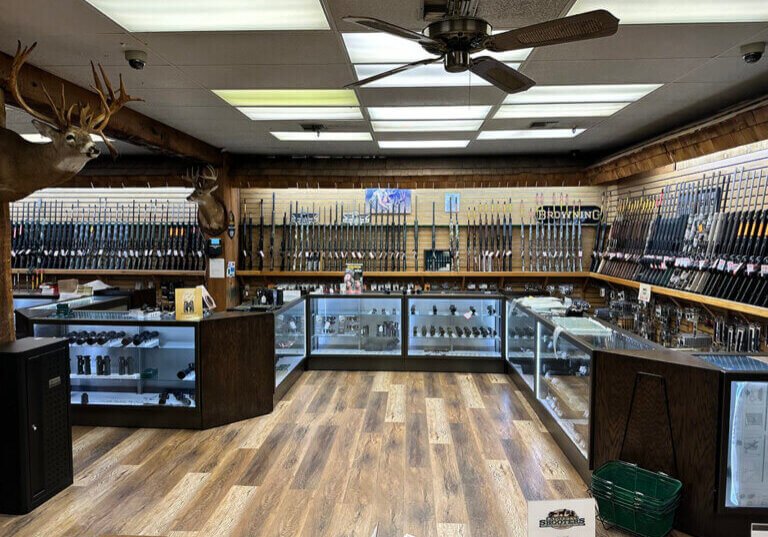
We review FFL documentation, website disclosures, ammo age controls, chargeback history, fulfillment rules, and product categories before the file reaches underwriting.
colorado firearms credit card processing high-risk merchants.
Colorado firearms retailers, FFL merchants, ammunition shops, sporting goods stores, and ecommerce sellers face careful underwriting because firearm transactions combine regulated products, age controls, chargeback exposure, and shipping restrictions. High Wire Payments helps operators prepare compliant payment applications without promising approval or bypassing bank review.
CO
Firearms Market
FFL
Underwriting Required
48 hrs
Theft or Loss Reporting
2027
Dealer Security Milestones
Colorado firearms credit card processing requires more preparation than a standard retail merchant account, especially for FFL dealers, ammunition shops, sporting goods businesses, training providers, and ecommerce sellers serving Denver, Colorado Springs, Aurora, Fort Collins, Lakewood, Thornton, Arvada, Westminster, Pueblo, Centennial, Boulder, and Greeley. Banks evaluate the merchant, the owners, the website, the inventory mix, and the legal environment around each transaction. A Colorado shop that sells rifles, handguns, ammunition, optics, range accessories, classes, and transfers may look like a local sporting goods business to customers, but it is reviewed as a regulated, higher-risk merchant by payment underwriters.
The Colorado regulatory environment is also changing. Research from the Colorado General Assembly shows HB26-1126, Requirements for Firearms Dealers, became law in 2026 and clarifies that a state permit to engage in the business of dealing in firearms is required for a firearms dealer to transfer firearms. The act also extends several requirements to responsible persons and certain contractors who handle firearms, process sales or transfers, or otherwise have access to firearms. For payment applications, that means processors may ask more detailed questions about ownership, operating control, employee responsibilities, security procedures, and recordkeeping.
High Wire Payments approaches Colorado firearms merchant services as an underwriting and compliance preparation process. We do not position payment acceptance as a way around federal, state, or card-network expectations. Instead, we help merchants organize FFL documents, Colorado dealer permit information when applicable, product listings, shipping policies, ammunition age controls, chargeback history, refunds, fraud tools, and fulfillment workflows so acquiring banks can understand the business clearly. That level of preparation matters whether the merchant sells from a storefront in Colorado Springs, operates an online ammunition store from Greeley, or combines retail, range services, and training near Denver.
A firearms merchant account is not guaranteed approval. Underwriters will review the FFL, state permit status where applicable, ownership, products sold, website content, shipping practices, chargeback exposure, and whether the business has written controls for regulated sales.
Why Colorado firearms merchants are reviewed as high-risk
Firearms businesses are considered high-risk because banks must evaluate more than ordinary retail sales. The product category involves federal licensing, state requirements, age restrictions, background-check related workflows, potential local ordinances, chargeback sensitivity, and reputational risk. A Colorado FFL that sells firearms, ammunition, reloading components, magazines, gun parts, and accessories needs a processor that understands how the business operates. If an application is submitted as a generic sporting goods store while the website clearly sells regulated firearms or ammunition, the mismatch can trigger delays, account holds, or termination.
Colorado law also includes policy areas that affect how underwriters view the state. The research notes universal background checks, waiting periods, minimum age restrictions, ghost gun regulations, lost and stolen reporting, local regulation, and dealer regulations. Colorado Parks and Wildlife materials also state that starting August 1, 2026, a firearms safety course is required before purchasing or transferring a specified semiautomatic firearm. These rules do not mean payment processing is unavailable, but they do mean banks expect merchants to document how products are sold, transferred, shipped, and advertised.
For ecommerce sellers, the review is usually deeper. Underwriters look for a clear FFL-to-FFL shipping policy for firearms, separate handling rules for ammunition, no prohibited checkout language, accurate product descriptions, and age-gated purchasing where appropriate. The Colorado Sun research excerpt also notes that starting July 1, 2026, the minimum age to purchase firearm ammunition in Colorado will be 21. A merchant selling ammunition online should be ready to show how age controls, delivery restrictions, refund procedures, and customer service scripts support that requirement.
Colorado laws and dates payment underwriters may ask about
HB26-1126 is especially relevant to Colorado firearms dealer underwriting because it addresses who needs a state permit, who must meet responsible-person standards, and how dealers handle records and security. The Colorado General Assembly summary states that the act clarifies a state permit is required for a firearms dealer to transfer firearms. It also clarifies that prior license and prior violation requirements apply to individuals who directly or indirectly control the management and policies of the dealer. In a payment review, that can translate into beneficial ownership questions, responsible-person disclosures, and requests for evidence that the business is properly licensed.
The same law expands training and personnel provisions. Dealer training requirements apply to responsible persons who, during their duties, handle firearms, process a sale, loan, or transfer, or otherwise have access to firearms. The act also applies employee-related provisions to individuals, including independent contractors, who perform employee duties whether paid or unpaid. For a merchant file, this supports the need for documented operating procedures. If a store in Aurora uses contractors during peak inventory periods or a gun show vendor in Golden brings temporary staff, the bank may want the merchant to explain who touches inventory and who processes transactions.
HB26-1126 also authorizes the Colorado Department of Revenue to fine a dealer up to $75,000 for a second or subsequent violation of certain dealer requirements committed on or after January 1, 2027, with rules to be adopted concerning fines. It expands recordkeeping from pistols and revolvers to all retail transactions involving a firearm other than a destructive device, clarifies that records may be kept electronically, and prohibits state agencies from using dealer records to create or maintain a registry identifying firearm ownership. Beginning October 1, 2027, dealers must implement required security measures, including measures tied to large-capacity magazines, and submit a comprehensive security plan to the department.
Key dates from the research include August 1, 2026 for specified semiautomatic firearm safety-course requirements, July 1, 2026 for the referenced ammunition purchase age change, January 1, 2027 for certain repeat-violation fine authority, and October 1, 2027 for dealer security implementation requirements under HB26-1126.
Retail, gun show, range, and ecommerce payment scenarios
Colorado firearms businesses rarely fit one simple model. A storefront in Lakewood may sell handguns, long guns, safes, optics, cleaning supplies, and ammunition. A sporting goods merchant in Fort Collins may sell fishing gear and camping equipment alongside firearms. A range near Centennial may take payments for lane rentals, memberships, classes, retail accessories, and transfers. An ecommerce seller in Pueblo may accept online orders for accessories while routing firearms transfers through receiving FFLs. Each model creates different payment and chargeback questions, so the merchant account should match the real business.
Gun show activity adds another layer. Tanner Gun Show describes itself as Colorado’s largest gun and knife show and lists 2026 two-day events, including a Colorado Springs Gun Show at the Norris Penrose Event Center on June 13-14, 2026, and a Golden Gun Show on June 27-28, 2026. The event page notes Saturday hours of 9 am to 5 pm, Sunday hours of 10 am to 4 pm, $15 tickets, and acceptance of major credit cards and cash but no checks. Vendors who take card payments at shows should use approved mobile or keyed-entry setups that match their merchant account terms.
Some Colorado operators also emphasize training and community education. Salida Gunshop, for example, promotes firearms courses, awareness, ammunition, handguns, rifles, shotguns, used firearms, reloading powder, primers, and projectiles. That type of mixed inventory and education model can be positive from a compliance narrative standpoint, but it still needs clean payment categorization. A merchant should separate deposits, class fees, retail sales, transfer fees, and ecommerce transactions in a way that accounting, tax reporting, refunds, and chargeback responses can be supported with receipts and policies.
Documents Colorado firearms merchants should prepare
A strong Colorado firearms payment application starts before the bank asks questions. Underwriters want a complete picture of the legal entity, ownership, location, licenses, products, policies, and processing history. Missing documents can slow review or cause a file to be declined for uncertainty rather than a specific rule issue. The goal is to make the business easy to understand: who owns it, where it operates, what it sells, how it verifies eligibility, how it ships products, how it handles refunds, and how it responds to disputes.
- Federal Firearms License copy and any applicable renewal documents
- Colorado state firearms dealer permit documentation when applicable under state law
- Government IDs for owners and responsible persons listed in the application
- Entity documents, trade name filings, EIN confirmation, and Colorado business registration details
- Lease, deed, or proof of business address for the retail location, warehouse, or range
- Product category list separating firearms, ammunition, magazines, reloading components, accessories, training, and transfers
- Website URL, checkout screenshots, shipping policy, refund policy, privacy policy, and terms of sale
- Written FFL-to-FFL transfer procedure for firearm shipments
- Ammunition age-control and restricted-shipping policy, including Colorado-specific procedures
- Three to six months of processing statements, bank statements, chargeback reports, or startup projections
Merchants should also prepare operational documentation that may not appear on a standard checklist. For Colorado, that includes any written process for theft or loss reporting within 48 hours after learning of the event, as described in HB26-1126, and a security plan or security-plan preparation file if the business is subject to the dealer security rules. If the store keeps electronic records for retail firearm transactions, note the software or system used and who has access. Clear documentation helps distinguish a compliant dealer from a vague or incomplete application.
Chargebacks, fraud controls, and product presentation
Chargebacks are a central issue for firearms payment processing. Many disputes do not come from product legality; they come from delivery timing, transfer delays, customer misunderstanding, descriptor confusion, return restrictions, or the buyer claiming they did not authorize the transaction. A Colorado ecommerce order may involve the online seller, the receiving FFL, the shipping carrier, and the customer. If any part of that process is unclear, the merchant can lose the dispute even when the product was lawful and the business followed its internal policy.
High Wire Payments encourages firearms merchants to use clear billing descriptors, AVS, CVV, velocity controls, order review queues, signed invoices for higher-ticket transactions, and documented customer communications. For ammunition, merchants should preserve age-verification evidence where the law or policy requires it. For firearms, the order record should show that the item ships only to an FFL where applicable, not directly to an unlicensed consumer. If a customer cancels because a transfer cannot proceed, the refund and restocking policy should be disclosed before checkout rather than debated after the charge posts.
Product presentation matters too. Listings should avoid misleading claims, banned-product ambiguity, or vague bundle descriptions that make underwriting harder. If a Colorado retailer sells magazines, parts, reloading components, or specified semiautomatic firearms, product pages should accurately label what is being sold and should not hide regulated inventory behind generic accessory language. For mixed sporting goods stores in Boulder, Westminster, Thornton, or Arvada, category mapping can help processors understand which transactions are firearms-related and which are ordinary outdoor retail.
Colorado firearms payment processing preparation checklist
Before applying for a Colorado firearms merchant account, review the business the way an underwriter will review it. The application should match the storefront, ecommerce site, product catalog, bank statements, licensing documents, and customer policies. If the business has recently expanded from accessories into ammunition, from retail into online sales, or from training into firearm transfers, update the payment file before volume grows. Preparation reduces avoidable holds and makes the compliance story easier to verify.
- Confirm that the legal name, DBA, ownership, EIN, address, and bank account match the application
- Gather FFL documents and Colorado dealer permit information that applies to the business model
- Identify responsible persons and staff or contractors who handle firearms, transfers, or transaction processing
- Update website policies for FFL transfers, ammunition sales, restricted jurisdictions, refunds, privacy, and terms
- Add age controls for ammunition and other age-restricted categories where required by law or policy
- Separate product categories for firearms, ammunition, magazines, reloading, accessories, classes, memberships, and services
- Review billing descriptors so customers recognize the charge and do not dispute valid purchases
- Turn on AVS, CVV, fraud filters, velocity limits, and manual review for high-risk or high-dollar orders
- Prepare chargeback evidence templates with invoices, delivery records, FFL information, emails, and signed acknowledgments
- Document Colorado-specific procedures for records, security planning, theft or loss reporting, and changing regulatory dates
If your Colorado firearms business is opening, changing processors, adding ecommerce, or preparing for increased regulatory review, High Wire Payments can review the file before it is submitted to banking partners. We help identify gaps in documentation, policy language, risk controls, and processing history so the application is more complete. Approval remains subject to underwriting, network rules, and bank policy, but a well-prepared file gives a legitimate FFL or sporting goods merchant a clearer path through review.
Colorado firearms merchant markets we support
High Wire Payments works with firearms and sporting goods merchants across Colorado, including storefront, range, gun show, and ecommerce models in major Front Range and regional markets.
How High Wire supports Colorado firearms underwriting
Our role is to prepare a complete, accurate merchant file and support ongoing risk controls after approval, not to bypass licensing, state law, or card-network rules.
FFL and permit file review
We organize the Federal Firearms License, Colorado dealer permit details when applicable, owner IDs, entity documents, and responsible-person information into an underwriting-ready packet. This helps the bank connect the legal entity to the regulated activity.
Colorado regulation mapping
We help merchants flag Colorado-specific issues from HB26-1126, including state permit expectations, responsible-person coverage, recordkeeping, 48-hour theft or loss reporting, and upcoming security-plan requirements. The goal is to make the compliance narrative clear, not to provide legal advice.
Ecommerce checkout controls
For online firearms and ammunition sellers, we review checkout flow for FFL-to-FFL firearm shipment language, ammunition age controls, restricted-shipping disclosures, refund terms, AVS, CVV, and manual review triggers. These controls reduce underwriting questions and dispute exposure.
Chargeback monitoring thresholds
We help merchants monitor chargeback activity with early alerts around 0.7% so issues can be addressed before ratios become a bank concern. Evidence templates can include invoices, customer emails, FFL transfer details, delivery records, and signed acknowledgments.
Descriptor and category cleanup
Firearms merchants often use trade names, range names, or ecommerce brands that customers may not recognize. We review billing descriptors, product category labels, and receipt language so cardholders can identify valid charges and underwriters can understand the inventory mix.
Retail, show, and range workflows
Colorado merchants may sell in-store, at events, online, and through range or training programs. We help separate card-present terminals, mobile processing, ecommerce gateway settings, deposits, class fees, transfer fees, and retail sales so each transaction type is processed under the correct risk profile.
Can a Colorado FFL get credit card processing for firearms sales?
Yes, some acquiring banks support firearms merchants when the business is properly licensed and the file is complete. Approval is not guaranteed, and the bank will review the FFL, ownership, products sold, policies, chargeback history, and Colorado compliance documentation.
Does Colorado require a separate state permit for firearms dealers?
HB26-1126, Requirements for Firearms Dealers, clarifies that a state permit to engage in the business of dealing in firearms is required for a firearms dealer to transfer firearms. Merchants should keep state permit documentation available for underwriting when it applies to their business.
What Colorado law should firearms dealers know about for 2027?
Under HB26-1126, the Colorado Department of Revenue may fine a dealer up to $75,000 for a second or subsequent violation of certain dealer requirements committed on or after January 1, 2027. The law also requires security measures to be implemented beginning October 1, 2027, with a comprehensive security plan submitted to the department.
Can Colorado ammunition shops accept credit cards online?
Ammunition ecommerce can be supported by certain high-risk processors, but the merchant must disclose the product category and maintain age controls, shipping restrictions, refund rules, and fraud screening. The research notes that starting July 1, 2026, the minimum age to purchase firearm ammunition in Colorado will be 21.
What is required for specified semiautomatic firearm purchases in Colorado starting August 1, 2026?
Colorado Parks and Wildlife materials state that starting August 1, 2026, a firearms safety course is required before purchasing or transferring a specified semiautomatic firearm. Payment underwriters may ask how a Colorado dealer handles affected products, disclosures, and transfer procedures.
Do Colorado firearms ecommerce sellers need an FFL-to-FFL shipping policy?
Yes, if the website sells firearms that must be transferred through a receiving FFL, the policy should be visible before checkout. The order record should show that firearms are shipped according to the required transfer process and not directly to unlicensed consumers where prohibited.
Why do processors ask for chargeback history from Colorado gun shops?
Firearms and ammunition transactions can involve higher ticket amounts, delivery restrictions, transfer delays, and strict return rules. Processing statements and chargeback reports help the bank evaluate whether disputes are controlled and whether the merchant has clear customer communication.
Can Colorado gun show vendors use mobile card readers?
They may be able to, but the mobile setup must be approved for the merchant’s actual firearms, ammunition, or accessories activity. Vendors at events such as Colorado Springs or Golden gun shows should not process regulated sales through a personal aggregator account that prohibits firearms activity.
Do local Colorado city rules matter for payment processing?
They can. The research notes that Colorado allows significant local regulation, so merchants in Denver, Boulder, Aurora, Colorado Springs, and other cities should verify municipal requirements in addition to state and federal rules.
What documents should a Colorado firearms merchant send first?
Start with the FFL, Colorado dealer permit information if applicable, owner IDs, entity documents, website policies, product category list, FFL transfer procedure, ammunition age-control policy, and recent processing statements. A complete file reduces avoidable underwriting delays.
Prepare your Colorado firearms merchant account file
High Wire Payments helps Colorado FFLs, ammunition shops, sporting goods retailers, ranges, gun show vendors, and ecommerce sellers organize the documentation, policies, and risk controls banks expect to see. Request a review before you submit or move processing volume.